
IJEBULAND: Inside story of the Awujale succession crisis
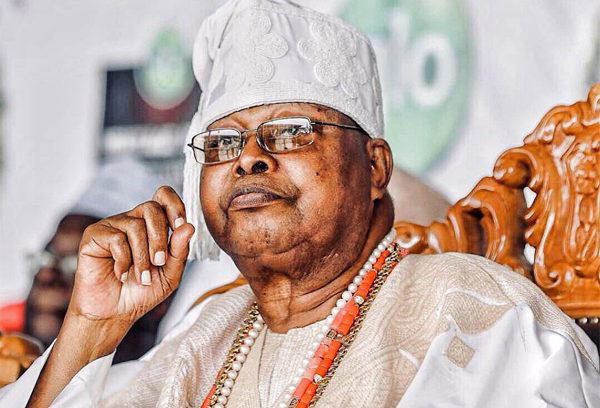
•Amid claims of interference, factions emerge
nBy James Ogunnaike, Abeokuta
nFor Ijebuland, the wait for a new Awujale has become much more than a traditional succession exercise.
nIt has evolved into a complex contest involving custom, law, family interests, institutional authority and allegations of political influence.
nMore than a year after the death of Oba Sikiru Kayode Adetona, the late Awujale of Ijebuland, the kingdom is yet to produce a successor.
nInstead, the process has been repeatedly suspended, challenged and reopened, with fresh disputes now emerging within the very ruling house expected to produce the next monarch.
nThe latest crisis in the Fusengbuwa Ruling House has added another layer to an already complicated succession saga.
nAt the centre of the latest dispute is the purported removal of three senior officials of the ruling house: Chairman, Otunba Abdulateef Owoyemi; Vice-Chairman, Prof. Fassy Yusuf; and Deputy Chairman, Prince Oladokun Ajidagba, over allegations of financial inducement, manipulation of documents and breach of due process.
nBut the trio has rejected the allegations and the purported removal, describing those behind the action as “usurpers and impostors.”
nThe competing claims have raised a fundamental question: Can Ijebuland choose a new Awujale without further damaging public confidence in the institution?
nA throne of immense history
nOba Adetona died in July 2025 at the age of 91 after an extraordinary 65-year reign.
nHis reign transformed the Awujale stool into one of Nigeria’s most respected traditional institutions.
nHe was widely regarded as a monarch who combined tradition with modernity, while his outspoken interventions on national issues gave the throne an influence extending well beyond Ijebuland.
nHis death therefore created not merely a vacancy, but a profound institutional transition.
nUnder the Awujale Chieftaincy Declaration and the Ogun State Obas and Chiefs Law, succession rotates among the recognised ruling houses: Anikinaiya, Fusengbuwa, Fidipote and Gbelegbuwa.
nFollowing the late monarch’s death, the turn fell to the Fusengbuwa Ruling House.
nBy December 2025, the Ijebu-Ode Local Government had formally invited the ruling house to commence the process of nominating candidates.
nWhat followed was an unprecedented rush of interest.
nNo fewer than 95 aspirants; 94 princes and one princess reportedly emerged.
nThe sheer number reflected the prestige attached to the throne, but it also exposed the difficulty of administering a contest involving numerous branches, lineages and competing interpretations of eligibility.
nAlmost immediately, controversy followed.
nPolitics of succession
nThe succession process became increasingly contentious amid allegations that political interests were attempting to influence the outcome.
nOne of the most explosive allegations concerned a reported late-night meeting involving Governor Dapo Abiodun and kingmakers.
nAccording to accounts attributed to people familiar with the meeting, the governor was alleged to have indicated support for Hon. Ademorin Kuye as his preferred candidate and urged the kingmakers to present him.
nThe allegation has been denied by the government, which has repeatedly insisted that it has no preferred candidate and is committed to due process.
nYet the reported meeting became a defining moment in the controversy.
nSources claimed that the kingmakers resisted what they regarded as political interference as the Awujale stool could not be treated as a political appointment.
nOne statement attributed to the confrontation captured the intensity of the disagreement: “No Kuye, no Awujale.”
nThe kingmakers were also reported to have responded that they would rather have no Awujale than accept an imposed monarch.
nWhether every detail of the reported exchange can ultimately be established is a matter for those directly involved.
nKWAM 1’s dramatic intervention
nThe crisis was further complicated by the entry of popular Fuji musician, Alhaji Wasiu Ayinde Marshal, popularly known as KWAM 1 or K1 De Ultimate.
nThe musician declared interest in the throne, claiming eligibility through the Jadiara branch of the Fusengbuwa Ruling House.
nHis claim was immediately disputed by leaders of the Fusengbuwa family and the Jadiara Royal House, who denied that he possessed the required paternal lineage and reportedly maintained that he belonged to the Fidipote Ruling House.
nThrough his lawyer, Dr Wahab Shittu, SAN, Ayinde challenged aspects of the nomination process, alleging exclusion and the use of a “delegate system” that, he claimed, disenfranchised some members.
nHe also alleged that security operatives prevented him from attending a nomination meeting on January 12, 2026.
nThe dispute eventually reached the Ogun State High Court in Ijebu-Ode. His application was dismissed, after which Ayinde withdrew both the suit and his bid for the throne.
nHis departure, however, did not end the controversy.
nGovernment suspension
nWith petitions, protests and competing allegations multiplying, Ogun State government intervened.
nThe Commissioner for Local Government and Chieftaincy Affairs, Hon. Ganiyu Hamzat, warned against misinformation and cautioned individuals against parading themselves as ‘Awujale-elect.’
n“The process is governed strictly by customary law and extant statutes,” Hamzat said, insisting that the government would remain neutral while enforcing due process.
nOn January 20, 2026, the government suspended the selection process, citing petitions, security reports and heightened tension.
nThe decision was presented as a measure intended to preserve peace and protect the dignity of the institution.
nChief Sonny Kuku, Chairman of the Awujale Interregnum Council and head of the kingmakers, confirmed the suspension and said consultations were ongoing.
nHe disclosed that the kingmakers had begun scrutinising more than 1,200 documents submitted by aspirants.
n“There will be no imposition,” Kuku said. “The responsibility is too sacred.”
nThe state later nullified the exercise, citing procedural lapses by the local government, and ordered the Fusengbuwa Ruling House to restart the process.
nThat decision generated another dispute, with the Fidipote Ruling House arguing that Fusengbuwa had forfeited its turn by failing to meet statutory timelines.
nThe government rejected the argument, maintaining that the process had not legally commenced.
nNew battle inside Fusengbuwa
nThe latest crisis has moved the succession battle from the wider arena into the heart of the Fusengbuwa family.
nA nine-member Fact-Finding Committee, constituted in June 2026 and chaired by Prince Olusegun Olusoga, was tasked with examining petitions concerning the conduct of the ruling house’s leadership and the nomination process.
nThe committee, according to its secretary, Ridwan Oduneye, produced a 25-page report.
nOnly Owoyemi appeared before the committee, while Yusuf and Ajidagba reportedly declined its invitation.
nOduneye said the committee found “a manifest breakdown of unity, communication, and cohesion” among the three officials recognised as Olori-Ebis.
nThe committee also alleged irregularities in the compilation and submission of candidates.
nIt faulted the leadership for allegedly failing to classify candidates according to categories provided in the Awujale Declaration, including male-line and female-line candidates and those born through Awujale Folagbade before he ascended the throne.
nOduneye described the alleged failure as “deliberate dereliction of sacred duty.”
nThe committee recommended that the three officials step aside.
nAt a general meeting of the ruling house on August 9, the recommendation was reportedly adopted by the faction that convened the meeting.
nSpeaking after the meeting, Adeyemi said the decision was unanimous.
nOduneye also alleged financial inducement, support for preferred candidates and manipulation of documents.
nBut these are allegations contained in a committee report, not judicial findings of criminal guilt.
nThat distinction is crucial.
nTrio fight back
nThe affected officials have mounted a vigorous defence.
nYusuf, speaking on behalf of the trio, dismissed the allegations and rejected the purported removal.
nHe described those behind the action as “a bunch of rabble rousers and confusionists.”
nHe questioned the authority of the committee and the meeting that purportedly removed them, particularly because of an alleged interest in the Awujale contest by one of those involved.
n“How could somebody under you set up a panel to probe you? Probe you for what? Who are they?” Yusuf asked.
nHe denied any role in compiling the candidate list and threatened legal action over alleged defamation.
nOwoyemi was equally dismissive
n“Their allegations are baseless, unfounded and should be ignored by members of the public,” he said, describing the group behind the purported removal as “a bunch of rebels.”
nThe dispute therefore presents Ijebuland with two irreconcilable narratives: one side says it is fighting to restore integrity and due process; the other insists that it is being targeted by an unauthorised faction attempting to seize control of the ruling house.
nGrand Council backs trio
nThe dispute escalated when the Grand Council of the Fusengbuwa Ruling House passed a vote of confidence in Owoyemi, Ajidagba and Yusuf.
nThe council rejected their removal and described the opposing group as a “kangaroo committee.”
nOwoyemi said the current leadership emerged after three factions within the family were reconciled through the intervention of Ogun State government.
nAccording to him, the reconciled structure produced him as Chairman/Olori-Ebi, Ajidagba as Deputy Chairman and Yusuf as Vice-Chairman.
nHe said the opposing group had no authority to act for the family.
nHe alleged that the group was attempting to undermine Fusengbuwa’s claim to the Awujale throne.
nThe group also urged the governor to lift the suspension and allow the kingmakers to conclude their traditional responsibility.
nYusuf went further, arguing that the government had no legal authority to halt the process.
nThat position, however, remains contested by the state, which has relied on its statutory responsibilities under the Obas and Chiefs Law.
n‘We only want due process’
nOduneye has rejected the charge that his group is attempting to overthrow the recognised leadership.
nHe said the objective was to “restore due process, unity and the integrity of the Fusegbuwa/Jadiara Ruling House.”
nAccording to him, the August 9 meeting was attended by 115 members from different family lineages and resolved to remove the trio and appoint Prince Adeleke Adeyemi as interim secretary and authorised signatory pending the election of a new Olori-Ebi.
nHe welcomed the prospect of litigation.
n“Litigation is a civil way of seeking redress. The court will be the best place to establish who has betrayed the House and who is pursuing personal interest at the expense of the collective,” Oduneye said.
nHe also denied having a personal interest in the succession contest, pointing to his family’s historical connection with the ruling house.
nKingmakers draw line
nWhile the Fusengbuwa dispute rages, another disagreement emerged among the kingmakers.
nThe Awujale Afobaje Council, led by Chief Sonny Kuku, rejected a letter reportedly sent to Governor Abiodun by the Olisa of Ijebu-Ode, Chief Rasheed Adeoye Adesanya.
nThe Afobajes accused Adesanya of falsely presenting himself as chairman of the council and objected to his use of the appellation “Alaiyeluwa”, a title ordinarily associated with a reigning monarch.
nAccording to the council, the law does not expressly designate a chairman, but at its inaugural meeting on December 2, 2025, Adesanya himself allegedly nominated Kuku as chairman, with the nomination unanimously supported.
nThe council said it subsequently held four meetings — on December 2, January 13, January 19 and January 20 — before halting its deliberations following the government’s suspension.
n“We therefore urge all sons and daughters of Ijebu Ode, as well as residents of our ancient kingdom, to remain calm, peaceful, and law-abiding while awaiting the directive of the Ogun State government,” the statement said.
nThe council’s position is significant because the kingmakers occupy a central role in the traditional selection of the Awujale.
nTheir insistence on due process underscores the wider concern that competing claims of authority could further complicate the succession.
nQuestion of public trust
nAt this stage, the biggest casualty of the prolonged dispute may be public confidence.
nA traditional institution derives its authority not only from law or custom, but also from the acceptance of the people.
nThe Awujale stool has survived for generations because successive monarchs have been regarded as custodians of a collective heritage.
nIf the process of choosing the next occupant becomes synonymous with factional warfare, allegations of inducement, political pressure and competing claims of authority, the institution itself risks being diminished.
nThere is a strong argument, therefore, for separating allegations from established facts.
nClaims of bribery or manipulation should not be treated as convictions. They should be independently investigated where appropriate. Those accused must be allowed to defend themselves, while anyone found to have compromised the process should face the consequences prescribed by law.
nEqually, allegations of political interference should be tested against evidence rather than rumour.
nWhat Ijebuland needs now is not another round of accusations, but an authoritative process capable of answering the outstanding questions.
nWho is entitled to nominate? Who has authority to screen candidates?
nWhat exactly constitutes eligibility under the Awujale Declaration? What role should government play?
nWhat are the limits of the Afobajes’ powers? And, perhaps most importantly, what safeguards exist to prevent anyone with a personal interest in the outcome from controlling the process? These questions must be answered transparently.
nTradition must survive the test of modern governance
nThe Awujale institution is ancient, but the society around it is not.
nIjebuland today includes professionals, academics, business leaders, politicians, traditionalists and a large diaspora. Its people increasingly expect institutions, traditional and governmental to demonstrate transparency and accountability. That does not mean abandoning custom.
nOn the contrary, clear adherence to established custom may be the best defence against manipulation.
nThe strength of the Ijebu political and cultural system has historically rested on institutions such as the Osugbo, the ruling houses and the network of chiefs and community authorities. Those institutions can only retain their authority if their decisions are perceived as legitimate.
nThe lesson from the present crisis is therefore broader than the identity of the next Awujale. It is about whether tradition can be preserved while embracing procedures that withstand public scrutiny.
nDanger of rushing the throne
nThere will inevitably be pressure to end the interregnum. But speed should not become the overriding objective. A monarch whose selection is challenged from the outset could spend the early years of his reign defending his legitimacy rather than uniting the kingdom.
nBy contrast, a painstaking process that addresses grievances, verifies documents, clarifies eligibility and resolves internal disputes may take longer, but could produce a stronger outcome.
nThe next Awujale must inherit not only the palace, but also the confidence of Ijebuland. That confidence cannot be manufactured by government proclamation, family declaration or media campaign.
nIt must emerge from a process that the major stakeholders the ruling houses, Afobajes, government and the wider Ijebu public regard as fair.
n nRelated Stories
 General News
CELEBRATING TWO YEARS OF TRANSFORMATIONAL LEADERSHIP IN THE PRESIDENTIAL AMNESTY PROGRAMME
Tomorrow, 14TH March 2026, as we look forward to the second anniversary, we reflect on the remarkable two years since the Administrator of the Preside
 General News
PRESIDENTIAL AMNESTY PROGRAMME PHASE 3: DISREGARD PURPORTED STATEMENT ON DELAYED ITA PAYMENTS — OFFICE OF NATIONAL CHAIRMAN
The Office of the National Chairman of the Presidential Amnesty Programme Phase 3, General Elaye ThankGod Dollar Slaboh, has called on beneficiaries a
 General News
RE: CLARIFICATION ON MY PERSONAL RELATIONSHIPS
PUBLIC NOTICErnrnRE: CLARIFICATION ON MY PERSONAL RELATIONSHIPSrnrnIt has become necessary to make this public clarification following the increasing