
Ijaw Nation Aims for Autonomous Region, Expanded Territory, and Local Governance Overhaul in Ambitious 5-Year Plan
The SMUTUNS playground in Warri, Delta State, was abuzz with vibrant colors, lively rhythms, and intense political energy on Thursday, May 14, 2026, as thousands of Ijaw people gathered for the inauguration of the 9th National Executive Council of the Ijaw National Congress.
nThe event drew an array of notable figures, including High Chief Government Tompolo Ekpemukpolo, Dumo Lulu-Briggs, top Delta State government officials, the Speaker of the Delta State House of Assembly, and traditional rulers from Delta, Bayelsa, Edo, Ondo, and Rivers states, as well as a retired Supreme Court justice, His Royal Majesty Justice F.F. Tabai.
nLawmakers from Niger Delta states were also in attendance, adding to the gravity of the occasion, which marked a pivotal moment in the Ijaw nation's history, as outgoing president Prof. Benjamin Ogele Okaba handed over to incoming president High Chief Macdonald Igbadiwei.
nThe new leadership has been tasked with a revolutionary agenda, including the creation of two new states, a significant increase in local government areas in Bayelsa State, enforcement of a Supreme Court judgment, and the pursuit of an Ijaw republic, signaling a shift from petitioning to taking action.
nProf. Okaba, who led the INC for five years, reflected on his tenure, highlighting the organization's transformation from a comatose state to an internationally recognized body, with membership in the United Nations Unrepresented Peoples' Council and diplomatic engagements with the European Union and other partners.
nOkaba warned against attempts to seize control of the organization, emphasizing the importance of democratic processes and reminding his audience that the April 13 election that produced the new NEC was sanctioned by over 600 delegates, lending it legitimacy.
nHe charged his successor to prioritize the Ijaw quest for additional states and local government areas, declaring that the Ijaw Republic is no longer a dream but a destination, and that the new leadership must continue the battle for these causes.
nHigh Chief Macdonald Igbadiwei, the new INC president, struck a tone of historical consciousness and urgent purpose, noting that the first INC congress was held in the Western Zone, making the event a full-circle moment for the region.
nIgbadiwei emphasized that leadership is about service and sacrifice, not personal ambition, and that his administration would marry sacrifice with strategic and lawful aggression on political and resource fronts to address the Ijaw nation's concerns.
nHe catalogued the contradictions faced by the Ijaw people, including environmental degradation, political exclusion, youth unemployment, and marginalization, stating that these issues are a call to action, not mere accusations.
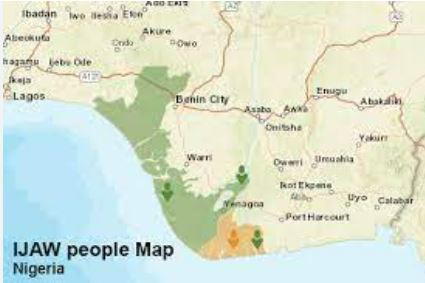
nThe new INC agenda includes demands for the creation of two new states, Toru-Ebe State and Oil Rivers State, to address the marginalization of Ijaw people, particularly in Edo and Ondo states, and to create more political space for the Ijaw nation.
nThe congress is also demanding that the number of local government areas in Bayelsa State be increased to at least 24, citing the injustice of the current eight local governments, and comparing it to Kano State, which has 44 local governments.
nIgbadiwei expressed concern for Ijaw communities facing suppression within their home states, singling out Ibeno in Akwa Ibom State, and pledged to explore all lawful means to seek redress and ensure justice and recognition for these communities.
nSimilar concerns were raised about the treatment of Ijaw communities in Edo and Ondo states, highlighting the congress's view that the struggle for Ijaw rights extends across southern Nigeria's coastline.
nIn a symbolic gesture, Igbadiwei fulfilled a campaign pledge by donating three 30-seater coaster buses and four 18-seater buses to various INC zones and chapters, demonstrating his commitment to the organization's growth and development.
nThe electoral committee that oversaw the transition described the April 13 election as a peaceful and successful exercise in Ijaw democracy, acknowledging the support of stakeholders, including former President Goodluck Ebele Jonathan and Governors Senator Douye Diri and Sir Siminalayi Fubara.
nAs the celebrations concluded, the occasion's symbolism lingered, marking a new chapter in the Ijaw story, as the congress, born in 1991, demands not just a seat at the table but a republic of its own, leaving the question of whether Nigeria's political establishment is listening to define the next chapter in the Ijaw nation's history.
Related Stories
 General News
CELEBRATING TWO YEARS OF TRANSFORMATIONAL LEADERSHIP IN THE PRESIDENTIAL AMNESTY PROGRAMME
Tomorrow, 14TH March 2026, as we look forward to the second anniversary, we reflect on the remarkable two years since the Administrator of the Preside
 General News
PRESIDENTIAL AMNESTY PROGRAMME PHASE 3: DISREGARD PURPORTED STATEMENT ON DELAYED ITA PAYMENTS — OFFICE OF NATIONAL CHAIRMAN
The Office of the National Chairman of the Presidential Amnesty Programme Phase 3, General Elaye ThankGod Dollar Slaboh, has called on beneficiaries a
 General News
RE: CLARIFICATION ON MY PERSONAL RELATIONSHIPS
PUBLIC NOTICErnrnRE: CLARIFICATION ON MY PERSONAL RELATIONSHIPSrnrnIt has become necessary to make this public clarification following the increasing