
How we were sexually exploited in Mali — Nigerian teens
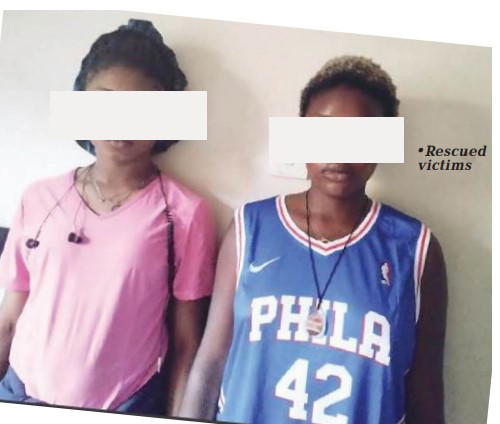
The survivors
nBy Esther Onyegbula
nThe night air at Maza-Maza Motor Park, along the Mile-Two/Badagry Expressway in Lagos, was thick with the usual chaos of the city on Saturday, March 14, 2026: hustling bus conductors, the pungent smell of diesel, and fried plantain. Amidst the cacophony, a small figure in a pink shirt and light blue jeggings sat motionless on a bench, clutching a small bag. She looked impossibly young, her face a calm mask that belied the horrors she had just survived.
nRead Also: ‘We’re tired’ – Bargaja residents cry, as Bello Turji orders them to flee
nThis was a 15-year-old girl just back on Nigerian soil after a nightmare abroad. She will simply be called Princess on account of her age.
nBy 10 a.m. the following Sunday, while many Nigerians attended church to pray, the Princess’s own prayers had finally been answered, having returned from four months of exploitation in Mali and beginning to process the trauma. Her pink shirt was bright, almost cheerful, but her eyes conveyed the vacant look of a child who had seen too much. Calm and naive, she seemed unaware of the machinery that had worked to free her from the clutches of traffickers.
nLife’s early trials
nLife had never been easy for Princess. She was born a triplet, but the bond of unity was broken early, as one of her siblings had passed away. Her parents separated, leaving her to navigate a broken home. She lived with her father in Warri, Delta State, until a devastating accident rendered him unable to care for her. Forced to drop out of secondary school, she went to live with her grandmother.
nIn the search for survival, Princess found work in a local bar. It was there, amidst loud music and cheap alcohol, that a predator found her, a familiar face from the neighborhood, who promised her a “job as a drug peddler in Burkina Faso.” Despite her parents’ warnings, the lure of greener pastures proved irresistible and in late 2025, Princess disappeared.
nThe ordeal
nHer voice barely above a whisper, Princess recounted the journey funded by her trafficker. The promise of drug peddling quickly dissolved into the harsh reality of prostitution. Every CFA franc she earned went to her captors.
nHer words: “I left Warri in late 2025 after being persuaded by a man from my neighborhood. Despite my parents’ warnings, I traveled secretly in search of greener pastures, leaving my sister behind. Poverty pushed me to take the risk.
n“The woman I worked for when I arrived in Mali financed my journey and connected me with contacts there. I was initially told I would be involved in drug-related work, which I didn’t fully understand. But upon arrival, I was forced into prostitution.
n“I was kept with other girls under strict control and compelled to solicit clients every day. Everything I earned went to my boss. I didn’t know how much I was earning or how much I owed. I could have worked for years and still been told I hadn’t finished paying because there was no clear agreement.
n“The exploitation was daily and harsh. I had to sleep with many men. Some were for a short time at night; the fee for short-term clients was 2,000 CFA. I could see up to five clients in a day, depending on arrangements. For full-time clients, the fee ranged from 10,000 to 15,000 CFA. If I didn’t earn any money, my madam would at least give me food, but otherwise, I had to work and pay her back. I deeply regret my decision to travel, but I am grateful to be back home.”
n“Whenever I refused to work, she threatened me and even starved me. I had no way to communicate with anyone, as I didn’t have a phone. I cried when I realized what I had been brought there for. I told my boss repeatedly, ‘I cannot do this work. I want to go back home. I don’t want to suffer anymore.’
n“I spent about four months in Mali. When I could no longer endure it, I called my grandmother, who reached out to my parents. They contacted an NGO, which eventually rescued me. There were other girls working for my boss as well.”
nEscape at last
nFreedom was never guaranteed. Princess attributed her return to her family’s relentless efforts. Threatening legal action and contacting Comrade Prosper Michael, convener of the Global Anti-Human Trafficking Organization (GAHTO), they set in motion a rescue operation that finally brought her home.
nAnother narrow escape
nHours before Princess returned, another 17-year-old girl, from Benin City, Edo State, who will be called Angel was processing her own trauma. Recruited with the promise of a job in Libya, Angel embarked on a week-long odyssey of terror. The journey through multiple borders, including dangerous forests to evade law enforcement, left her terrified.
n“We spent days without sleep. At one point, I was very scared, especially when we had to pass through the forest,” she recounted.
nUpon arrival in Mali, she discovered the fantastic job she was promised was a lie. Instead, she was placed in a makeshift village of over 30 girls aged 17 to 19, all forced into the sex trade.
nHer trafficker, identified only as “Madam Cassandra”, demanded N4 million from her family as “compensation” for the cost of trafficking her when Angel refused to comply.
n“She tried to seize my phone so I wouldn’t contact anyone. I had to hide it to stay in touch with my family,” Angel said. Through this lifeline, her family alerted NAPTIP, which partnered with GAHTO to orchestrate her rescue.
nMessage to Nigerian youth
nNow safe, both girls have a warning for young Nigerians: “I didn’t know about human trafficking before. I thought they wanted to help me. It is not good. It is very risky”, Angel said. Princess, quiet and reflective, nodded in agreement.
nThe ordeal left both girls with the daunting task of rebuilding stolen childhoods.
nComrade Michael, observing the reunions at the park, condemned the traffickers: “This is a crime against humanity. These predators are in your neighborhoods, in bars, promising the world. They are selling your children into hell.” He also commended the Nigerian embassy in Burkina Faso and urged parents to be vigilant, emphasizing that awareness was the first line of defense against such exploitation.
n nRelated Stories
 General News
CELEBRATING TWO YEARS OF TRANSFORMATIONAL LEADERSHIP IN THE PRESIDENTIAL AMNESTY PROGRAMME
Tomorrow, 14TH March 2026, as we look forward to the second anniversary, we reflect on the remarkable two years since the Administrator of the Preside
 General News
PRESIDENTIAL AMNESTY PROGRAMME PHASE 3: DISREGARD PURPORTED STATEMENT ON DELAYED ITA PAYMENTS — OFFICE OF NATIONAL CHAIRMAN
The Office of the National Chairman of the Presidential Amnesty Programme Phase 3, General Elaye ThankGod Dollar Slaboh, has called on beneficiaries a
 General News
RE: CLARIFICATION ON MY PERSONAL RELATIONSHIPS
PUBLIC NOTICErnrnRE: CLARIFICATION ON MY PERSONAL RELATIONSHIPSrnrnIt has become necessary to make this public clarification following the increasing