
How Nigeria’s $1tn economy target reflects our 40-year reforms — Michal Cygan, Poland’s Ambassador to Nigeria
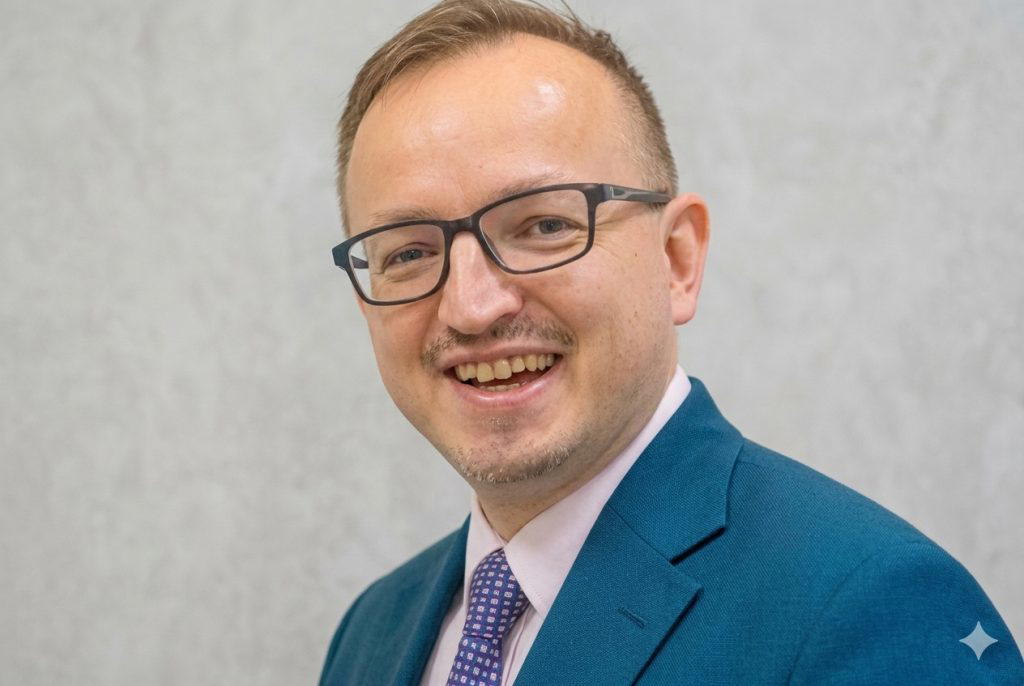
Michal Cygan, Poland Ambassador to Nigeria
nThe Polish ambassador to Nigeria, Michal Cygan, has said Warsaw views Nigeria as a land of opportunity and is backing President Bola Tinubu’s $1 trillion economy target with concrete investments in infrastructure, education, and defence.
nIn this exclusive interview, the ambassador, who led a Polish delegation to the LCCI Invest Nigeria conference and GITEX Nigeria, explained how Poland’s own painful 40-year transition from a state-run economy mirrored Nigeria’s current reform measures. He also detailed Poland’s role in the $560 million Lagos port expansion, plans for railways, agri-tech and energy, and how Nigerian businesses can use Poland as a gateway into the €300 billion EU Global Gateway market.
nBy Nkiruka Nnorom
nPoland hit $1 trillion last year. What reforms got you there, and what can Nigeria learn?
nIt’s an interesting milestone for Poland – crossing the $1 trillion mark and joining the G20. And it aligns with Nigeria’s ambition under President Tinubu’s Renewed Hope Agenda, which we support.
nBut I don’t like to frame it as Nigeria learning from Poland. I believe learning goes both ways.
nPoland has been on a reform path for almost 40 years. Since 1989, we went through a painful transition from a state-run economy to one built on individuals, SMEs, free markets, and currency liberalization. These are essentially the same reforms Nigeria is pursuing now.
nSo we understand the difficulty and the pain involved. We admire the resilience of the Nigerian people and the resolve of the government to press on with what they believe is right despite the challenges. And we are already seeing great results. We hope Nigeria continues on this path.
nThe LCCI Invest Nigeria conference captured it well. It focused on the opportunities from currency stabilization, the strong performance of the stock market, and renewed investor confidence – with Poland among the key countries showing interest.
nThe truth is, Poland has not been present in Africa at this scale for decades. That alone shows Polish businesses now see Nigeria as a land of opportunities.
nTake the Lagos port expansion. The Polish Export Credit Agency is co-financing it with the UK Export Finance with credit guarantee worth over $560 million. Polish investment within that is between $150 – $170 million.
nIt is a significant package. Our goal is that the companies, products and technologies that come within it are advanced and that they partner with Nigerian firms and transfer technology and skills. We don’t just want to sell to Nigeria.
nWe hope that the partnerships we build will be lasting and this is the reason for my presence not just for the LCCI Invest Nigeria Conference, but also for the Gitex Nigeria exhibition.
nWhat measures did Poland put in place to mitigate the pains of its own reforms?
nWe understood that Poland’s domestic capital was not enough to build a stable, technologically advanced workforce. So we opened up in a controlled way. We allowed our companies to face competition, but not in a way that would kill them. The idea was for them to learn, adapt, and grow stronger.
nIt’s like going to the gym or solving a difficult puzzle. It’s painful, you get tired, but you also get stronger.
nSo the policy was partial liberalization. We opened the market to foreign competition, including in banking and finance, but in a way that protected our own firms and kept the playing field level.
nAt one point, 90 percent of our banking sector was owned by foreign institutions. That was fine because the government retained control. Later, as Polish companies became stronger, they bought back assets. Today, 60 to 70 percent of the financial sector is back in Polish hands.
nFrom a struggling sector, it is now one of the most robust and competitive in Europe. I believe this is the way to go: open the market, but in a controlled way.
nSo you think Nigeria is on the right path?
nI believe Nigeria is on the right path. But I will not downplay the challenges.
nFrom insecurity to poverty, many Nigerians feel they don’t have the tools to participate in this economy or to benefit from the increased presence of foreign companies and access to capital. To compete globally, for instance with a startup, you need specific skills.
nThat is why we are also investing in young Nigerian talent.
nPoland is offering high-value scholarships to Nigerians named after some of our greatest scientists.
nCopernicus, one of the greatest minds in history, was Polish. Maria Skłodowska-Curie, one of the most brilliant scientists ever, was Polish. And Stefan Banach, the mathematician whose work helped his students crack the German Enigma code during World War II – a breakthrough that contributed to the Allied victory.
nThe Stefan Banach Scholarship Programme is for Nigerian students specializing in STEM – mathematics, physics, astronomy, and other fields.
nWe see that the Nigerian government is also encouraging its talents. The question is always whether the resources are enough to meet the needs, given the size of the youth population.
nPoland is doing what it can to help, to the best of our capacity.
nWhat specific actions will Poland take to support Nigeria’s $1 trillion economy drive?
nThe first is large-scale infrastructure. Our participation in the expansion of the Lagos Port will position Nigeria, and Lagos State specifically, as an even bigger gateway – not just to Nigeria, but to African markets.
nWe are also focused on connectivity: building highways and railways. This will help reduce transportation costs and cut post-harvest losses in agriculture.
nOther key areas include IT and cybersecurity, to protect businesses from risk and losses. And as we mentioned, investment in education through scholarships.
nPoland is also bringing solutions in agri-tech, logistics, transportation, energy including renewables, and the defence sector.
nWhen people ask me what Poland can offer, I often reverse the question: what does Nigeria need? We produce almost everything. So the partnership should be based on Nigeria’s needs, not just on what Polish companies produce.
nPoland invests over 4% of its GDP in defence. With Nigeria battling insecurity in the Sahel and the Gulf of Guinea, where can Nigeria and Poland cooperate on defence and security?
nAbsolutely. Poland has strong systems to support the defence sector, security agencies, and the police – both at the national and sub-national levels. We understand that each Nigerian state faces its own peculiar challenges.
nIn June this year, we hosted His Excellency, the Minister of Interior, Olubunmi Tunji-Ojo, along with several service chiefs. We have excellent solutions for them.
nOur cooperation covers training, technology, and technology transfer. Over the years, we have partnered with different Nigerian institutions, and we are ready to continue. This includes training Nigerians for specific challenges, providing communication systems for the police and other security services. These are areas we are already involved in, or are in advanced discussions on.
nOn hard defence, we are not happy to be spending over 4 percent of our GDP on defence. But Russia’s aggression against Ukraine, right next to us, has made it necessary. Like any responsible nation, we must defend ourselves and support those under attack.
nIn the process, we have developed cutting-edge technologies and equipment tested in real war conditions, not just in textbooks. Partnering with Poland gives Nigeria access to these best-in-class technologies at very competitive prices, because large-scale production also drives down unit costs.
nSo, yes, I strongly believe Poland is a good partner for Nigeria. We share the same values. Both our countries want stability in our regions. We do not want asymmetric wars, non-state actors, or any forces disturbing the peaceful lives of our citizens and neighbours. That is a goal we share.
nWith the EU rolling out the 300 euro billion Global Gateway strategy, how can Nigerian businesses use Poland to access the EU markets?
nThat’s a great question because it speaks to reciprocity.
nThe big advantage of entering Europe through Poland is that it’s a unified market. Once you meet the criteria to operate in Poland, you meet the criteria to operate everywhere – from Greece to Ireland, from Finland to Portugal.
nThe best route is through partnerships with Polish companies. If you set up a joint venture, and you build to European standards in Nigeria, that same product or technology can be sold across the entire EU.
nTake railways as an example. Poland is very strong in railway infrastructure, and Nigeria has a huge need in that area. A Polish-Nigerian joint venture that produces rolling stock, or develops IT systems to regulate rail traffic, would meet European standards.
nThat means it can serve the Nigerian market, the African market through AfCFTA, and also be sold anywhere in the European Union.
nSo, yes, Poland can be a gateway for Nigerian businesses into the €300 billion Global Gateway and the wider EU market.
nWhat else does Poland offer Nigerian students beyond scholarships?
nActually, many Nigerian students don’t even apply for scholarships. They see studying in Poland as an investment and go through commercial channels.
nWe have Nigerian students across many fields – medicine, engineering, polytechnics, and other specialized areas.
nWhat’s interesting is that almost every Polish company that comes to Nigeria already has Nigerian alumni who studied in Poland. They become the best representatives for these companies because they know the local market and culture, but they also bring back knowledge and expertise from Poland. This is happening all the time.
nI believe the government should gently steer this tide, and not over-direct it. When the climate of the exchange between our countries is good, students know where their future lies. We don’t need to mandate that 100 people must study Marine Biology and 100 must study Advance Mathematics.
nInstead, we should build a framework: offer targeted scholarships, open up possibilities, promote education fairs where Polish universities can engage directly with Nigerian students, and play a guidance and monitoring role.
nThat way, the exchange grows naturally and benefits both countries.
n nRelated Stories
 General News
CELEBRATING TWO YEARS OF TRANSFORMATIONAL LEADERSHIP IN THE PRESIDENTIAL AMNESTY PROGRAMME
Tomorrow, 14TH March 2026, as we look forward to the second anniversary, we reflect on the remarkable two years since the Administrator of the Preside
 General News
PRESIDENTIAL AMNESTY PROGRAMME PHASE 3: DISREGARD PURPORTED STATEMENT ON DELAYED ITA PAYMENTS — OFFICE OF NATIONAL CHAIRMAN
The Office of the National Chairman of the Presidential Amnesty Programme Phase 3, General Elaye ThankGod Dollar Slaboh, has called on beneficiaries a
 General News
RE: CLARIFICATION ON MY PERSONAL RELATIONSHIPS
PUBLIC NOTICErnrnRE: CLARIFICATION ON MY PERSONAL RELATIONSHIPSrnrnIt has become necessary to make this public clarification following the increasing