
How 24 firms control over 70% of Nigeria’s stock market
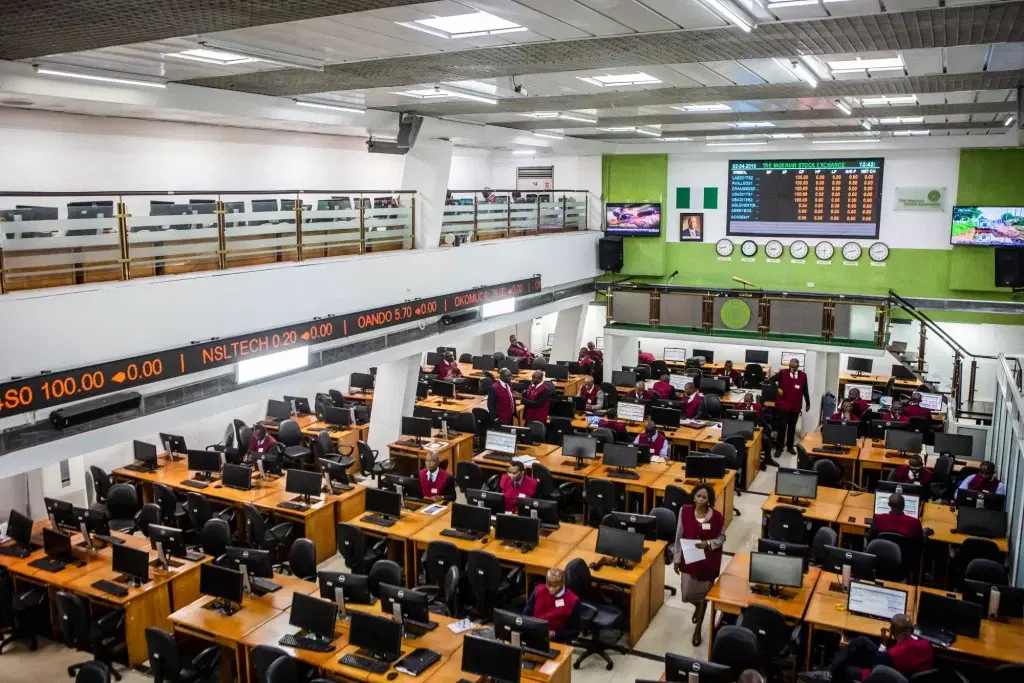
Twenty-four companies have emerged as the most valuable stocks on the Nigerian Exchange Limited (NGX) year-to-date (YtD) as of August 17, 2026, collectively accounting for 74.8 per cent of the total market capitalisation of the equities market.
nThe 24 companies, drawn largely from the banking, consumer goods, industrial goods and energy sectors, have a combined market capitalisation of N117.01 trillion, underscoring the high concentration of value among a relatively small number of companies on the NGX.
nThe market capitalisation of the NGX has risen by N57.141 trillion, or 57.5 per cent YtD, to N156.517 trillion from N99.376 trillion at the close of trading on December 31, 2025.
nThe sharp increase in market value reflects the strong rally recorded by several large-cap stocks, although analysts said the concentration of market value in a few companies also means that movements in these stocks could have a disproportionate impact on the overall market index.
nA review of the top-valued stocks showed Dangote Cement Plc overtaking MTN Nigeria Plc to emerge as the most capitalised company.
nThe 24 companies include nine banks, six consumer goods companies, three industrial goods companies, three energy companies, one consumer services company and one telecommunications company.
nThe companies are Dangote Cement Plc, MTN Nigeria Plc, BUA Foods Plc, BUA Cement Plc, Aradel Holdings Plc, First Holdco Plc, HBM Nigeria Plc, Zenith Bank Plc, GTCO Plc, Stanbic IBTC Holdings Plc, Transcorp Hotels Plc, Presco Plc, Nestle Nigeria Plc, Nigerian Breweries Plc, Geregu Power Plc, United Bank for Africa (UBA) Plc, International Breweries Plc, Transcorp Power Plc, Access Holdings Plc, Fidelity Bank Plc, Okomu Oil Palm Plc, Ecobank Transnational Incorporated and Wema Bank Plc.
nBanks dominate high-capitalised stocks
nAmong the banks, First Holdco led with a market capitalisation of N6.37 trillion, followed by Zenith Bank with N5.04 trillion and GTCO with N4.70 trillion.
nStanbic IBTC followed with N2.56 trillion, while UBA recorded N1.99 trillion. Access Holdings recorded N1.45 trillion, while Fidelity Bank had N1.38 trillion.
nEcobank Transnational Incorporated and Wema Bank recorded market capitalisations of N1.27 trillion and N1.16 trillion respectively.
nThe strong showing of the banks reflects the substantial repricing of banking stocks following the sector’s recapitalisation exercise and improved investor sentiment towards the financial sector.
nTop capitalised consumer goods coys
nIn the consumer goods segment, BUA Foods led with N13.69 trillion in market capitalisation.
nPresco followed with N2.40 trillion, while Nestle Nigeria recorded N2.22 trillion.
nNigerian Breweries and International Breweries ranked fourth and fifth with N2.10 trillion and N1.79 trillion respectively.
nThe performance of some consumer goods stocks has been supported by expectations of improved operating conditions, although high production costs, inflation and weak consumer purchasing power remain major concerns for the sector.
nTop capitalised industrial goods coys
nDangote Cement topped the industrial goods category with N17.15 trillion market capitalisation, followed by BUA Cement with N13.69 trillion and HBM Nigeria with N5.38 trillion.
nThe dominance of the industrial goods companies further illustrates the extent to which large-cap stocks are driving the expansion in the NGX’s overall market value.
nTop capitalised energy coys
nSeplat Energy led with N6.72 trillion, followed by Aradel Holdings, also recording N6.72 trillion.
nGeregu Power recorded N2.06 trillion, while Transcorp Power posted N1.65 trillion.
nAnalysts’ ratings
nBeyond market capitalisation, analysts have also maintained varying views on the investment prospects of 32 stocks among the 138 companies listed on the NGX.
nSeventeen stocks were rated Buy or Strong Buy, 12 were rated Sell or Strong Sell, while three received Neutral ratings.
nThe ratings are intended to guide investors based on analysts’ assessment of earnings prospects, valuation, business fundamentals and expected share-price performance.
nAmong the stocks rated Buy or Strong Buy are Aradel Holdings, Access Holdings, Dangote Cement, Dangote Sugar, FCMB, GTCO, Guinness Nigeria, HBM Nigeria, Honeywell Flour Mills, Nigerian Breweries, Nestle Nigeria, UACN, Transcorp Corporation, UBA, Zenith Bank and Cadbury Nigeria.
nStocks rated Sell or Strong Sell include BUA Cement, BUA Foods, Conoil, First Holdco, International Breweries, Julius Berger, Okomu Oil, Presco, PZ Cussons, Stanbic IBTC, TotalEnergies Marketing and Unilever Nigeria.
nFidelity Bank, Ecobank Transnational Incorporated and NASCON Allied Industries received Neutral ratings.
nMarket gainers YtD, August 17, 2026
nThe market’s strong YtD performance has been driven by remarkable gains across several sectors, particularly among mid- and small-cap stocks.
nZichis Agro Allied Industries led the gainers, surging 1,744.22 per cent to N18.35 per share.
nSCOA Nigeria followed with a 365.49 per cent gain to N33.05, while Infinity Trust Mortgage Bank appreciated by 221.43 per cent to N11.25.
nBerger Paints Nigeria gained 207.50 per cent to close at N147.60 per share, followed by Premier Paints rising by 204 per cent to N30.40 per share.
nOther major gainers included First Holdco, up 198.51 per cent to N140; Vitafoam Nigeria, which rose 153.04 per cent to N194; and HBM Nigeria, up 149.25 per cent to N334.00 per share.
nMarket losers amid market rally YtD
nDespite the broad market rally, some investors suffered significant losses as several stocks recorded sharp price declines.
nSovereign Trust Insurance emerged as the worst performer, losing 50.39 per cent to close at N1.89 per share.
nEllah Lakes followed with a 41.52 per cent decline to N8.10, while Guinea Insurance fell 43.37 per cent to N0.76.
nSUNU Assurances Nigeria declined 39.64 per cent to N3.32, while Austin Laz fell 39.06 per cent to N2.84.
nOther major losers included Royal Exchange, down 37.43 per cent; Triple Gee & Company, down 34.84 per cent; Champion Breweries, down 33.44 per cent; Universal Insurance, down 29.59 per cent; and Transcorp Power, which declined 28.45 per cent to close at N219.60 per share.
nBalance Sheet Asset size Q2’26
nThe ranking changes significantly when companies are assessed based on total assets rather than market capitalisation.
nEcobank Transnational Incorporated emerged as the company with the largest total assets in Q2’26, at N49.15 trillion, followed by First Holdco with N30.65 trillion.
nAradel Holdings ranked third with N10.88 trillion, while FCMB recorded N8.36 trillion and Oando N7.89 trillion.
nDangote Cement had total assets of N6.62 trillion, MTN Nigeria N5.97 trillion, Sterling Holdings N4.67 trillion, BUA Cement N1.92 trillion and BUA Foods N1.67 trillion.
nAnalysts, however, noted that a large asset base does not necessarily translate into profitability or strong shareholder returns, particularly where the assets are financed largely by liabilities.
nNegative equity raises concerns
nThe Q2’26 balance-sheet figures also show significant differences in the financial strength of companies.
nEcobank Transnational Incorporated had total equity of N3.17 trillion, while First Holdco recorded N3.63 trillion in equity.
nMTN Nigeria had positive equity of N930.61 billion, while Sterling Holdings recorded N547.67 billion.
nDangote Cement had positive equity of about N3.17 trillion, while Jaiz Bank and United Capital recorded positive equity of N93.6 billion and N187.09 billion respectively.
nHowever, Aradel Holdings recorded negative equity of N2.16 trillion, despite total assets of N10.88 trillion.
nOando also had negative equity of N530.45 billion against total assets of N7.89 trillion.
nAnalysts’ comments
nMarket analysts said the concentration of more than 70 per cent of market capitalisation in just 24 companies demonstrates the growing importance of large-cap stocks to the performance of the Nigerian equities market.
nAn analyst and Chief Executive Officer, Highcap Securities Limited, David Adonri, said the market rally should not be interpreted as a uniform improvement across all listed companies.
nHe said: “The 70.5 per cent concentration is significant because it shows that the headline market performance is being driven by a relatively small number of large companies. Investors, therefore need to look beyond the All-Share Index and examine individual stocks, earnings and valuations.”
nThe analyst noted that the divergence between market capitalisation, share-price performance and balance-sheet strength was particularly important.
n“Some companies have recorded extraordinary share-price appreciation without necessarily having the same level of improvement in fundamentals. That is why investors should be careful about chasing stocks simply because they have delivered high YtD returns,” Adonri said.
nOn the negative-equity companies, an analyst at InvestData Consulting Limited said investors should pay particular attention to capital structure, cash flows and the ability of the businesses to deleverage.
n“Negative shareholders’ equity is a red flag, although the circumstances differ from company to company. Investors should examine whether the negative position is temporary, whether there is a credible recapitalisation or restructuring plan, and whether the underlying business is generating sufficient cash to meet its obligations,” the analyst explained.
nAnother market analyst said the wide gap between the Buy and Sell recommendations showed that the market rally had created both opportunities and valuation risks.
n“The fact that 17 stocks are rated Buy or Strong Buy while 12 are rated Sell or Strong Sell tells you that the market is becoming more selective. A rising market does not mean every stock is cheap. Some companies may have already priced in future earnings growth, while others may still offer value,” the analyst said.
nThe analyst advised investors to focus on earnings growth, dividend prospects, debt levels, cash flow and return on equity.
n nRelated Stories
 General News
CELEBRATING TWO YEARS OF TRANSFORMATIONAL LEADERSHIP IN THE PRESIDENTIAL AMNESTY PROGRAMME
Tomorrow, 14TH March 2026, as we look forward to the second anniversary, we reflect on the remarkable two years since the Administrator of the Preside
 General News
PRESIDENTIAL AMNESTY PROGRAMME PHASE 3: DISREGARD PURPORTED STATEMENT ON DELAYED ITA PAYMENTS — OFFICE OF NATIONAL CHAIRMAN
The Office of the National Chairman of the Presidential Amnesty Programme Phase 3, General Elaye ThankGod Dollar Slaboh, has called on beneficiaries a
 General News
RE: CLARIFICATION ON MY PERSONAL RELATIONSHIPS
PUBLIC NOTICErnrnRE: CLARIFICATION ON MY PERSONAL RELATIONSHIPSrnrnIt has become necessary to make this public clarification following the increasing