
Hezbollah rejects deal with Israel, which expects ‘extended stay’ in Lebanon
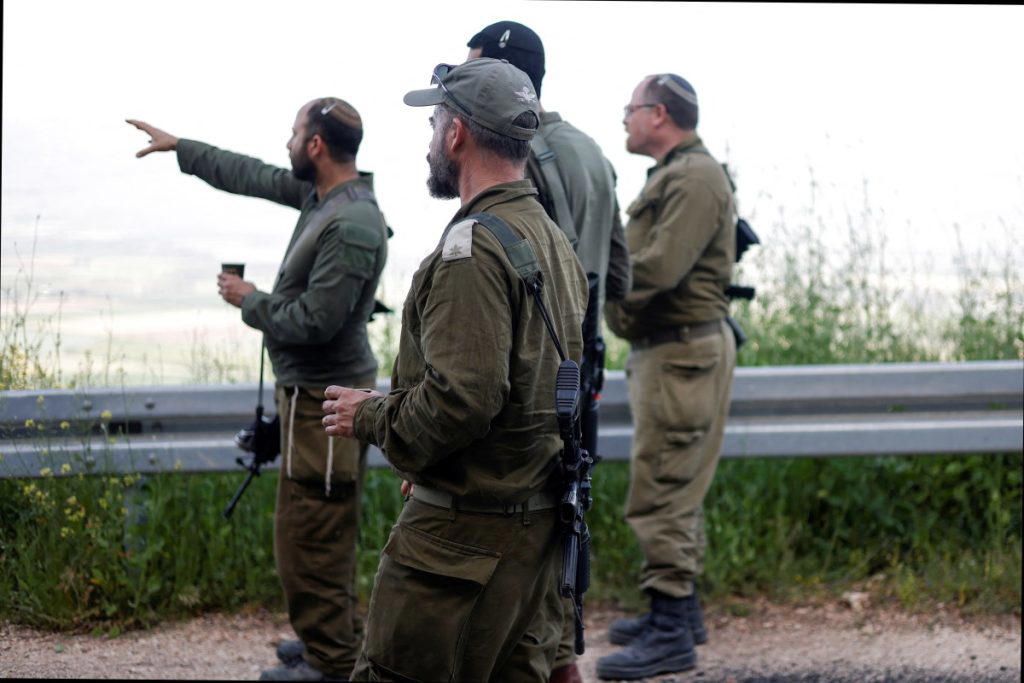
Israeli soldiers patrol along the Israel-Lebanon border on April 16, 2026. The US President announced that Israel and Lebanon have agreed to a 10-day ceasefire starting on Thursday, though there was no indication if Iran-backed Hezbollah was on board. (Photo by Jalaa MAREY / AFP) /
nIsraeli Prime Minister Benjamin Netanyahu on Saturday declared his country’s agreement with Lebanon “a blow to Iran and Hezbollah”, while the militant group’s leader Naim Qassem declared it void.
nThe agreement, which was signed in Washington on Friday after five rounds of talks and aims to pave the way to peace between the neighbours, includes plans to disarm Hezbollah.
nQassem called the agreement “humiliating, shameful, and a surrender of sovereignty” and warned that it could lead to the Israeli annexation of southern Lebanon.
n“This agreement is null and void, and the provisions of the Iranian-American memorandum of understanding must be implemented,” he said, referring to the deal between the two powers to end the broader Middle East war, which includes a ceasefire in Lebanon.
nWhile Qassem attacked the deal, Israeli Defence Minister Israel Katz insisted that the country’s troops would be able to stay in Lebanon so long as Hezbollah remained armed.
nHe said he had instructed Israeli troops “to prepare for an extended stay” in southern Lebanon and that “there will be no redeployment by Israel in southern Lebanon, no withdrawal, as long as the terrorist organisation Hezbollah is not disarmed throughout Lebanon”.
nHis prime minister, Netanyahu, reiterated that point in a televised briefing, saying that both the US and Lebanon “have recognised Israel’s right to maintain a security zone inside Lebanon for as long as it remains necessary to safeguard our security.”
nThe deal has drawn criticism from within Israel, with far-right Security Minister Itamar Ben Gvir on Saturday denouncing it and saying only Israeli forces were capable of disarming Hezbollah.
nLebanon was drawn into the regional war on March 2 when Tehran-backed Hezbollah fired rockets at Israel to avenge the killing of Iran’s supreme leader in US-Israeli strikes.
nIsrael responded with heavy airstrikes and an invasion of southern Lebanon, where its troops occupy swathes of territory and have been carrying out extensive demolitions of homes and other buildings.
nIran insists any deal to end the broader war must include Lebanon, while the Lebanese government has repeatedly tried to separate the negotiating tracks.
nKatz on Saturday said Israel would use “great force” against Iran if it “tries to attack Israel to prevent the implementation of the agreement” with Lebanon.
n– ‘Humiliating and shameful’ –
nHezbollah supporters took to the streets of Beirut on Friday night to protest the framework.
nIn western Beirut’s Hamra street, 48-year-old Ahmad Shamas told AFP on Saturday that “the agreement reached is a humiliating and shameful one”.
nAnother local, Husam Beiruiti, 43, wasn’t ready to write the agreement off, and said he saw no other solution.
n“I don’t think it will stop the Israeli aggression… Let’s wait and see what this agreement achieves,” he added.
nOn Saturday evening, the military vowed to maintain public order, saying it would “not allow any breach of security or threat to civil peace”.
nHezbollah has opposed the direct negotiations between Lebanon and Israel, which have been ongoing since April.
nAn April 17 ceasefire failed to stop the fighting, but the violence has decreased since the US and Iran reached their memorandum of understanding last week.
nThe Israeli military said on Saturday that it had targeted “suspected terrorists” who posed a threat to its soldiers in southern Lebanon, and Lebanese state media reported strikes in the south.
nThe health ministry later reported at least one person killed and two wounded.
nAccording to the text of the deal shared by the US State Department, Lebanon and Israel, officially at war for decades, expressed their intent to “conclusively end the conflict, address its underlying causes, and to therewith formally conclude any state of war between them”.
nThe agreement sets up a process during which Lebanon’s military is due to “restore effective sovereign authority over all Lebanese territory, pending the verified disarmament of non-state armed groups”.
n nRelated Stories
 General News
CELEBRATING TWO YEARS OF TRANSFORMATIONAL LEADERSHIP IN THE PRESIDENTIAL AMNESTY PROGRAMME
Tomorrow, 14TH March 2026, as we look forward to the second anniversary, we reflect on the remarkable two years since the Administrator of the Preside
 General News
PRESIDENTIAL AMNESTY PROGRAMME PHASE 3: DISREGARD PURPORTED STATEMENT ON DELAYED ITA PAYMENTS — OFFICE OF NATIONAL CHAIRMAN
The Office of the National Chairman of the Presidential Amnesty Programme Phase 3, General Elaye ThankGod Dollar Slaboh, has called on beneficiaries a
 General News
RE: CLARIFICATION ON MY PERSONAL RELATIONSHIPS
PUBLIC NOTICErnrnRE: CLARIFICATION ON MY PERSONAL RELATIONSHIPSrnrnIt has become necessary to make this public clarification following the increasing