
Heated 2027 Discussion Escalates: Farotimi Claims Nigeria Fails to Hold Genuine Polls
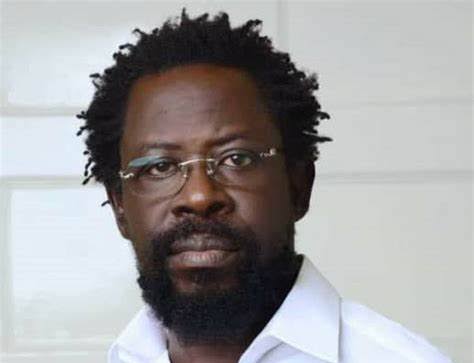
National Organising Secretary of Afenifere, Barrister Dele Farotimi, has made a startling allegation, claiming that Nigeria's electoral system is fundamentally flawed and does not conduct genuine elections, leaving citizens with limited power to determine their leaders.
nFarotimi's remarks come at a time when concerns about the credibility of Nigeria's electoral system are escalating, particularly with the 2027 Nigerian general election on the horizon, and speakers at a recent Christian political forum are urging citizens to unite around shared national concerns to effect meaningful change.
nFarotimi's comments were made during a Christian Consultative Assembly organised by the Christian Social Movement of Nigeria (CSMN) via Zoom, where he spoke alongside Pastor Bosun Emmanuel, Executive Secretary of CSMN, and Luka Binniyat, spokesman of the Middle Belt Forum.
nIn his address, Farotimi delivered a blunt assessment of Nigeria's political and electoral system, stating that the country's elections are mere "hollow rituals" that pretend to be legitimate, and that citizens are being misled into believing they have a genuine say in the outcome.
nFarotimi warned that discussing political options is futile if the system itself does not allow citizens to truly determine the outcome, emphasizing that citizens are not genuinely empowered to make choices in the current system.
nHe asserted that the concept of citizenship is distorted in Nigeria, where citizens are not treated equally under the law, and that the country's governance is rooted in a flawed foundational idea that has shaped its political landscape.
nFarotimi attributed Nigeria's political difficulties to a bad idea founded on feudalism and religion, which has resulted in ineffective governance, including a National Assembly that is "resoundingly ineffective" and elections where votes are not counted, citing the 2023 election as an example.
nDespite his scathing criticism, Farotimi believes that peaceful change is still possible if citizens organise and participate strategically, emphasizing the importance of the electoral process, albeit a flawed one.
nHe advised citizens to organise themselves around ideas, rather than personalities or purposes, highlighting the commonalities between different groups, such as the desire for good education and security, which transcend religious affiliations.
nFarotimi also pointed to low voter turnout as a significant factor that facilitates manipulation, citing the fact that only 20 million out of 90 million registered voters cast their ballots in the last election, and that organisation is key to defeating this trend.
nLuka Binniyat, speaking from the perspective of the Middle Belt, noted that religion has historically played a significant role in shaping politics globally, and that communities in the Middle Belt have fought for political autonomy within the former Northern Region.
nBinniyat suggested that alliances between regions, particularly the Middle Belt and the South, could be a decisive factor in future elections, and that a president who prioritises the interests of all citizens is essential for the country's progress.
nParticipants at the forum posed questions about unity within the Christian community and how religious groups can contribute to addressing Nigeria's political challenges, prompting Farotimi to respond that Nigerians share common struggles and can work together if they organise around shared ideas.
nFarotimi cautioned that this endeavour will not be easy, but emphasised that it is not a reason to abandon the effort, and that meaningful change can occur if citizens are willing to work together.
nPastor Bosun Emmanuel explained that the Christian Social Movement of Nigeria was established in 2000 to encourage Christians to participate more actively in governance and public affairs, with a focus on mobilising Christians around social and political issues.
nEmmanuel stated that the Christian Social Movement of Nigeria is committed to helping build a new mindset and organising the Christian community to effect meaningful change, highlighting the importance of collective action in addressing the country's challenges.
Related Stories
 General News
CELEBRATING TWO YEARS OF TRANSFORMATIONAL LEADERSHIP IN THE PRESIDENTIAL AMNESTY PROGRAMME
Tomorrow, 14TH March 2026, as we look forward to the second anniversary, we reflect on the remarkable two years since the Administrator of the Preside
 General News
PRESIDENTIAL AMNESTY PROGRAMME PHASE 3: DISREGARD PURPORTED STATEMENT ON DELAYED ITA PAYMENTS — OFFICE OF NATIONAL CHAIRMAN
The Office of the National Chairman of the Presidential Amnesty Programme Phase 3, General Elaye ThankGod Dollar Slaboh, has called on beneficiaries a
 General News
RE: CLARIFICATION ON MY PERSONAL RELATIONSHIPS
PUBLIC NOTICErnrnRE: CLARIFICATION ON MY PERSONAL RELATIONSHIPSrnrnIt has become necessary to make this public clarification following the increasing