
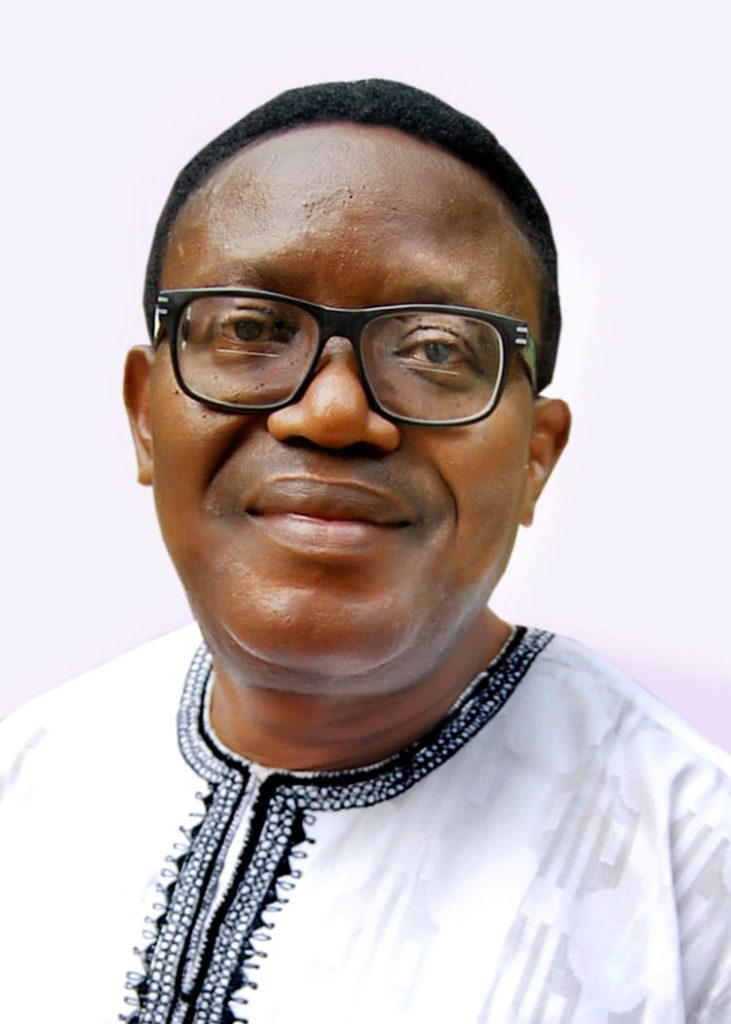
In the realm of institutional finance, a long-standing principle holds that capital is inherently cautious, eschewing emotional decisions and fleeing at the slightest hint of instability or regulatory uncertainty, as noted by Kunle Odusola-Stevenson.
The recent meeting between Alhaji Aliko Dangote, President of the Dangote Group, and Lucky Orimisan Aiyedatiwa, Executive Governor of Ondo State, has sparked strategic optimism across West Africa, with the announcement of a concrete timeline for the development of a power-driven industrial hub within the Olokola Free Trade Zone (OKFTZ) in the fourth quarter of 2026.
This development is a significant economic achievement, representing a historic opportunity for the coastline with Nigeria's longest stretch of contiguous Atlantic shoreline, and is set to be a major milestone for the region.
However, a concerning trend is emerging, as pundits and commentators are rapidly inflating the significance of this breakthrough with unsustainable hyperbole, which, if left unchecked, could sabotage the project before it even begins.
To ensure the Olokola vision becomes a reality, it is essential to separate factual information from speculative fiction, and to focus on the actual details of the project rather than getting caught up in media inflation.
A key issue in current media discourse is the flawed historical conflation of the $19 billion mega-refinery and LNG terminal, with many pundits claiming that Dangote is "returning to revive" this project in Ondo State, which is factually incorrect, as the $19 billion refinery at Lekki is fully operational and will not be replicated in Olokola.
The actual 2026 commitment from the Dangote Group is a pragmatic, infrastructure-led intervention designed to address the energy deficits that have historically hindered African manufacturing, with a blueprint outlining a power-driven industrial layout equipped with captive electricity, industrial water infrastructure, and a connection to the East-West gas corridor pipeline.
This commercial model offers a turnkey environment allowing third-party factories, FMCG producers, and agro-allied processors to plug in and produce immediately, providing a significant opportunity for economic growth and development in the region.
Claims that a "20 per cent equity stake for the state" has been finalized are premature, as Alhaji Dangote has formally invited the state government to nominate a representative to the board to ensure cooperation, but the financial and asset frameworks are still being negotiated.
Ondo State must prioritize funding and securing this stake, as paying for this asset is the only way to guarantee a permanent, voting seat at the table and ensure that the people of Ondo remain co-architects of this industrial rebirth rather than mere spectators.
While media hype may seem like harmless political marketing to some, it poses a significant risk factor to international financiers, venture capitalists, and multilateral institutions, as global capital demands data integrity and is deterred by distorted corporate realities.
When local commentary distorts corporate realities, it triggers three severe economic complications: artificial asset bubbles, premature labor and entitlement militancy, and political project poisoning, all of which can have serious consequences for the project's success.
Artificial asset bubbles are created when fictional mega-project announcements trigger aggressive land speculation, making project expansion prohibitively expensive and legally messy, and often forcing serious investors to withdraw quietly.
Premature labor and entitlement militancy arise when fabricated metrics create unrealistic local expectations, leading to community resentment and avoidable security risks when actual construction begins with highly specialized engineering requirements.
Political project poisoning occurs when an economic asset is over-hyped to score short-term points for an incumbent administration, risking being viewed by successive administrations or opposing factions as a mere propaganda vehicle, leading to future bureaucratic foot-dragging or systemic cancellation.
Moving forward, Ondo State does not need to exaggerate its economic wins, as the natural geography of the Olokola coastline speaks powerfully for itself, with its deep draft and strategic position as a logistical hinge between the Atlantic and the Nigerian hinterland.
Resolving the industrial power bottleneck in that corridor is a revolutionary milestone on its own, and the business community must approach the emerging OKFTZ as a premier destination for light manufacturing and agro-processing, driven by guaranteed energy access.
The political community and local leadership, supported by stakeholder groups like the Ilaje Development Summit Group (IDSG), must shift focus away from premature celebrations and toward executing structural readiness, with immediate tasks including maintaining absolute peace and security along the Ilaje coastline.
Harmonizing land access seamlessly through the Ondo State Development and Investment Promotion Agency (ONDIPA) and investing aggressively in technical vocational training are also essential, so that local youths possess the actual, certifiable capacity required when contractors mobilize in Q4 2026.
Great economies are built on balance sheets, capital commitments, and brick-and-mortar execution, never on hyperbole, and if we truly want to see the phoenix of Olokola rise permanently from its ashes, we must learn to speak about it—and invest in it—with the discipline, sobriety, and precision that high finance demands.

Comments
Please login to leave a comment.
No comments yet. Be the first to share your thoughts!