
Government slashes duty on second-hand cars to 5%, sets 10% for brand-new ones, Adeniyi reveals
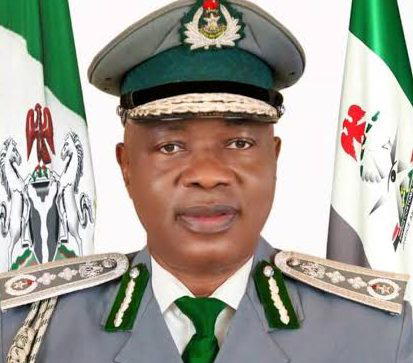
The Comptroller-General of the Nigeria Customs Service, Adewale Adeniyi, announced that the federal government has slashed import tariffs on used vehicles from 15 per cent to five per cent and on brand-new vehicles from 20 per cent to 10 per cent.
nAdeniyi made this revelation when he appeared before the House of Representatives Committee on Customs and Excise to defend the service’s 2026 budget proposal, stating that the revised excise tariffs on vehicles are outlined in the 2026 fiscal policy measures.
nAccording to Adeniyi, while the new policy is expected to boost revenue generation, the reduction in vehicle tariffs may have a negative impact on collections, as the service anticipates that the decrease in tariffs could lead to lower revenue.
nHe explained that the new excise tariff, as provided in the 2026 fiscal policy, aims to increase revenue collection, but the significant reduction in tariffs on vehicles and levies on vehicles may have the opposite effect.
nAdeniyi specified that the tariffs on used vehicles have been reduced from 15 percent to five percent, and for brand-new vehicles, the tariffs have been reduced from 20 percent to 10 percent, which may negatively affect revenue.
nAlex Mascot, a lawmaker from Abia, questioned whether the reduction in tariffs would be sufficient to discourage importers from routing cargo through neighbouring countries, citing the example of importers moving goods to Cotonou.
nResponding to Mascot's query, Adeniyi stated that the policy implementation began in May, aiming to address the concerns of importers and discourage them from using neighbouring countries.
nLeke Abejide, chairman of the committee, described the tariff review as a relief for Nigerians, commending the federal government for taking this step and urging the public to appreciate the effort.
nAbejide praised President Bola Ahmed Tinubu for implementing the policy, saying that it is a positive development that will benefit the public, and that the government deserves commendation for this move.
nThe comptroller-general reported that the service generated N7.258 trillion in revenue between January and December 2025, exceeding its approved revenue target by a significant margin.
nAccording to Adeniyi, the performance represented a positive variance of N1.153 trillion, or 18.89 percent, above the approved target for the year, despite several factors that constrained revenue generation.
nHe cited factors such as the suspension of excise duty on telecommunications services, the continued suspension of the proposed green tax introduced in 2023, and government fiscal policies promoting local production of healthcare products, which reduced import duty and VAT collections on medical imports.
nAdeniyi also mentioned the presidential initiative on compressed natural gas and electric vehicles, which reduced revenue from imports, as well as the high volume of imports covered by import duty exemption certificates, IDEC, VAT orders, and schedule II of the common external tariff, CET.
nHe added that imports worth N34.538 trillion qualified for revenue concessions in 2025, comprising 56.40 percent petroleum products, 40.52 percent military imports, and 3.08 percent IDEC and other items.
nGlobal trade disruptions arising from the Russia-Ukraine war also affected imports, particularly wheat shipments from the region, according to Adeniyi.
nThe Customs boss announced that the NCS has a revenue target of N11.074 trillion for the 2026 fiscal year, which comprises N5.542 trillion for the federation, N1.491 trillion for non-federation revenue, N2.773 trillion from import VAT, and N1.266 trillion from free-on-board, FOB, collections.
nTo achieve this target, Adeniyi said the service will deploy several strategies, including the full implementation of the unified customs information system, UCIS, also known as B’Odogwu, to automate customs processes and improve revenue collection.
nOther measures include strengthening post-clearance audits and real-time systems audits to improve compliance, expanding the authorised economic operator, AEO, and advance rulings programmes to facilitate trade, and deploying geospatial technology and joint border patrols to combat smuggling.
nAdeniyi also stated that the new excise tariff regime under the 2026 fiscal policy, the planned reintroduction of the green tax, and other fiscal measures are expected to support revenue generation, despite uncertainties in global trade arising from tensions involving the United States, Israel, and Iran.
nFor the 2026 fiscal year, Adeniyi proposed an expenditure budget of N1.235 trillion, to be funded by N949.86 billion from the four percent FOB allocation, N55.47 billion from its two percent VAT share, and N230.04 billion for ongoing capital projects.
nThe proposed expenditure will cover N421.70 billion for personnel costs, N307.77 billion for overheads, and N565.93 billion for capital projects, according to Adeniyi.
Related Stories
 General News
CELEBRATING TWO YEARS OF TRANSFORMATIONAL LEADERSHIP IN THE PRESIDENTIAL AMNESTY PROGRAMME
Tomorrow, 14TH March 2026, as we look forward to the second anniversary, we reflect on the remarkable two years since the Administrator of the Preside
 General News
PRESIDENTIAL AMNESTY PROGRAMME PHASE 3: DISREGARD PURPORTED STATEMENT ON DELAYED ITA PAYMENTS — OFFICE OF NATIONAL CHAIRMAN
The Office of the National Chairman of the Presidential Amnesty Programme Phase 3, General Elaye ThankGod Dollar Slaboh, has called on beneficiaries a
 General News
RE: CLARIFICATION ON MY PERSONAL RELATIONSHIPS
PUBLIC NOTICErnrnRE: CLARIFICATION ON MY PERSONAL RELATIONSHIPSrnrnIt has become necessary to make this public clarification following the increasing