
Government pledges to defeat kidnappers, secure release of abducted students in Oyo, Borno
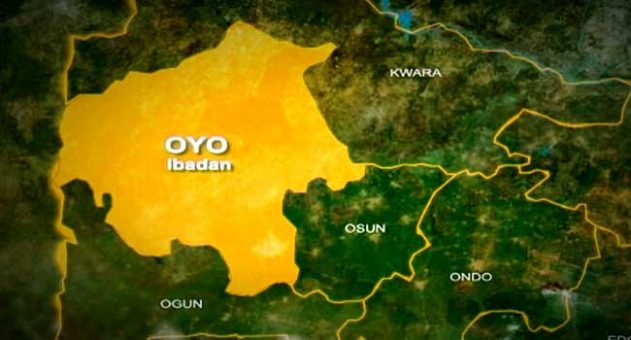
The Federal Government has launched a renewed offensive against terrorism and kidnapping, with a commitment to rescue abducted schoolchildren and teachers in Oyo and Borno states, and no effort will be spared in this endeavor.
nPresident Bola Tinubu had earlier ordered the deployment of a specialised rescue team and approved the recruitment of 1,000 forest guards to strengthen security in vulnerable communities, in response to the recent abductions.
nFormer Vice President Atiku Abubakar, the presidential candidate of the African Democratic Congress, has challenged the Tinubu administration to overhaul Nigeria’s counter-terrorism framework, warning that terrorists are continuously refining their tactics while the government appears incapable of doing the same.
nMinister of Information and National Orientation, Mohammed Idris, stated that the recent abductions of schoolchildren and teachers constitute a direct assault on Nigeria’s future and will be met with the full force of the state, during a special national security briefing tagged #UniteAgainstTerror in Abuja.
nIdris delivered President Tinubu’s message to Nigerians, saying "No child belongs in captivity" and assured distraught families that the safe return of every abducted child and teacher remains the top priority of the Federal Government.
nThe minister revealed that all security and intelligence agencies have been mobilised to secure the freedom of the abducted individuals and bring perpetrators to justice, and that the President has directed that every lawful instrument available to the Nigerian state be deployed towards achieving this objective.
nA specialised rescue team has already been activated, and additional security personnel will be deployed through the recruitment of forest guards, while intelligence gathering, aerial surveillance, community engagement, and coordinated search-and-rescue operations are ongoing in both Oyo and Borno states.
nThe administration’s security strategy goes beyond military force, according to Idris, and is an intelligence-driven approach backed by a comprehensive overhaul of Nigeria’s security architecture, including plans to institutionalise state policing.
nPresident Tinubu is determined to leave behind a modern policing system capable of responding effectively to local security challenges, and since the administration came into office in May 2023, hundreds of terrorists, bandits, and criminal elements have been neutralised, arrested, or compelled to surrender.
nNumerous kidnap victims have been rescued nationwide, and recent military victories in the North-East include the repelling of multiple terrorist incursions along the Kirawa-Pulka and Ngoshe corridors in Borno State, killing over 50 insurgents, including key commanders.
nApproximately 1,000 terrorists, among them several top leaders, were eliminated in the first quarter of 2026 alone, and a joint Nigeria-United States-supported operation conducted in May disrupted terrorist logistics networks and eliminated key Islamic State – West Africa Province, ISWAP, commanders.
nThe operation also rescued 92 civilians from captivity near Buratai, and intensified military pressure on bandits and kidnapping syndicates operating across Zamfara, Sokoto, Katsina, Kaduna, Niger, Kogi, and Kwara states has led to the destruction of criminal camps and the arrest of numerous suspects.
nSecurity agencies have sustained operations against separatist-linked violence, cult groups, oil thieves, and economic saboteurs in the South-East and South-South, and enhanced maritime security has boosted crude oil production by about 400,000 barrels per day since Tinubu assumed office.
nOn the judicial front, significant gains have been made in terrorism prosecutions, with the Federal High Court in Abuja sentencing four terrorists to death for their roles in the 2022 attack on St. Francis Catholic Church in Owo, Ondo State.
nNigeria is currently undertaking one of the largest terrorism prosecution exercises in its history, with over 500 terrorism suspects facing trial, and 508 terrorism-related cases have already been prosecuted, resulting in 386 convictions.
nThe government is strengthening international security partnerships, particularly with the United States, in areas such as intelligence sharing, counter-terrorism operations, military training, border security, and cybersecurity.
nIdris praised the cooperation between the Federal Government and state governments, citing close coordination with Oyo State Governor, Seyi Makinde, and Borno State authorities in ongoing rescue operations.
nAcknowledging the progress made, Idris stressed that military operations alone cannot end insecurity, and that sustainable peace will ultimately depend on economic growth, infrastructure development, and improved opportunities for citizens.
nThe minister linked the administration’s security agenda to the broader Renewed Hope Agenda, which includes road construction, rail expansion, housing projects, energy infrastructure, and healthcare investments aimed at tackling the root causes of instability.
nIdris challenged Nigerians and the media to play active roles in the fight against terrorism, warning against sensational reporting that could inadvertently advance terrorists’ objectives.
nHe urged media organisations to verify information rigorously and report responsibly, saying "Terrorists thrive on fear, division, misinformation, and public despair," and that their objective is not only to kidnap or kill but also to weaken national unity and undermine confidence in institutions.
nCalling for national solidarity under the #UniteAgainstTerror campaign, Idris said terrorism knows no tribe, religion, or political affiliation and should be treated as a common enemy of all Nigerians.
nAtiku, in a statement, said the disturbing spread of terrorism, banditry, and kidnapping from the North to other parts of the country is proof that the current security architecture is failing to evolve as rapidly as the threats it was designed to defeat.
nAtiku argued that Nigeria’s counterterrorism efforts have for too long depended on centrally designed and largely imported frameworks that pay insufficient attention to hard-earned lessons from communities that have directly borne the scars of terrorist violence.
nHe called on the Federal Government to immediately initiate a comprehensive review of the National Counter-terrorism Policy, insisting that such a review must be rooted in Nigeria’s experiences rather than foreign templates.
nAtiku proposed the establishment of a Terrorism Violence Peer Review Mechanism, a structured platform that would bring together communities, local leaders, security personnel, and other stakeholders to share experiences and document lessons.
nHe also proposed the creation of specialised Counter-terrorism Fusion Centres in each of the country’s six geopolitical zones, where intelligence from various agencies could be pooled, analysed, and acted upon in real-time.
nAtiku stressed the need for massive investment in intelligence gathering, surveillance technology, aerial monitoring systems, communication interception capabilities, and data-driven threat analysis, and that communities must be made active partners in national security.
nHe called for stronger border security, arguing that Nigeria’s porous borders have become conduits for the movement of terrorists, arms traffickers, and transnational criminal networks.
nAtiku urged the government to invest in education, youth employment, rural development, and targeted rehabilitation in vulnerable communities, as terrorism thrives where poverty, unemployment, illiteracy, and state neglect have left citizens feeling abandoned.
nHe proposed the creation of a National Victims and Survivors Support Framework to provide psychosocial support, educational opportunities, rehabilitation assistance, and economic recovery programmes to communities devastated by terrorist attacks.
nAtiku criticised the Tinubu administration for maintaining an opaque approach to the financing of counterterrorism operations, arguing that despite trillions of naira budgeted for defence and security, Nigerians are less secure today than they were a decade ago.
nHe called on the Federal Government to immediately constitute a high-level technical committee to review and update the National Counterterrorism Policy and establish the proposed Terrorism Violence Peer Review Mechanism within the shortest possible time.
Related Stories
 General News
CELEBRATING TWO YEARS OF TRANSFORMATIONAL LEADERSHIP IN THE PRESIDENTIAL AMNESTY PROGRAMME
Tomorrow, 14TH March 2026, as we look forward to the second anniversary, we reflect on the remarkable two years since the Administrator of the Preside
 General News
PRESIDENTIAL AMNESTY PROGRAMME PHASE 3: DISREGARD PURPORTED STATEMENT ON DELAYED ITA PAYMENTS — OFFICE OF NATIONAL CHAIRMAN
The Office of the National Chairman of the Presidential Amnesty Programme Phase 3, General Elaye ThankGod Dollar Slaboh, has called on beneficiaries a
 General News
RE: CLARIFICATION ON MY PERSONAL RELATIONSHIPS
PUBLIC NOTICErnrnRE: CLARIFICATION ON MY PERSONAL RELATIONSHIPSrnrnIt has become necessary to make this public clarification following the increasing