
Government aims to slash imports by $500 million through establishment of fresh palm oil plantations
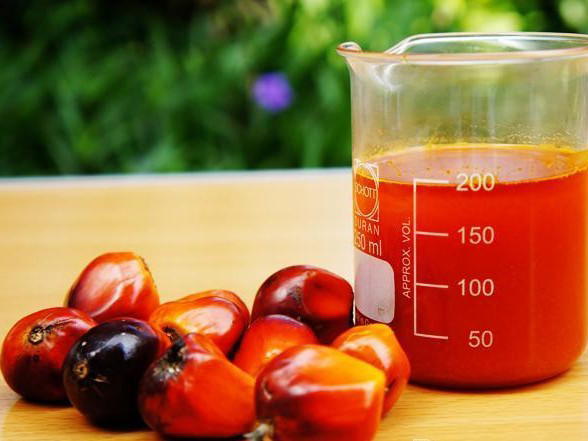
File image.
nBy Efe Onodjae
nThe Federal Government has unveiled a coordinated plan to revive Nigeria’s palm oil industry, aiming to cut import bills by up to $500 million annually through a public-private investment model built on large-scale estates and downstream processing.
nThe initiative, driven by the Federal Ministry of Agriculture and Food Security in collaboration with Mass Industrial Development and Logistics Limited and other stakeholders, is designed to bridge the nation’s supply gap, stimulate agro-industrial expansion and create jobs across the value chain.
nMinister of Agriculture and Food Security, Abubakar Kyari, represented by his Senior Technical Assistant, Ibrahim Alkali, said the programme would operate strictly as a Public-Private Partnership (PPP), with government providing policy, regulatory and institutional support without resorting to public borrowing.
nKyari disclosed that Nigeria currently produces about 1.4 million metric tonnes of palm oil annually, far below national demand estimated at over 2.5 million metric tonnes, leaving a deficit exceeding one million tonnes.
nAccording to him, the shortfall fuels annual imports valued between $500 million and $600 million.
nHe stressed that the new initiative is structured to reverse the trend and reposition the sector as a major driver of economic growth.
n“Nigeria must take deliberate steps to move from intention to implementation,” he said.
nUnder the plan, phase one will see the establishment of seven integrated oil palm estates, each spanning 10,000 hectares across participating states.
nThe estates are expected to integrate cultivation with modern milling and refining facilities, storage systems, logistics infrastructure, and residential communities capable of supporting over 2,000 families per location.
nPhase two will focus on downstream processing and manufacturing of palm-based products, with emphasis on value addition and export competitiveness.
nFinancial projections presented at a stakeholders’ meeting indicate internal rates of return ranging from 18 to 25 per cent, with investment payback periods projected at between five and seven years, driven by strong domestic demand and access to regional markets.
nKyari further noted that Nigeria has over three million hectares suitable for oil palm cultivation, much of which remains underutilised, while existing plantations are hampered by ageing trees and limited access to improved inputs.
nHe called on state governments to facilitate land access, enabling policies, infrastructure development and community engagement, noting that increased investments would boost internally generated revenue and improve rural livelihoods.
nIn his remarks, Permanent Secretary in the ministry, Marcus Olaniyi Ogunbiyi, represented by Director of Farm Input Support Services, Abba Waziri, said the initiative followed the ministry’s validation of the National Oil Palm Development Strategy after extensive stakeholder consultations.
nHe also commended the Managing Director of Mass Industrial Development and Logistics Limited, Emmanuel Obiorah Anyaralu, for spearheading the joint development framework.
nAnyaralu expressed confidence that the programme would transform Nigeria’s palm oil ecosystem, raise farmers’ incomes and strengthen the country’s competitiveness in both domestic and export markets.
n nRelated Stories
 General News
CELEBRATING TWO YEARS OF TRANSFORMATIONAL LEADERSHIP IN THE PRESIDENTIAL AMNESTY PROGRAMME
Tomorrow, 14TH March 2026, as we look forward to the second anniversary, we reflect on the remarkable two years since the Administrator of the Preside
 General News
PRESIDENTIAL AMNESTY PROGRAMME PHASE 3: DISREGARD PURPORTED STATEMENT ON DELAYED ITA PAYMENTS — OFFICE OF NATIONAL CHAIRMAN
The Office of the National Chairman of the Presidential Amnesty Programme Phase 3, General Elaye ThankGod Dollar Slaboh, has called on beneficiaries a
 General News
RE: CLARIFICATION ON MY PERSONAL RELATIONSHIPS
PUBLIC NOTICErnrnRE: CLARIFICATION ON MY PERSONAL RELATIONSHIPSrnrnIt has become necessary to make this public clarification following the increasing