
Global anti-terror action: US cracks down on Lagos-based ISIS financier, BDC operator
***Bureaux de Change operator listed with address in Agege, Lagos State, and Kano, linked directly to ISIS-West AfricalAction taken under US Executive Order 13224, targeting networks operating in France, Turkiye, Syria and Nigeria
nBy Nkiruka Nnorom, with agency reports
nLAGOS — The United States has sanctioned a Lagos-based ISIS financier,, Mukhtar Adamu Muhammad, 35, and three bureaux de change linked to him for allegedly moving funds for the group, as part of a sweeping action targeting ISIS financial networks across Europe, the Middle East and West Africa.
nThe action, taken under Executive Order 13224, targets a network operating in France, Turkiye, Syria and Nigeria that Washington said helped fund ISIS attacks, supported its affiliates, and threatened civilians, including religious minorities.
nMuhammad, also known as Adamu Mukhtar and Muhammad Mukhtar, was listed with address in Agege, Lagos State, and linked directly to ISIS-West Africa.
nThe latest action brought the number of Nigerians already targeted and sanctioned by the US over terrorism financing to 10 since 2022 when the US State Department initiated its most prominent sanction on Nigerian nationals.
nAccording to the Department of State’s Office of Foreign Assets Control, in an updated sanctions list, the Nigeria-based facilitator served as conduit for ISIS financing, using his bureaux de change in Lagos and Kano states.
nThe Department listed the bureaux de change to include Generation Currency Bureau De Change Limited, and Nine to Nine Exchange Bureau De Change Limited, both based in Lagos State and Kano-based Manhattan Bureau De Change Limited.
nAccording to the statement, the network also included a France-based facilitator who provided explosives information to ISIS supporters, and a Syria-based operator who used cryptocurrency to transfer funds for ISIS associates in multiple countries, including the US.
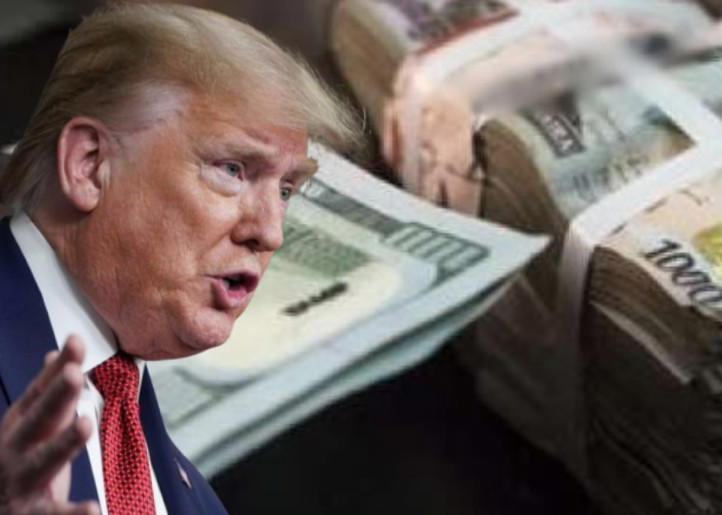
n“Under the leadership of President Trump, the United States is dismantling ISIS’s ability to finance terrorism around the world.
n“We are cutting off the financial lifelines that enable ISIS to fund attacks, support its regional affiliates, and threaten civilians, including religious minorities.
n“These actions reflect the United States’ unrelenting pressure on ISIS, which continues to decentralise its operations and rely on financial intermediaries to connect its global network,” said spokesperson Thomas Pigott.
nThe US also reaffirmed its partnership with Nigeria, noting Abuja’s role in the May 16, 2026, operation that killed Abu-Bilal al-Minuki, the number two official in ISIS.
nWashington assured it will continue to use “every diplomatic and legal tool available” to hold ISIS and its supporters accountable, and reaffirmed its commitment to protecting religious minorities and working with partners to eliminate the threat.
n“We will continue to use every diplomatic and legal tool available to hold ISIS and its supporters accountable wherever they operate and however they move money.
n“We remain fully committed to protecting American lives, defending religious minorities, and working with international partners to eliminate the threat that ISIS poses to global peace and security,” the Department said.
nAll individuals and entities have been added to the Office of Foreign Assets Control’s, OFAC, Specially Designated Nationals list under Executive Order 13224.
nThe designation blocks their US assets and prohibits transactions with Americans.
nUS terrorism sanctions on Nigerians and Nigeria-linked networks
nIt will be recalled that the United States has repeatedly used terrorism sanctions to target Nigerians and Nigeria-based networks financing Boko Haram and ISIS-West Africa.
nBoko Haram, for instance, was designated a Foreign Terrorist Organization and Specially Designated Global Terrorist by the State Department in November 2013, giving OFAC authority to sanction its financiers and facilitators.
nOne of the most prominent actions came in March 2022, when OFAC sanctioned six Nigerians for raising funds in the United Arab Emirates to support Boko Haram.
nThe Treasury Department said Abdurrahman Ado Musa, Salihu Yusuf Adamu, Bashir Ali Yusuf, Muhammed Ibrahim Isa, Ibrahim Ali Alhassan and Surajo Abubakar Muhammad operated a Boko Haram cell in the UAE and were convicted there in September 2021 for attempting to transfer $782,000 to insurgents in Nigeria.
nThe designations followed joint action with Emirati authorities.
nIn a most recent action, OFAC in February 2026, expanded its list to include eight Nigerians over alleged links to Boko Haram, ISIS, and cybercrime.
nAmong them was Salih Yusuf Adamu, one of the six convicted in the UAE for the 2022 fund raising plot.
nOthers included Babestan Oluwole Ademulero and Abu Musab Al-Barnawi, a former Boko Haram commander. The designations froze any US-based assets and barred US persons from transactions with them.
nThe US has consistently described these sanctions as part of efforts to disrupt ISIS and its affiliates’ decentralised financing.
nWashington said the groups rely on financial intermediaries and money exchange businesses to move funds across borders.
nThe February 2026 update was contained in a 3,000-page SDN List update, which OFAC described as a reference tool to help the public comply with sanctions programmes.
nUnited States lawmakers introduced the “Nigeria Religious Freedom and Accountability Act of 2026” (H.R. 7457) and House Resolution 860, recommending that the Miyetti Allah Cattle Breeders Association of Nigeria, MACBAN, Miyetti Allah Kautal Hore, and specific Fulani-ethnic militias be sanctioned as Entities of Particular Concern, EPC, over alleged religious freedom violations and face Global Magnitsky sanctions, which imposes economic penalties and visa bans targeting foreign individuals and entities responsible for serious human rights abuses or significant corruption worldwide.
nMACBAN has, however, rejected the allegations linking it to terrorism, banditry, kidnapping, or cattle rustling.
nISIS was first designated as a Specially Designated Global Terrorist Organisation in October 2004 and a Foreign Terrorist Organisation later that year.
nGlobal focus on cutting ISIS finances
nThe US has made dismantling ISIS’s financial networks a core pillar of its counterterrorism strategy since 2014.
nAfter ISIS seized territory in Iraq and Syria, Treasury and State Department designations targeted oil smuggling, extortion, kidnapping ransoms, and external donor networks. The goal was to isolate ISIS affiliates by making it harder to move, store and use money across borders.
nMost of these actions are taken under Executive Order 13224, originally issued after 9/11 and amended to broaden the scope.
nIt allows OFAC to block assets and prohibit US transactions with individuals and entities that provide material support to terrorist groups.
nThe order is used against ISIS, Al-Qaeda, Boko Haram, and their regional affiliates, including ISIS-West Africa.
nIn recent years, the US has expanded designations to include money service businesses, bureaux de change, and crypto operators accused of acting as conduits for ISIS.
nU.S Treasury said ISIS increasingly relies on decentralised financial intermediaries and hawala (informal) networks to move small amounts across borders.
nWashington often coordinates these designations with allies to increase impact. The March 2022 sanctions on six Nigerians for Boko Haram financing followed arrests and prosecutions in the UAE in September 2021.
nAccording to OFAC, multilateral action makes it harder for networks to shift funds through the international financial system.
nThe U.S under President Donlad Trump has described these actions as part of “unrelenting pressure” on ISIS as it decentralises and relies more on regional affiliates.
n nRelated Stories
 General News
CELEBRATING TWO YEARS OF TRANSFORMATIONAL LEADERSHIP IN THE PRESIDENTIAL AMNESTY PROGRAMME
Tomorrow, 14TH March 2026, as we look forward to the second anniversary, we reflect on the remarkable two years since the Administrator of the Preside
 General News
PRESIDENTIAL AMNESTY PROGRAMME PHASE 3: DISREGARD PURPORTED STATEMENT ON DELAYED ITA PAYMENTS — OFFICE OF NATIONAL CHAIRMAN
The Office of the National Chairman of the Presidential Amnesty Programme Phase 3, General Elaye ThankGod Dollar Slaboh, has called on beneficiaries a
 General News
RE: CLARIFICATION ON MY PERSONAL RELATIONSHIPS
PUBLIC NOTICErnrnRE: CLARIFICATION ON MY PERSONAL RELATIONSHIPSrnrnIt has become necessary to make this public clarification following the increasing