
Fuel price rose to N1,288.54 per litre last month, according to NBS.
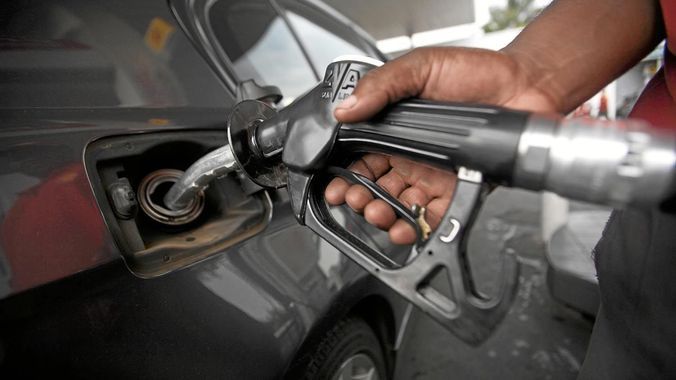
The average retail price of a litre of petrol rose from N1,051.47 in February to N1,288.54 in March, according to the National Bureau of Statistics (NBS).
nThis increase is outlined in the NBS's Premium Motor Spirit (Petrol) Price Watch for March, which was released in Abuja on Tuesday.
nThe March price of N1,288.54 represents a 22.55 per cent increase over the price of N1,051.47 recorded in February, indicating a significant surge in petrol prices.
nOn a year-on-year basis, the average retail price of petrol increased from N1,261.65 in March 2025 to N1,288.54 in March 2026, marking a 2.13 per cent increase.
nAnambra paid the highest average retail price of N1,441.22 per litre, followed closely by Sokoto at N1,377.55 and Borno at N1,375.16, according to the state profiles analysis.
nIn contrast, Lagos paid the lowest average retail price of N1,162.71, followed by Ogun at N1,169.78 and Kaduna State at N1,193.40.
nBy zone, the North-East recorded the highest average retail price in March at N1,336.50, while the South-West recorded the lowest at N1,232.46.
nThe NBS also reported that the average retail price of diesel increased by 16.05 per cent on a month-on-month basis, rising from N1,420.17 per litre in February to N1,648.08 per litre in March.
nThis increase is detailed in the NBS's Diesel Price Watch Report for March, which further notes that the price increased by 3.05 per cent on a year-on-year basis from N1,599.30 per litre in March 2025 to N1,648.08 in March 2026.
nEbonyi recorded the highest average price of diesel in March at N2,262.29 per litre, followed by Akwa Ibom at N1,895.72 and Osun at N1,872.15, according to the state profiles analysis.
nConversely, the lowest price was recorded in Kogi at N1,383.40 per litre, followed by Katsina State at N1,438.25 and Enugu at N1,480.06.
nZonal analysis revealed that the South-East had the highest price at N1,730.14 per litre, while the North-Central Zone recorded the lowest price at N1,593.11 per litre.
nExperts attribute the increase in petrol and diesel prices on a month-on-month basis to geopolitical tensions in the Middle East, which have disrupted supply chains and driven up Brent crude oil prices.
nMr Opeyemi Alabi, an economist, noted that the US-Iran war and the closure of the Strait of Hormuz have disrupted global energy supply, leading to rising fuel and diesel prices in Nigeria.
nPetrol is now selling for as much as N1,600 in some parts of the country, while diesel has exceeded N2,000 per litre, driving up transportation costs and straining individuals and businesses.
nAccording to Mr Alabi, if this trend persists, it will inevitably lead to higher inflation across Nigeria.
Related Stories
 General News
CELEBRATING TWO YEARS OF TRANSFORMATIONAL LEADERSHIP IN THE PRESIDENTIAL AMNESTY PROGRAMME
Tomorrow, 14TH March 2026, as we look forward to the second anniversary, we reflect on the remarkable two years since the Administrator of the Preside
 General News
PRESIDENTIAL AMNESTY PROGRAMME PHASE 3: DISREGARD PURPORTED STATEMENT ON DELAYED ITA PAYMENTS — OFFICE OF NATIONAL CHAIRMAN
The Office of the National Chairman of the Presidential Amnesty Programme Phase 3, General Elaye ThankGod Dollar Slaboh, has called on beneficiaries a
 General News
RE: CLARIFICATION ON MY PERSONAL RELATIONSHIPS
PUBLIC NOTICErnrnRE: CLARIFICATION ON MY PERSONAL RELATIONSHIPSrnrnIt has become necessary to make this public clarification following the increasing