
Fuel Price Increase: "My wages can't cover daily gasoline costs": FCT commuters ditch personal vehicles for buses and trains
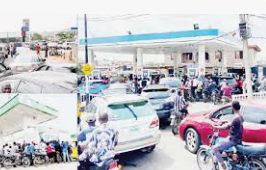
Many car owners in the Federal Capital Territory (FCT) have resorted to using public transportation due to the recent increase in petrol prices, as the rising cost of fuel continues to deepen economic hardship across Abuja.
nThe News Agency of Nigeria (NAN) reports that low-income earners are also being forced to walk long distances to work, as transport fares become increasingly unaffordable.
nObservations along major routes, including the Kubwa Expressway and the Suleja–Mandalla axis, showed significantly reduced vehicular movement on weekdays. Roads that previously experienced heavy traffic are now noticeably less congested, as many private vehicle owners can no longer afford daily fuel costs.
nA public servant, Sholape Kolawole, said she had stopped using her personal vehicle due to the high cost of petrol.
n“It has been stressful using commercial vehicles, but I have no choice. My salary is not enough to buy fuel every day,” she said, adding that she now relies on public transport despite its rising cost.
nAnother resident, Mr James Obasi, said the fuel situation had disrupted small transport businesses, with some operators unable to work for weeks due to high operating costs.
nSimilarly, Mr Emmanuel Ajayi said he had been unable to fuel his car for months, noting that the daily stress of moving between public transport vehicles was affecting his wellbeing.
nHe called on the government to urgently address the situation and provide lasting relief for citizens.
nA development expert, Dr Aliyu Ilias, described the hardship as severe, noting that many Nigerians are now forced to stay home several days a week because they cannot afford transportation.
nHe argued that despite Nigeria being an oil-producing country, citizens are not benefiting from rising global crude oil revenues, and urged the government to channel part of its earnings into stabilising fuel prices.
nHe also suggested supplying crude oil to local refineries at subsidised rates to reduce the cost of refined petroleum products.
nMeanwhile, the National Coordinator of the Human Rights Writers Association of Nigeria (HURIWA), Emmanuel Onwubikor, described the fuel price increase as an “economic ambush” on Nigerians.
nHe warned that many small businesses—including barbing salons, workshops, transport operators, and petty traders—risk collapse due to rising operational costs.
nOnwubikor called for immediate government intervention, urging the administration to introduce price stabilisation measures and strengthen regulatory oversight to prevent further hardship.
nHe also warned that continued increases could worsen unemployment and deepen insecurity across the country.
n nRelated Stories
 General News
CELEBRATING TWO YEARS OF TRANSFORMATIONAL LEADERSHIP IN THE PRESIDENTIAL AMNESTY PROGRAMME
Tomorrow, 14TH March 2026, as we look forward to the second anniversary, we reflect on the remarkable two years since the Administrator of the Preside
 General News
PRESIDENTIAL AMNESTY PROGRAMME PHASE 3: DISREGARD PURPORTED STATEMENT ON DELAYED ITA PAYMENTS — OFFICE OF NATIONAL CHAIRMAN
The Office of the National Chairman of the Presidential Amnesty Programme Phase 3, General Elaye ThankGod Dollar Slaboh, has called on beneficiaries a
 General News
RE: CLARIFICATION ON MY PERSONAL RELATIONSHIPS
PUBLIC NOTICErnrnRE: CLARIFICATION ON MY PERSONAL RELATIONSHIPSrnrnIt has become necessary to make this public clarification following the increasing