
Fuel Marketers Disregard Regulatory Guidelines, Hike JET-A1 Price to N2,230 Per Litre
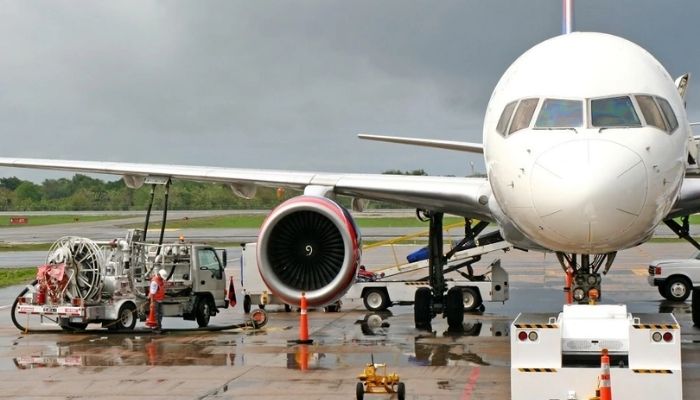
Nigerian oil marketers continue to sell aviation fuel, also known as Jet A1, to airlines at N2,230 per litre and above, despite the Nigerian Midstream and Downstream Petroleum Regulatory Authority's pricing advisory of N1,760 to N1,988 per litre in Lagos and about N2,037 per litre in Abuja.
nThe regulator's guidance was based on prevailing market fundamentals, following a series of stakeholder engagements involving aviation operators, oil marketers, depot owners, and other industry players, aimed at resolving recent disputes over pricing.
nMarket checks revealed that actual transactions remain significantly above the regulator's benchmark, with airlines still paying as high as N2,230 per litre, due to strong demand for Jet A1 and the activities of intermediaries seeking to maximise margins.
nIndustry sources indicated that the supply chain, often involving multiple middlemen between depot and end-users, continues to exert upward pressure on final prices, resulting in elevated prices.
nThe Dangote Petroleum Refinery currently has commercial stock of aviation fuel, with a gantry price of about N1,800 per litre, but intermediaries lifting the product and supplying to airlines are marking up prices significantly, pushing them far above the regulator's recommended range.
nThe lingering pricing gap underscores ongoing inefficiencies in distribution and raises questions about the effectiveness of regulatory guidance in a largely market-driven downstream sector, with industry stakeholders warning that unless supply bottlenecks and arbitrage opportunities within the distribution chain are addressed, airlines might continue to face high operating costs.
nOlatide Jeremiah, Chief Executive Officer of Petroleumprice.ng, stated that there is a lack of transparency in jet fuel pricing, and Dangote Refinery should publish its daily jet fuel gantry prices to erode abnormal margins by middlemen and help save artificial hike of Jet fuel that is about to cripple businesses in Nigeria's aviation sector.
nChibuike Uloka, spokesperson for United Nigeria Airlines, lamented that the situation had significantly increased operational costs, saying for an airline like Ibom Air, which requires about N7.6 million per flight operation, the cost burden is even higher, depending on aircraft type and route structure, with some operators spending double of Ibom Air's figure.
nUloka explained that the market is not controlled, and the NMDPRA cannot fix prices, but rather provides a suggested price based on market value, market force, and other factors, while marketers continue to sell at their own prices, with nobody able to call them to order.
nManaging Director/ Chief Executive Officer of Aero Contractors, Capt Ado Sanusi, called for a transparent pricing system, saying no one should take advantage of airlines due to challenges and uncertainties in the global market, and advocated for knowing the price at which Dangote sells fuel and the landing price for imported fuel.
nSanusi emphasized the need for a benchmark for pricing, without fixing prices, to prevent airlines from being taken advantage of, and to ensure a transparent pricing system.
nIndustry think-tank, Aviation Round Table Initiative, ASRTI, has proposed an urgent bailout of domestic airlines, saying the surge in Jet-A1 prices could cripple operators and result in severe consequences for the aviation sector, with prices climbing from about N900 per litre in February to between N3,000 and N3,300 by mid-April 2026.
nPresident of ASRTI, Air Commodore Ademola Onitiju, and General Secretary Olumide Ohunayo, outlined urgent measures to stabilise the sector in a letter to President Bola Tinubu, Minister of Aviation and Aerospace Development Festus Keyamo, and other officials, proposing a corrective, time-bound Jet-A1 refund mechanism.
nThe stakeholders called for the federal government to contract six months of fuel supply at negotiated parity prices to cover the hardship period between February and April 2026, and extend the arrangement for an additional four months while global markets stabilised, as well as a narrowly targeted emergency stabilisation package for airlines.
nThe proposed package includes short-term, low-interest bridge loans and working-capital guarantees to cover immediate cash-flow shortfalls and essential operational costs, with funds tied to strict milestones, such as safety compliance, payroll continuity, and uninterrupted essential services.
nThe letter emphasized the need for transparency and accountability, with a neutral reconciliation vehicle to process payments, advances, and concessions, and an independent auditor to certify outcomes at the end of the relief window, ensuring that no entity receiving support compromises safety, maintenance, training, or regulatory compliance.
nThe stakeholders also proposed structural reforms, including a comprehensive overhaul of the aviation charging ecosystem, with a top global advisory firm to audit airport charges, passenger levies, navigation fees, parking, and ground-handling tariffs, and other provider charges.
nA National Energy Price Protection Program, NEPPP, was also proposed, with rules-based frameworks, including a volatility buffer fund, mandatory price transparency across the supply chain, and a logistics-cost rationalisation audit, to prevent future crises.
Related Stories
 General News
CELEBRATING TWO YEARS OF TRANSFORMATIONAL LEADERSHIP IN THE PRESIDENTIAL AMNESTY PROGRAMME
Tomorrow, 14TH March 2026, as we look forward to the second anniversary, we reflect on the remarkable two years since the Administrator of the Preside
 General News
PRESIDENTIAL AMNESTY PROGRAMME PHASE 3: DISREGARD PURPORTED STATEMENT ON DELAYED ITA PAYMENTS — OFFICE OF NATIONAL CHAIRMAN
The Office of the National Chairman of the Presidential Amnesty Programme Phase 3, General Elaye ThankGod Dollar Slaboh, has called on beneficiaries a
 General News
RE: CLARIFICATION ON MY PERSONAL RELATIONSHIPS
PUBLIC NOTICErnrnRE: CLARIFICATION ON MY PERSONAL RELATIONSHIPSrnrnIt has become necessary to make this public clarification following the increasing