
Former Leader Shagari Urges Constitutional Protections to Prevent Misuse of Power by State Authorities
By Musa Ubandawaki
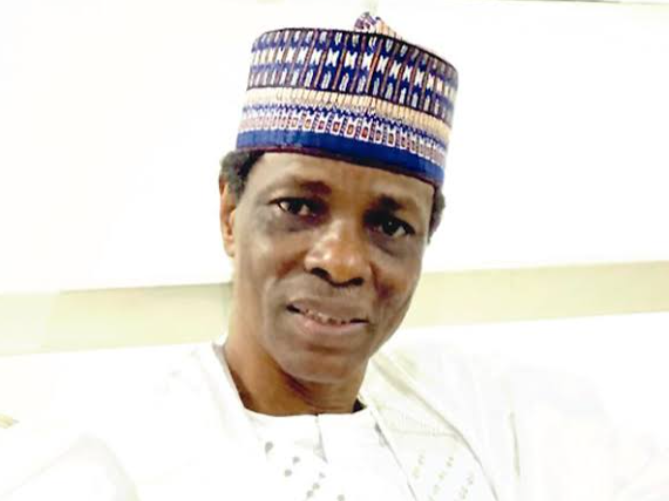
nFormer Deputy Governor of Sokoto State and former Minister of Water Resources, Alhaji Muktari Shagari, in this interview argues that Nigeria can no longer delay the creation of state police.
nHe speaks on why the country urgently needs decentralized policing, how funding should be structured, the safeguards required to prevent abuse, and the role state police could play in tackling banditry, kidnapping and other violent crimes across the federation among others.
nThere appears to be growing momentum in the National Assembly towards establishing state police. Beyond granting states policing powers, what critical safeguards must be included in the legislation to ensure success?
nThere has never been a more appropriate time in Nigeria’s history to establish state police than now. Across the country, insecurity has become a major concern despite the efforts of the Federal Government and the security agencies.
nThe reality is that our existing security institutions are overstretched. Banditry, kidnapping and other criminal activities have spread beyond the North-West and North-East to other regions of the country.
nI strongly believe state police has become imperative. Members of the National Assembly must recognise their responsibility to enact laws that protect Nigerians. The proposed legislation must ensure professionalism, accountability and effective collaboration with federal security agencies. Above all, it must allow states to recruit personnel from local communities who understand the terrain, culture and security dynamics of their areas.
nOne of the major concerns is that governors could misuse state police for political purposes. How do you respond to such fears?
nThe bigger question is whether we should continue allowing Nigerians to be kidnapped, killed and terrorised while we focus on fears about what might happen in the future. Any governor who uses state police to intimidate political opponents would be acting outside constitutional provisions and democratic norms. Nigerians are politically conscious and would resist such abuse.
nWe cannot allow hypothetical concerns to delay a critical security reform. The priority now should be protecting lives and property. Safeguards can be built into the law to prevent misuse, but the establishment of state police should not be delayed.
nCritics argue that many states already struggle to meet financial obligations. Can governors realistically fund state police?
nFunding challenges are real, but they are not insurmountable. Security must be treated as the highest priority of government.
nStates already receive security votes and allocate resources for security-related activities. We must rethink how those resources are utilised. If governments can fund other programmes, they can certainly prioritize security.
nThe protection of citizens should come before every other consideration.
nShould state police funding come solely from state governments or should there be federal support?
nThere must be a funding arrangement that guarantees sustainability and transparency.
nWhile security votes can contribute, they may not be sufficient to cover all operational costs. Therefore, there should be synergy between the Federal Government and state governments.
nMy position is that funding mechanisms should include allocations directly linked to the Federation Account, ensuring that personnel salaries and operational requirements are adequately covered.
nMany criminal groups possess sophisticated military grade weapons. How can state police effectively confront such threats?
nSeveral state governments are already supporting security operations by procuring equipment for the military and conventional police formations.
nAt the same time, authorities must intensify efforts to identify and dismantle the networks supplying weapons to criminal groups. The Federal Government must take decisive action against those responsible for arms trafficking.
nAnother important advantage of state police is their ability to identify informants within local communities. Because officers will be recruited from the areas they serve, they are more likely to understand local dynamics and expose collaborators aiding criminal elements.
nPublic trust in law enforcement remains a challenge. Why would state police be different from existing policing structures?
nThe answer lies in recruitment, training and accountability. State police must recruit qualified and educated personnel. Officers should be properly trained to understand that their duty is to protect citizens, not harass them.
nThe law should contain clear disciplinary provisions for misconduct. There must also be public sensitisation programmes to foster mutual understanding between communities and security personnel.
nIf citizens and law enforcement officers work together, trust can be built. Community based policing has worked in the past because officers knew the people they served and communities saw them as partners rather than outsiders.
nWhat measures should be taken to prevent the politicisation of state police?
nGovernors and political leaders must recognize that public institutions outlive individual administrations.
nThe legal framework must guarantee operational independence, professionalism and accountability. State police should be equipped and supported to perform their constitutional responsibilities, not serve as political instruments. Any attempt to politicise the institution would undermine its effectiveness and create unnecessary tensions.
nSome analysts argue that state police alone cannot solve Nigeria’s security crisis. Do you agree?
nAbsolutely. State police should not be viewed as a replacement for the military, the police, intelligence agencies or other security institutions.
nRather, it should serve as a complementary structure. Effective security depends on cooperation, intelligence sharing and coordination among all agencies.
nThe military, police, intelligence services, vigilantes and community based security groups must work together. State police will strengthen this network by providing local knowledge and rapid response capabilities.
nThe key is synergy. When all security stakeholders collaborate effectively, Nigeria will be in a much stronger position to confront insecurity.
nWhat message would you like to send to lawmakers currently considering the state police bill?
nMy message is simple: Nigerians are looking to the National Assembly for action.
nThe security situation demands urgent and bold reforms. Lawmakers should rise above partisan interests and pass legislation that strengthens security and protects citizens.
nState police is not a luxury; it is becoming a necessity. The time for debate is gradually giving way to the time for action. Nigeria cannot afford further delays.
n nRelated Stories
 General News
CELEBRATING TWO YEARS OF TRANSFORMATIONAL LEADERSHIP IN THE PRESIDENTIAL AMNESTY PROGRAMME
Tomorrow, 14TH March 2026, as we look forward to the second anniversary, we reflect on the remarkable two years since the Administrator of the Preside
 General News
PRESIDENTIAL AMNESTY PROGRAMME PHASE 3: DISREGARD PURPORTED STATEMENT ON DELAYED ITA PAYMENTS — OFFICE OF NATIONAL CHAIRMAN
The Office of the National Chairman of the Presidential Amnesty Programme Phase 3, General Elaye ThankGod Dollar Slaboh, has called on beneficiaries a
 General News
RE: CLARIFICATION ON MY PERSONAL RELATIONSHIPS
PUBLIC NOTICErnrnRE: CLARIFICATION ON MY PERSONAL RELATIONSHIPSrnrnIt has become necessary to make this public clarification following the increasing