
Former defence chief says state police is off the table, now the hurdle is making it functional
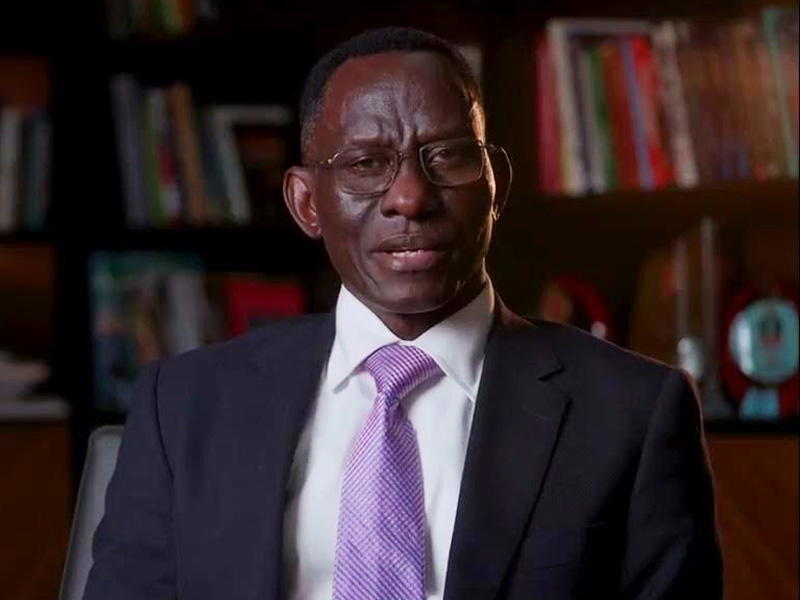
Former Chief of Defence Staff, General Lucky Irabor, stated on Thursday that the discussion on state police should shift from whether Nigeria needs it to how it can be implemented, emphasizing the need for a professional and trusted policing system that avoids the shortcomings of the federal model.
nAccording to Irabor, the priority is no longer whether state police should exist, but rather how to get the structure right, as the real challenge lies in building a force that responds quickly to security threats without compromising professionalism, accountability, or public confidence.
nSpeaking at the ARISE News Town Hall on State Police in Abuja, Irabor addressed concerns raised by former House of Representatives member Nnenna Ukeje, who warned that state police could become a modern version of the defunct Native Authority Police or evolve into private armies in official uniforms.
nThe moderator's question about alternative options if Nigeria rejects state police, despite the existing policing system being overstretched, prompted Irabor to respond that the challenge is no longer whether state police should exist, but how to create an effective, professional, and trusted law enforcement institution.
nIrabor argued that much of the public debate is based on a misconception, as state police is less about recruiting local people and more about where operational authority should reside, noting that police formations already exist across the country, from states to local government areas and even villages.
nThe difference between the existing federal police system and a state police structure, according to Irabor, lies in command and control, determining where operational authority should reside to enable faster, more effective, and locally suited responses to security challenges.
nIrabor cautioned against reducing the concept of state police to recruiting people from local communities, pointing out that the Nigeria Police Force, like the Armed Forces, already recruits personnel from local government areas across the country.
nHe warned against assuming that decentralisation alone would solve Nigeria's policing problems, stating that a stronger security architecture depends on having more capable institutions, and that unless underlying problems are addressed, the same weaknesses may be replicated in any new state police structure.
nIrabor called for a thorough review of the federal police system, including logistics, equipment, operational procedures, training, and organisational structure, to inform the design of any future state police arrangement.
nHe emphasized the need for strong institutional safeguards, including common training standards, uniform operational guidelines, and dedicated training institutions, to ensure that officers across the country meet the same professional standards in a decentralised policing system.
nIrabor stressed that proper training institutions, standardised training curricula, uniform operational guidelines, and common equipment standards are necessary to prevent inconsistency across the federation, where each state could develop its own practices and standards.
nRecruitment, according to Irabor, must be transparent and carefully managed, with fair representation from every local government area, while ensuring that criminal elements do not infiltrate the ranks, prompting questions about who is being recruited, what standards govern recruitment, and how to prevent criminal infiltration.
nIrabor believed that Nigeria should have adopted state police many years ago, but welcomed the fact that the country is now having a serious conversation about the issue, and that the success of any new policing system will ultimately be measured by the confidence officers inspire among the people they are meant to protect.
nHe noted that the goal is not to have highly visible officers on the streets who inspire little public confidence, but rather to have a system where officers earn the trust of the people, as there are times when the presence of someone in uniform raises questions about the seriousness of law enforcement efforts.
Related Stories
 General News
CELEBRATING TWO YEARS OF TRANSFORMATIONAL LEADERSHIP IN THE PRESIDENTIAL AMNESTY PROGRAMME
Tomorrow, 14TH March 2026, as we look forward to the second anniversary, we reflect on the remarkable two years since the Administrator of the Preside
 General News
PRESIDENTIAL AMNESTY PROGRAMME PHASE 3: DISREGARD PURPORTED STATEMENT ON DELAYED ITA PAYMENTS — OFFICE OF NATIONAL CHAIRMAN
The Office of the National Chairman of the Presidential Amnesty Programme Phase 3, General Elaye ThankGod Dollar Slaboh, has called on beneficiaries a
 General News
RE: CLARIFICATION ON MY PERSONAL RELATIONSHIPS
PUBLIC NOTICErnrnRE: CLARIFICATION ON MY PERSONAL RELATIONSHIPSrnrnIt has become necessary to make this public clarification following the increasing