
Firms pull staff from Dubai's business hub amid Iranian warnings
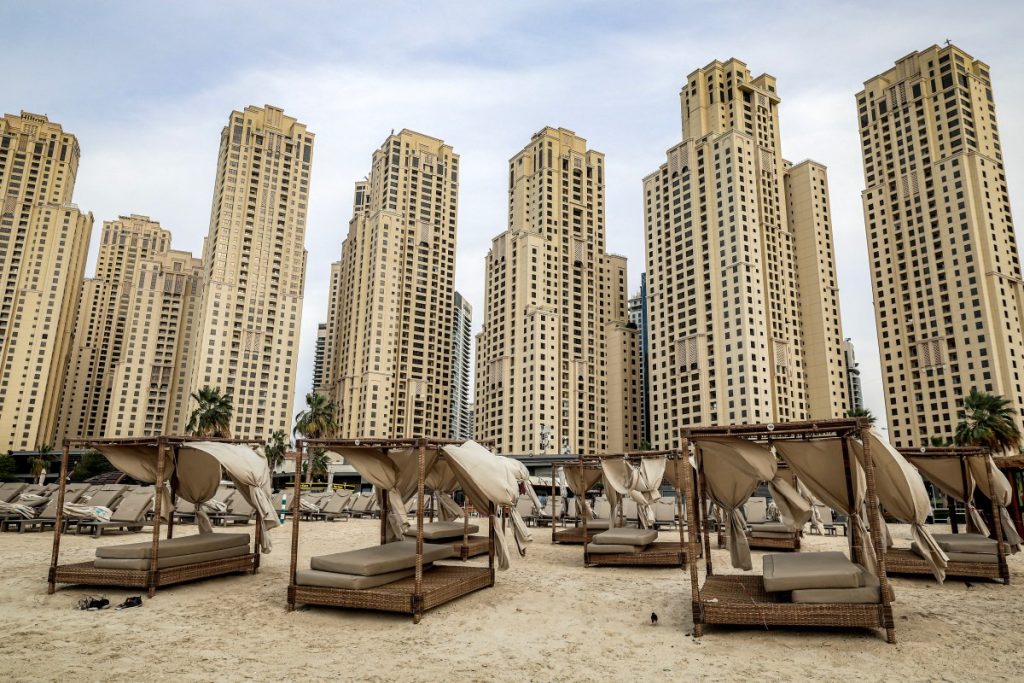
On March 11, 2026, the usually bustling Jumeirah Beach Residence in Dubai stood eerily empty, with high-rise buildings looming in the background, as tensions escalated in the region. Iran declared its readiness for a prolonged war of attrition that would have far-reaching consequences for the global economy, following its attack on two commercial ships and threat to target vessels from the US and its allies.
nMajor companies, including US group Citi, Deloitte, and PwC, took swift action, closing offices or evacuating employees in Dubai, in response to Iran's threat to US and Israel-linked economic assets in the Middle East. The evacuations were a precautionary measure, as the Gulf, particularly the UAE, bore the brunt of Iran's attacks, which were a retaliation to US-Israeli strikes.
nThe threat of attack by Iran's military on US and Israeli economic targets, including banks, prompted the evacuations, with employees at Citi's offices in the Dubai International Financial Centre and Oud Metha being asked to leave, according to a source familiar with the matter. British consulting group PwC also took precautionary measures, closing its offices in Saudi Arabia, Qatar, the UAE, and Kuwait for the remainder of the week.
nDeloitte, another British consultancy, instructed its staff to vacate their offices in the Dubai International Financial Centre on Wednesday afternoon, as a safety measure, a source with knowledge of the situation revealed. Employees at two other companies in the Dubai International Financial Centre also reported that their offices had been evacuated as a precautionary measure.
nIran's central operational command, Khatam Al-Anbiya, issued a statement, saying that it had been given the green light to target economic centers and banks belonging to the US and "the Zionist regime", and warned people to stay at least one kilometer away from banks. The command's statement was a clear indication of Iran's intentions to escalate the situation.
nTehran's attacks on US assets in the Gulf have also targeted civilian infrastructure, including airports, ports, hotels, and landmarks, causing widespread disruption. The attacks have had a significant impact on the region's economy, with shipping in the Strait of Hormuz being severely affected.
nOn Wednesday, drones were involved in incidents near Dubai airport, resulting in injuries to four people, while attacks on three ships in or near the Strait of Hormuz were also reported. The Strait of Hormuz is a critical waterway, with nearly 20 percent of global oil production passing through it, and the attacks have led to significant fluctuations in oil prices.
nThe Dubai Media Office reported that two drones fell near Dubai International Airport, causing minor injuries to two Ghanaian nationals and one Bangladeshi national, and moderate injuries to one Indian national, but air traffic continued to operate as normal. The incident was a stark reminder of the dangers posed by the ongoing conflict.
nUAE presidential advisor Anwar Gargash strongly condemned Iran's actions, saying that the country was "lying" when it claimed to be targeting US bases in the Gulf, and criticized the attacks on civilian infrastructure, which he said showed "no regard for civilians and innocent people". Gargash's comments reflected the UAE's strong stance against Iran's aggression.
nAn Indian worker at a cargo terminal near Dubai airport reported seeing a drone flying low and crashing into a building, causing a loud explosion, and another drone gliding past in a similar manner, highlighting the dangers posed by these unmanned aerial vehicles. The worker's account was a vivid description of the chaos caused by the drones.
nA container ship and a bulk carrier were hit by unknown projectiles off the coast of the UAE, with one incident occurring off Dubai and the other off the northern Emirate of Ras Al Khaimah, according to the United Kingdom Maritime Trade Operations. The attacks on these ships were a clear indication of the risks faced by vessels in the region.
nA projectile also hit a third ship off the coast of Oman, in the Strait of Hormuz, causing a fire that was later extinguished, the UKMTO reported, while drones struck fuel tanks at Oman's Salalah port, leading to the suspension of the port's operations. The attacks on these ships and ports highlighted the vulnerability of the region's maritime infrastructure.
nSaudi Arabia reported intercepting seven ballistic missiles targeting its eastern region and the Prince Sultan Air Base, as the conflict continued to escalate. The country's air defenses were able to prevent any damage or casualties from the missile attack.
nIn recent days, Saudi Aramco's Ras Tanura facility, one of the largest refineries in the Middle East, and the UAE's Ruwais refinery, one of the largest in the world, were targeted, highlighting the risks faced by the region's critical infrastructure. The attacks on these facilities were a stark reminder of the dangers posed by the ongoing conflict.
Related Stories
 General News
CELEBRATING TWO YEARS OF TRANSFORMATIONAL LEADERSHIP IN THE PRESIDENTIAL AMNESTY PROGRAMME
Tomorrow, 14TH March 2026, as we look forward to the second anniversary, we reflect on the remarkable two years since the Administrator of the Preside
 General News
PRESIDENTIAL AMNESTY PROGRAMME PHASE 3: DISREGARD PURPORTED STATEMENT ON DELAYED ITA PAYMENTS — OFFICE OF NATIONAL CHAIRMAN
The Office of the National Chairman of the Presidential Amnesty Programme Phase 3, General Elaye ThankGod Dollar Slaboh, has called on beneficiaries a
 General News
RE: CLARIFICATION ON MY PERSONAL RELATIONSHIPS
PUBLIC NOTICErnrnRE: CLARIFICATION ON MY PERSONAL RELATIONSHIPSrnrnIt has become necessary to make this public clarification following the increasing