
FG, AfDB, other stakeholders seek private sector investments in urban sanitation
By Gabriel Ewepu
nABUJA – THE Federal Government, Africa Development Bank, AfDB, and other stakeholders, Tuesday, pushed for private sector investment to unlock private sector investments to improve urban sanitation and expand access to safe water across Nigeria.
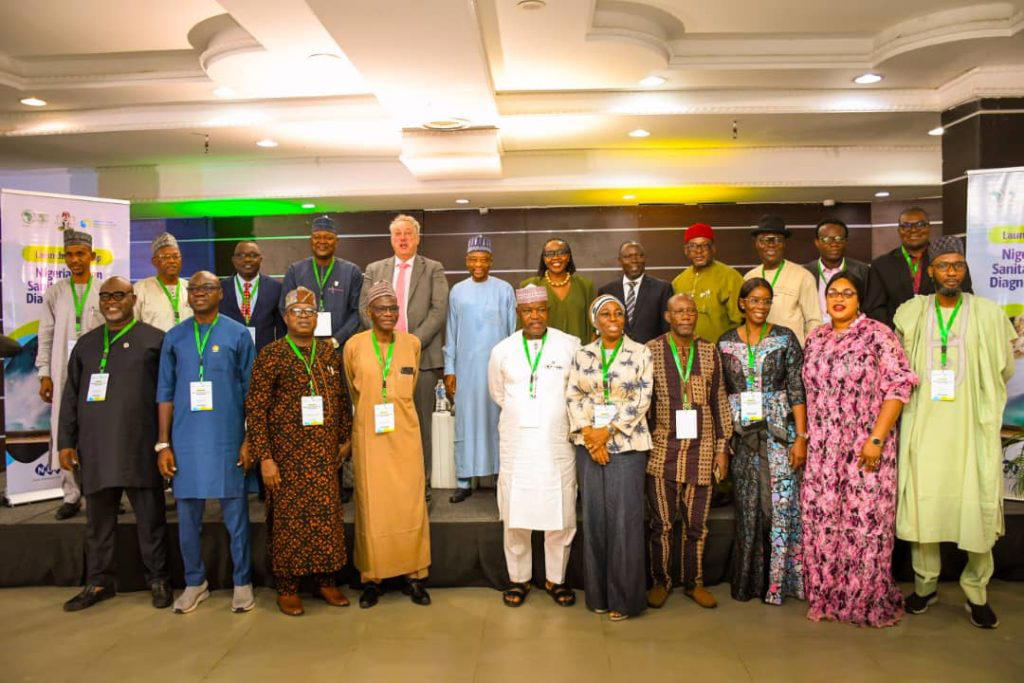
nSpeaking at the launch of the Nigeria Urban Sanitation Sector Diagnostic Report and the Africa Water Investment Programme, the Minister of Water Resources and Sanitation, Engr. Joseph Utsev, FNSE, represented by the Director Overseeing the office of the Permanent Secretary/ Director Dams and Reservoir Operations of the Ministry, Engr. Ali Ibrahim Dallah, described the report as a strategic roadmap for transforming Nigeria’s urban sanitation sector.
nUtsev said the report came at a critical period when the Federal Government is intensifying efforts to improve sanitation services, strengthen sector governance and mobilise both public and private investments to bridge the nation’s sanitation infrastructure gap.
nHe commended the African Development Bank and the African Water Facility for their sustained partnership in supporting Nigeria’s water and sanitation sector, noting that achieving universal access to safely managed sanitation services requires innovative financing, stronger institutions and active private sector participation.
nHs said: “The Federal Government remains committed to creating an enabling environment that encourages investment, strengthens institutional capacity and promotes sustainable sanitation solutions capable of improving public health, protecting the environment and driving economic growth.”
nThe Minister stressed that sanitation is not only a social service but also a catalyst for national development, adding that improved sanitation contributes significantly to better health outcomes, environmental sustainability, increased productivity and job creation.
nEarlier, the Lead Operations Manager, AfDB Nigeria Country Department, Mr. Orison Amu, reaffirmed the Bank’s commitment to supporting Nigeria’s efforts to achieve universal access to safe water and sanitation.
nHe described the Diagnostic Report as a strategic tool for guiding investments and reforms, stressing that translating its recommendations into concrete actions will be essential to achieving SDG’s goal 6, by 2030.
nAlso speaking, the Division Manager, AHWS.1, AfDB, Mrs. Jeanne-Astrid Ngako De Foki, described urban sanitation as a national development priority that requires increased investment, innovative financing, and stronger collaboration among governments, development partners, the private sector, and communities.
nShe urged stakeholders to convert the outcomes of the workshop into practical actions that will deliver cleaner cities, healthier communities, and improved quality of life for Nigerians.
nPresenting the Nigeria Urban Sanitation Status Overview, the Director of Water Quality Control and Sanitation, Mr. Jamilu Habu, identified financing, weak institutional coordination, and poor sanitation infrastructure as major constraints to the sector.
nHe called for stronger governance, more private sector participation, and sustained stakeholder collaboration to accelerate progress towards universal access to safely managed sanitation services.
nMeanwhile, stakeholders in the water and sanitation sector called for accelerated reforms, increased investment and stronger collaboration to tackle urban sanitation challenges.
nThe workshop featured technical presentations by experts in the water and sanitation sector including Principal Monitoring Evaluation and Project Portfolio Management Expert, Mrs. Hellen Njiwa, and the Financial and Institutional Sanitation Specialist AWF, Mr Peter Vos, as well as group and interactive sessions aimed at developing practical strategies for strengthening urban sanitation governance, mobilising investments, and advancing sustainable sanitation service delivery across Nigeria.
nThe event attracted participants from Federal and State Ministries, including Technical Directors from the Ministry, State Commissioners of water resources, development partners, financial institutions, academia, civil society organizations, NGOs and the organised private sector, who reaffirmed their commitment to supporting the implementation of the report’s recommendations.
n nRelated Stories
 General News
CELEBRATING TWO YEARS OF TRANSFORMATIONAL LEADERSHIP IN THE PRESIDENTIAL AMNESTY PROGRAMME
Tomorrow, 14TH March 2026, as we look forward to the second anniversary, we reflect on the remarkable two years since the Administrator of the Preside
 General News
PRESIDENTIAL AMNESTY PROGRAMME PHASE 3: DISREGARD PURPORTED STATEMENT ON DELAYED ITA PAYMENTS — OFFICE OF NATIONAL CHAIRMAN
The Office of the National Chairman of the Presidential Amnesty Programme Phase 3, General Elaye ThankGod Dollar Slaboh, has called on beneficiaries a
 General News
RE: CLARIFICATION ON MY PERSONAL RELATIONSHIPS
PUBLIC NOTICErnrnRE: CLARIFICATION ON MY PERSONAL RELATIONSHIPSrnrnIt has become necessary to make this public clarification following the increasing