
Federal Government's latest space project is nearing implementation phase, with launch scheduled for 2028 and 2029.
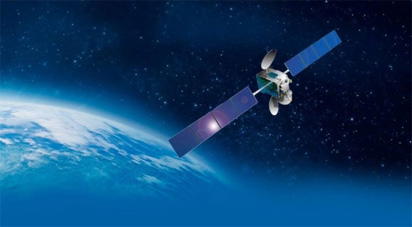
Nigeria's next-generation satellite programme has entered its execution phase, with the launch of NIGCOMSAT-2A and 2B scheduled for 2028 and 2029, respectively, to enhance connectivity, security, and digital economy growth.
nThe programme's progression was announced by NIGCOMSAT Limited's Managing Director, Mrs Jane Nkechi Egerton-Idehen, at the 2026 Satellite Week in Abuja, highlighting Nigeria's commitment to leveraging space technology for national development, sovereignty, and security.
nThe space sector is now experiencing a phase of accelerated growth, according to Egerton-Idehen, who explained that the satellites will facilitate real-time communication, intelligence gathering, and connectivity in remote areas, supporting applications such as precision agriculture and rural broadband expansion.
nThe satellites are expected to strengthen security within Nigeria and neighbouring countries, while providing critical data and intelligence to support agencies, once they become operational, Egerton-Idehen noted.
nThe procurement processes for the project have been completed, and it has moved into the financing and implementation phase, according to Egerton-Idehen.
nThe 2026 Satellite Week, themed "Harnessing Space for an Extraordinary Nigeria," brought together government officials, industry experts, researchers, and technology innovators to explore opportunities in space and digital infrastructure.
nMinister of Communications, Innovation and Digital Economy, Dr Bosun Tijani, stated that the initiative marks a shift from approvals to delivery, backed by investments in fibre networks, towers, and space infrastructure, at the event.
nTijani described satellites as crucial for bridging connectivity gaps and strengthening national resilience, highlighting their importance in Nigeria's digital growth strategy.
nNigeria remains the only West African country with its own communication satellite, positioning it as a regional hub for digital services, particularly in underserved areas, Tijani noted.
nSatellite technology plays a vital role in expanding internet access, supporting agriculture, and driving economic growth, according to Tijani, who emphasized its significance in Nigeria's development.
nBeyond infrastructure development, the government is focused on building an ecosystem that promotes innovation, research, and practical applications across sectors, Tijani added.
Related Stories
 General News
CELEBRATING TWO YEARS OF TRANSFORMATIONAL LEADERSHIP IN THE PRESIDENTIAL AMNESTY PROGRAMME
Tomorrow, 14TH March 2026, as we look forward to the second anniversary, we reflect on the remarkable two years since the Administrator of the Preside
 General News
PRESIDENTIAL AMNESTY PROGRAMME PHASE 3: DISREGARD PURPORTED STATEMENT ON DELAYED ITA PAYMENTS — OFFICE OF NATIONAL CHAIRMAN
The Office of the National Chairman of the Presidential Amnesty Programme Phase 3, General Elaye ThankGod Dollar Slaboh, has called on beneficiaries a
 General News
RE: CLARIFICATION ON MY PERSONAL RELATIONSHIPS
PUBLIC NOTICErnrnRE: CLARIFICATION ON MY PERSONAL RELATIONSHIPSrnrnIt has become necessary to make this public clarification following the increasing