
Fayemi: How opponents branded me ‘Tokunbo’ in 2010 guber race
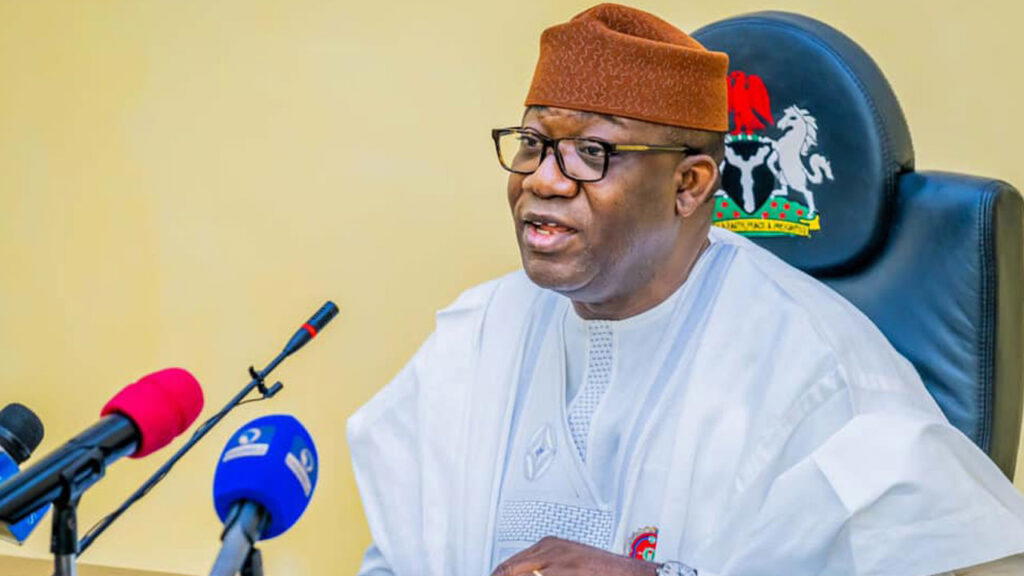
Former Ekiti State Governor, Dr Kayode Fayemi, has recalled how his political opponents attempted to portray him as an outsider during his campaign for the governorship of the state in 2010.
nFayemi disclosed this in a book titled How To Win Elections in Nigeria, authored by Seun Oloketuyi, media entrepreneur and convener of the Best of Nollywood (BON) Awards.
nFayemi, who served as governor for two non-consecutive terms, said his opponents described him as a “Tokunbo” or “Atohunrinwa” politician because of his extensive political activities outside Ekiti.
nHe, however, said his academic credentials, political networks and grassroots campaign helped him overcome the narrative and secure victory.
nFayemi said there was no universal political structure for winning elections, stressing that candidates must understand the peculiarities of the state where they seek elective office.
nAccording to him, aspiring candidates must also secure the support of influential party leaders, including governors, elected office holders, political appointees, ministers and party executives.
nHe recalled that he was invited to contest the Ekiti governorship election by former governor Niyi Adebayo, who was then influential within the party and controlled a significant part of its political structure in the state.
nDespite the backing, Fayemi said he and his campaign team embarked on extensive grassroots mobilisation, visiting each of the state’s 177 wards at least three times and meeting key political leaders individually.
nHe said the challenges he encountered during the 2010 election were relatively less difficult than those he faced when he returned in 2018 to seek a second term.
nFayemi stressed that knowledge of a state’s political history and dynamics was essential to winning elections, noting that Ekiti’s largely monolingual population and shared cultural values made its political environment distinctive.
n“At the point I entered politics, state politics had assumed a violent edge and become toxic,” Fayemi recalled.
nHe said the political opposition in the state was searching for a candidate capable of challenging the then administration, following the defeat of the progressives in the 2003 election.
nFayemi said his campaign consequently highlighted his academic credentials, including his PhD in War Studies, as well as his international and civil society experience and involvement in the pro-democracy struggle through NADECO and Radio Kudirat.
nHe added that his profile was further strengthened by reports about him in The New York Times and The Economist.
nAccording to Fayemi, the support he received from Ekiti’s intellectual community gave him broad appeal among the aspirants, particularly because of the state’s reputation as an intellectual centre.
n“Even though my opponents tried to dismiss me as a ‘Tokunbo’ or ‘Atohunrinwa’ (an outsider politician), having bold conviction and strong external networks carried the day,” he said.
nFayemi said the strategy was complemented by an extensive grassroots campaign and an eight-point agenda focused on welfare and development.
nHe, however, noted that the approach that worked in Ekiti might not necessarily produce the same result in another state.
nOn his 2018 re-election bid, Fayemi said he adopted a different strategy by highlighting his relationship with the federal government and his record during his first term.
n“I emphasised my proximity to the centre and governance track record during my first four years in office, especially in light of the excruciating suffering of the citizens during the period my successor was in charge,” he said.
n‘You Must Own Your Narrative’
nFayemi said the emergence of a 24-hour news cycle had made political communication more difficult, stressing that politicians must take control of the narratives surrounding their campaigns.
n“In my experience, you must own your narrative,” he said.
nHe added: “In politics, your work does not speak for you, no matter how well you have performed. You have to constantly communicate with your various audiences: the intellectual elite, social media spaces, and traditional grassroots publics.”
nThe former governor also identified what he described as five “election gods” that political aspirants must satisfy, even when they enjoy the support of voters.
nHe listed them as the electoral management body, security institutions, the judiciary, non-state security actors and the financial resources required to manage and coordinate election-related activities.
nFayemi further said candidates needed to maintain relationships with smaller political parties and their agents, while also cultivating relationships with independent observer missions in anticipation of possible post-election disputes. “These are non-negotiable,” he said.
n nRelated Stories
 General News
CELEBRATING TWO YEARS OF TRANSFORMATIONAL LEADERSHIP IN THE PRESIDENTIAL AMNESTY PROGRAMME
Tomorrow, 14TH March 2026, as we look forward to the second anniversary, we reflect on the remarkable two years since the Administrator of the Preside
 General News
PRESIDENTIAL AMNESTY PROGRAMME PHASE 3: DISREGARD PURPORTED STATEMENT ON DELAYED ITA PAYMENTS — OFFICE OF NATIONAL CHAIRMAN
The Office of the National Chairman of the Presidential Amnesty Programme Phase 3, General Elaye ThankGod Dollar Slaboh, has called on beneficiaries a
 General News
RE: CLARIFICATION ON MY PERSONAL RELATIONSHIPS
PUBLIC NOTICErnrnRE: CLARIFICATION ON MY PERSONAL RELATIONSHIPSrnrnIt has become necessary to make this public clarification following the increasing