
Fashola urges opposition to accept election results, saying no vote is completely flawless
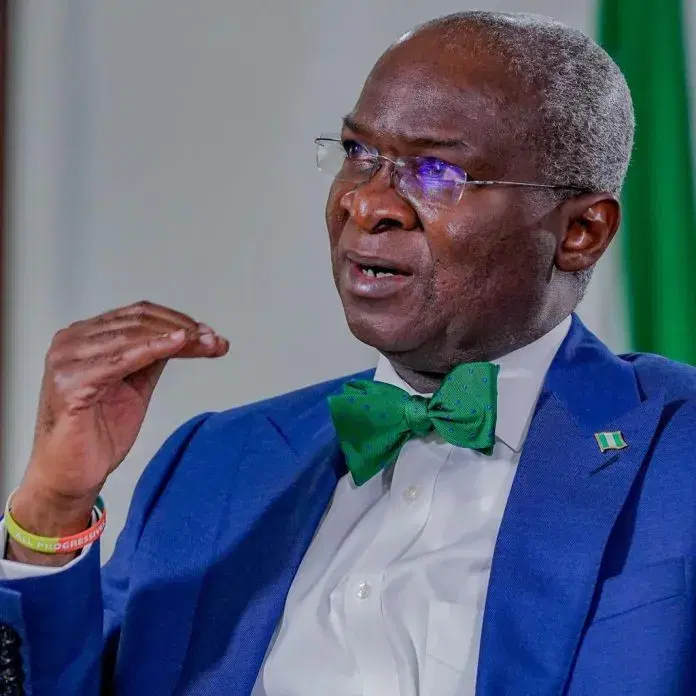
Babatunde Fashola, the former Lagos State governor and ex-Minister of Works, Housing and Power, has emphasized that elections are inherently imperfect, highlighting the need for Nigerians to understand the complexities of conducting nationwide polls and to focus on strengthening democratic institutions beyond the electoral process.
nThis perspective was shared by Fashola on Friday while speaking at The Platform, a public policy forum held in Lagos as part of activities marking Democracy Day.
nAccording to Fashola, the extensive logistical operations involved in presidential contests make it difficult to achieve absolute perfection, with elections being an imperfect event that requires a large logistical operation across a federation.
nFashola noted that the challenges of conducting nationwide elections involve thousands of polling units across the country, which must simultaneously carry out the same procedures, often under varying circumstances and conditions.
nThe reality of a presidential election, Fashola stated, is that all polling units across the nation have to be doing the same thing at the same time, raising the question of how to assign blame when things go wrong, especially when the Chairman of the Independent National Electoral Commission cannot be everywhere at the same time.
nFashola argued that electoral imperfections are not unique to Nigeria, as many democratic nations acknowledge such challenges while continually seeking ways to improve their electoral systems.
nEstablished democracies, he said, often accept that elections may not be flawless but work consistently to strengthen institutions and processes rather than undermine confidence in democratic outcomes.
nFashola cited the example of other jurisdictions, where imperfections are accepted and efforts are made to improve, but the results are also accepted.
nThe former minister expressed concern over the growing reluctance among some political actors to accept electoral outcomes, suggesting that such attitudes weaken democratic development.
nHe stated that an unwillingness to accept the outcome of an election perhaps blinds the unsuccessful participants from seeking and taking up the role of opposition for the development of society.
nFashola emphasized the critical role of opposition politics in democratic governance, urging that it should not be viewed solely through the lens of electoral victory or defeat.
nHe stressed that democracy extends beyond the conduct of elections, and citizens and political leaders should engage in deeper conversations about the kind of democratic culture Nigeria seeks to build.
nFashola asked a pertinent question: What kind of democracy do we want, if we are to discuss democracy beyond elections.
nFashola’s remarks were part of broader discussions at The Platform on the state of Nigeria’s democracy, governance, accountability, and the responsibilities of citizens and political leaders in sustaining democratic institutions.
nHe maintained that while elections remain a vital component of democracy, the true test of democratic maturity lies in the ability of institutions, political actors, and citizens to uphold democratic values even after the ballots have been counted.
Related Stories
 General News
CELEBRATING TWO YEARS OF TRANSFORMATIONAL LEADERSHIP IN THE PRESIDENTIAL AMNESTY PROGRAMME
Tomorrow, 14TH March 2026, as we look forward to the second anniversary, we reflect on the remarkable two years since the Administrator of the Preside
 General News
PRESIDENTIAL AMNESTY PROGRAMME PHASE 3: DISREGARD PURPORTED STATEMENT ON DELAYED ITA PAYMENTS — OFFICE OF NATIONAL CHAIRMAN
The Office of the National Chairman of the Presidential Amnesty Programme Phase 3, General Elaye ThankGod Dollar Slaboh, has called on beneficiaries a
 General News
RE: CLARIFICATION ON MY PERSONAL RELATIONSHIPS
PUBLIC NOTICErnrnRE: CLARIFICATION ON MY PERSONAL RELATIONSHIPSrnrnIt has become necessary to make this public clarification following the increasing