
Export rerouting erodes Nigeria’s gains despite N7.55trn trade surplus — NESG
By Yinka Kolawole
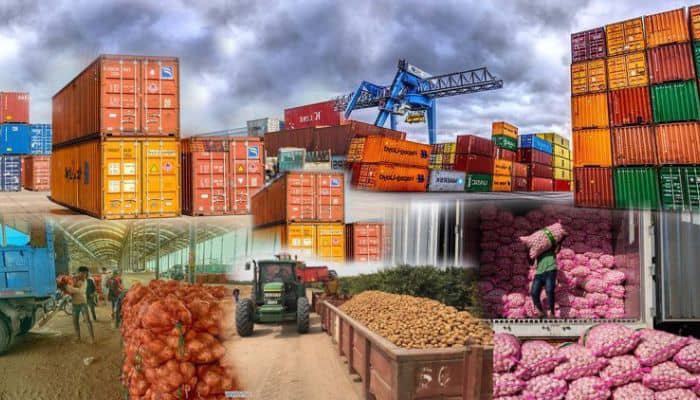
nThe Nigerian Economic Summit Group, NESG, has warned that export rerouting through neighbouring countries is undermining Nigeria’s trade competitiveness and depriving the economy of significant domestic value, despite the country’s impressive N7.55 trillion trade surplus recorded in the first quarter of 2026.
nThe warning comes as data from the National Bureau of Statistics, NBS, showed that Nigeria’s total merchandise trade rose to N34.79 trillion in Q1 2026, with exports valued at N21.17 trillion and imports at N13.62 trillion, resulting in a positive trade balance of N7.55 trillion.
nWhile describing the surplus as encouraging, NESG cautioned that headline trade figures do not tell the full story, stressing that Nigeria continues to lose substantial economic benefits when locally produced goods are exported through neighbouring countries before reaching their final destinations.
nExport rerouting happens when goods produced in one country are moved through another country before they reach buyers.
nAccording to the group, export rerouting deprives Nigeria of logistics income, distorts trade statistics, weakens product branding and limits the country’s ability to capture the full value generated by its exports.
nThe private sector think tank identified weak quality assurance and certification systems, inefficient port operations and cumbersome export procedures as major factors pushing exporters to seek alternative trade routes outside Nigeria.
nNESG called on the government to strengthen local certification and quality assurance infrastructure to ensure Nigerian products meet international standards without relying on third-country certification systems.
nIt noted that globally recognised certification has become a critical requirement for accessing international markets, warning that where Nigerian exporters cannot obtain credible certification domestically, neighbouring countries often benefit from providing the final export channel.
nThe group added that sectors such as agriculture, food processing, textiles, leather and manufacturing stand to gain significantly if certification processes are improved, enabling exporters to access foreign markets directly while retaining more value within the domestic economy.
nNESG also urged authorities to address longstanding bottlenecks at Nigerian ports, including congestion, excessive documentation, delays and high logistics costs, arguing that these inefficiencies continue to discourage exporters and make neighbouring ports more attractive.
nAccording to the group, improving port efficiency is not merely a transportation issue but a strategic imperative for boosting Nigeria’s export competitiveness under the African Continental Free Trade Area (AfCFTA) and the global trading system.
nIt stressed that beyond recording trade surpluses, Nigeria must focus on increasing domestic value capture by simplifying export procedures, modernising port infrastructure, investing in industrial processing zones and providing exporters with the infrastructure needed to compete globally.
n“Trade growth should not be measured only by the size of the surplus,” the group said, insisting that the ultimate objective should be to ensure exports generate more jobs, foreign exchange earnings, industrial expansion and broader economic value within Nigeria.
n nRelated Stories
 General News
CELEBRATING TWO YEARS OF TRANSFORMATIONAL LEADERSHIP IN THE PRESIDENTIAL AMNESTY PROGRAMME
Tomorrow, 14TH March 2026, as we look forward to the second anniversary, we reflect on the remarkable two years since the Administrator of the Preside
 General News
PRESIDENTIAL AMNESTY PROGRAMME PHASE 3: DISREGARD PURPORTED STATEMENT ON DELAYED ITA PAYMENTS — OFFICE OF NATIONAL CHAIRMAN
The Office of the National Chairman of the Presidential Amnesty Programme Phase 3, General Elaye ThankGod Dollar Slaboh, has called on beneficiaries a
 General News
RE: CLARIFICATION ON MY PERSONAL RELATIONSHIPS
PUBLIC NOTICErnrnRE: CLARIFICATION ON MY PERSONAL RELATIONSHIPSrnrnIt has become necessary to make this public clarification following the increasing