
Experts urge action to stop South Africa xenophobia
By Favour Ulebor, Abuja
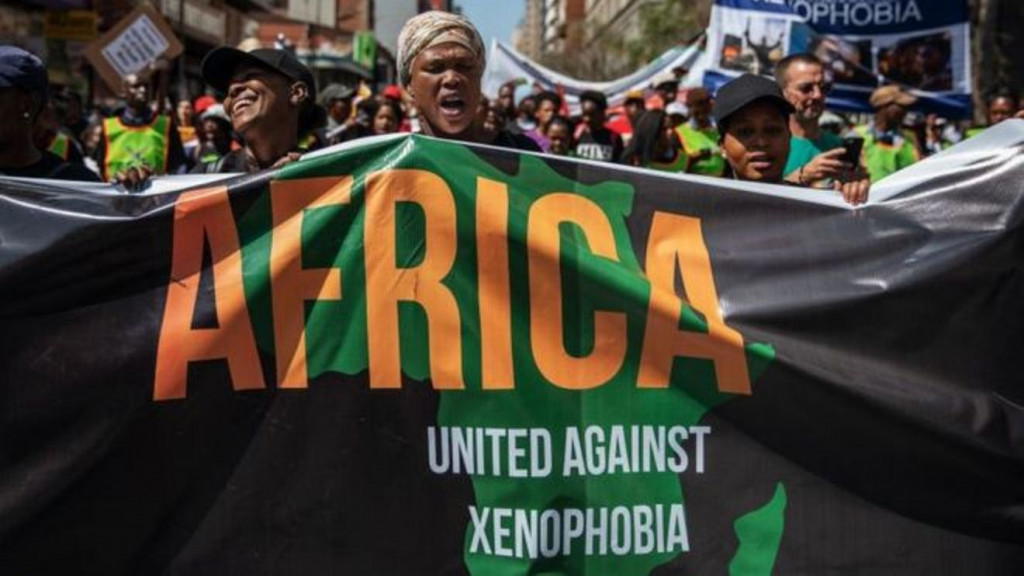
nNigerians and other African migrants living in South Africa are increasingly living in fear following renewed anti-foreigner protests in parts of Johannesburg, Pretoria, Durban, Cape Town, and KwaZulu-Natal, where tensions have prompted many to close businesses early and avoid public gatherings.
nThe situation has raised concern after the Nigerian Consulate General in Johannesburg confirmed the deaths of two Nigerians, Amaramiro Emmanuel and Ekpenyong Andrew, in separate incidents involving interactions with security personnel.
nAccording to the Consulate, Emmanuel reportedly died following injuries sustained after an encounter with personnel of the South African National Defence Force on April 20, while Andrew was arrested in Pretoria after an alleged altercation with members of the Tshwane Metro Police, with his body later discovered at the Pretoria Central Mortuary.
nThe incidents have heightened anxiety within the Nigerian community, with migrants calling for stronger protection and diplomatic engagement.
nFormer spokesperson of the Ministry of Foreign Affairs, Ogbole Amedu Odey, urged the Nigerian government to intensify efforts to protect its citizens abroad while encouraging lawful migration practices.
nHe stressed the importance of structured diplomacy and stronger enforcement measures by host authorities during public demonstrations to prevent escalation into violence.
nOdey also called for deeper bilateral cooperation between Nigeria and South Africa, noting that migration should be managed in a way that benefits both countries rather than creating tension.
nA political and research analyst at the Centre for Democracy and Development, Dengiyefa Angalapu, attributed recurring xenophobic tensions to governance challenges and economic hardship, noting that migrants are often unfairly blamed for structural economic issues.
nHe urged stronger consular protection systems, rapid response mechanisms, and enhanced legal support for affected Nigerians, alongside deeper diplomatic engagement between both countries.
nHe also called for the strengthening of Nigeria–South Africa relations and better implementation of regional frameworks under the African Continental Free Trade Area to reduce tensions.
nSimilarly, the Pan African AU Agenda 2063 Diplomatic Mission condemned the attacks, describing them as contrary to African Union principles of unity and free movement.
nThe Mission called on the African Union and South African authorities to strengthen accountability measures and ensure those responsible for violence are prosecuted, stressing that silence or weak responses could worsen the situation.
nIt further urged enhanced early-warning systems and stronger continental cooperation to prevent future outbreaks of xenophobic violence.
nA political commentator, Kio Amachree, also described the situation as a setback for African solidarity, recalling historical support extended by African countries during South Africa’s anti-apartheid struggle.
nHe warned that continued attacks on migrants could undermine continental unity and cooperation.
nMeanwhile, diplomatic engagements have intensified, with the Federal Government summoning South Africa’s Acting High Commissioner over concerns regarding the safety of Nigerians and their businesses.
nThe Ministry of Foreign Affairs said discussions are ongoing to address the situation and safeguard bilateral relations between both countries.
nIn a related development, the Nigerian Consulate in South Africa, in collaboration with the Nigerian Citizens Association in South Africa (NICASA), has announced arrangements for voluntary repatriation flights for Nigerians wishing to return home.
nNICASA President, Frank Onyekwelu, said the initiative aims to assist those affected by rising insecurity, noting that several Nigerians have already registered for the exercise.
nHe added that some migrants have been forced to close their businesses due to safety concerns.
nReports indicate that many Nigerians in affected areas continue to live in fear as videos of anti-foreigner protests circulate online, showing groups marching and confronting traders in some locations.
nAuthorities in both countries have reiterated commitments to maintaining calm and preventing further escalation while diplomatic consultations continue.
n nRelated Stories
 General News
CELEBRATING TWO YEARS OF TRANSFORMATIONAL LEADERSHIP IN THE PRESIDENTIAL AMNESTY PROGRAMME
Tomorrow, 14TH March 2026, as we look forward to the second anniversary, we reflect on the remarkable two years since the Administrator of the Preside
 General News
PRESIDENTIAL AMNESTY PROGRAMME PHASE 3: DISREGARD PURPORTED STATEMENT ON DELAYED ITA PAYMENTS — OFFICE OF NATIONAL CHAIRMAN
The Office of the National Chairman of the Presidential Amnesty Programme Phase 3, General Elaye ThankGod Dollar Slaboh, has called on beneficiaries a
 General News
RE: CLARIFICATION ON MY PERSONAL RELATIONSHIPS
PUBLIC NOTICErnrnRE: CLARIFICATION ON MY PERSONAL RELATIONSHIPSrnrnIt has become necessary to make this public clarification following the increasing