
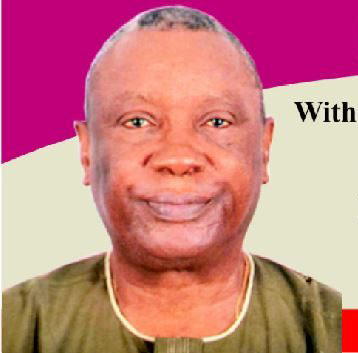
Eric Teniola explores our unique connection to London
Nigeria, just five years after gaining independence, was tasked with hosting the Commonwealth Conference to address the Rhodesian leadership crisis, which Britain was unable to resolve on its own, with twenty-two Commonwealth leaders agreeing to attend the conference.
nThe January 1966 Commonwealth Prime Ministers’ Conference, chaired by Nigerian Prime Minister Sir Abubakar Tafawa Balewa, focused on the Rhodesian crisis, with notable attendees including British Prime Minister Harold Wilson, Archbishop Makarios of Cyprus, Milton Obote of Uganda, Lee Kuan Yew of Singapore, and Sir Albert Margai of Sierra Leone.
nOther key attendees included Borg Oliver of Malta, Dr. E. E. Williams of Trinidad and Tobago, Zambia’s Vice-President R.C. Kamanga, Jamaica’s Acting Prime Minister, Malaysia’s Deputy Prime Minister, and Commonwealth Secretariat’s Secretary-General, Arnold Smith, marking the first Commonwealth conference held outside London.
nThe conference commenced on 11 January, amidst a fresh communal crisis in Ilesha, Osun State, with Alhaji Sir Abubakar Tafawa Balewa and Mr. Harold Wilson leading the delegates into the ballroom, accompanied by Mr. Arthur Bottomley.
nFollowing a two-minute silence in memory of Mr. Shastri, the Nigerian Prime Minister welcomed his guests, emphasizing the need to address the Rhodesian crisis, which threatened to create a division within the Commonwealth organisation, and stating that despite some notable absences, all attendees shared the objective of finding a speedy solution.
nHe then controlled the conference with dignity, followed by speeches from Mr. Lester Pearson of Canada and Mr. Lee Kuan Yew of Singapore, with Sir Abubakar delivering a keynote speech that highlighted the need to find a long-term solution for the future of the territory.
nSir Abubakar proposed a plan that included the release of all nationalists, a conference, and the abrogation of the 1961 constitution, to be replaced by a period of direct rule under British control, with executive and legislative councils comprising all races, presided over by the governor.
nBritish Prime Minister Harold Wilson presented Britain’s position, reviewing his policy to bring down the Smith regime, and emphasizing that the problem was Britain’s responsibility alone, with economic sanctions already showing significant impact, and expressing confidence that given time, sanctions would ultimately succeed.
nWilson also stated that he would not consider going further than the current measures, and that the restricted session would hear predictable messages of condemnation from various leaders, with the Africans seeking to prove their commitment to the cause.
nZambia suggested that there would be no resistance, while Canada proposed that if sanctions failed, the UN should be invited to impose mandatory world sanctions, with Wilson feeling that Britain was again under scrutiny, this time with the Lagos conference attendees being their countries’ principals.
nWilson was impressed by a 40-minute extempore speech by Lee Kuan Yew, which displayed a sophisticated understanding of the modern world, and equalled any world leader’s speech he had heard.
nThe Prime Ministers ultimately decided on several measures of Commonwealth action, including the appointment of two continuing committees to review the effects of sanctions and coordinate a special programme of assistance in training Rhodesians.
nThe sanctions committee would recommend reconvening the Prime Ministers’ meeting when necessary, with the Prime Ministers agreeing to meet again in July 1966 if the rebellion had not been ended before then, and reserving the right to propose mandatory United Nations action under certain circumstances.
nTragically, twenty-four hours after the Conference ended in Lagos, Alhaji Tafawa Balewa was assassinated, and it would take until April 18, 1980, for Rhodesia, now Zimbabwe, to gain independence.
nReflecting on the significance of the event, Eric Teniola, a former director at the Presidency, wrote from Lagos, lamenting that the best moments in his country’s foreign affairs may have occurred in the past.
Related Stories
 General News
CELEBRATING TWO YEARS OF TRANSFORMATIONAL LEADERSHIP IN THE PRESIDENTIAL AMNESTY PROGRAMME
Tomorrow, 14TH March 2026, as we look forward to the second anniversary, we reflect on the remarkable two years since the Administrator of the Preside
 General News
PRESIDENTIAL AMNESTY PROGRAMME PHASE 3: DISREGARD PURPORTED STATEMENT ON DELAYED ITA PAYMENTS — OFFICE OF NATIONAL CHAIRMAN
The Office of the National Chairman of the Presidential Amnesty Programme Phase 3, General Elaye ThankGod Dollar Slaboh, has called on beneficiaries a
 General News
RE: CLARIFICATION ON MY PERSONAL RELATIONSHIPS
PUBLIC NOTICErnrnRE: CLARIFICATION ON MY PERSONAL RELATIONSHIPSrnrnIt has become necessary to make this public clarification following the increasing