
ENUGU EZIKE: The Dynamics of Onyishi and Igwe's Dual Leadership Structure
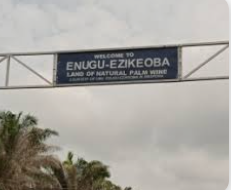
Enugu Ezike, situated in the Igbo-Eze North Local Government Area of Enugu State, boasts the distinction of being the second largest "native town" in West Africa, with precise geographic coordinates of Latitude: 6.9827° N and Longitude: 7.45534° E.
nIts strategic location places it near notable towns such as Nsukka, Otukpa in Benue State, and Ibagwa Aka in Igboeze South Local Government Area, Enugu State, while also sharing borders with Benue State to the north, Ovoko and Obollo-Afor to the south, and Kogi State to the west.
nThe primary occupations of the people of Enugu Ezike are palm wine tapping and farming, with the town's palm wine being renowned as arguably the best in the country, surpassing those from Udi in Udi Local Government Area or Ukehe axis in Igbo Etiti Local Government.
nIn Enugu Ezike, children of primary school age are taught how to tap palm wine, making it a rare occurrence to find an Enugu Ezike man who has never tapped palm wine before achieving success in life.
nEnugu Ezike has a unique system of traditional rulership, with 36 villages under the leadership of one Onyishi, who serves as the overall head, and each village having its own oldest man as the leader.
nThe Onyishi is the oldest man in the community, holding the positions of temporal, spiritual, and cultural leader of the town, a role that is also replicated in each village where the oldest man holds sway.
nThe government-established traditional ruler, Igwe, originated from the colonial masters who needed loyal leaders at the grassroots level for tax collection purposes, leading to the creation of Warrant Chiefs in line with the Emirate System in the North and Oba stools in the West.
nThe Regional House of Chiefs was established to give effect to the colonial plan for tax collection, but in Enugu Ezike, the role of government-appointed chiefs became contentious due to their lack of legitimacy and acceptance by their subjects, who instead paid allegiance to the Onyishi.
nEzike Oba, also known as Enugu Ezike, originally had four kindred clans: Umuitodo, Ozzi, Essodo, and Ezzodo, all of which descended from one progenitor, Ezike Oba, with Ezzodo being the oldest in seniority.
nUmuitodo and Ozzi are from the same parents, but Umuitodo is the elder brother of Umuozzi, while Ezzodo and Essodo are from their own mother, and Ozzi is the largest of the other communities that are traditionally and culturally related to one another.
nEnugu Ezike, which had one Onyishi as traditional ruler until the early eighties, now has over 36 autonomous communities, each with its own Onyishi and a government-recognized Igwe, whose role is not clearly defined.
nThe Onyishis are the de facto traditional rulers, as gerontocracy is the form of governance, while the Igwes are de jure, with the Onyishi Ezike Oba still holding regular meetings with his fellow Onyishis in the other 36 villages and exercising traditional functions in accordance with traditions.
nThe Regional House of Chiefs was disbanded by the Army when they took over power in 1966, and with the creation of states, the then military governor of Anambra State, Col Robert Nnaemeka Akonobi, introduced traditional stools in autonomous communities.
nBefore this, the first two appointed traditional rulers for Enugu Ezike included Urama Onoja from Aji in Essodo and Ooda Idoko from Igogoro, who were recognized as traditional rulers of Enugu Ezike at different periods before the town was split into four autonomous communities by the old Anambra State government.
nThe government created the first four traditional rulers in Enugu Ezike in the eighties, giving the four kindred clans autonomous status and imposing Sunday Eze Iyida, James Ogbonna Mamah, Simeon Itodo, and Hyacinth Odo as their Igwes, respectively.
nToday, the number of communities and their Igwes exceeds 38, with more people seeking to create new autonomous communities to carve out their own kingdoms for personal gain.
nMost of the autonomous communities were created with Oluwole Constitutions from the popular Eke Ozzi Market, resulting in Igwes who lack respect from their subjects, who instead pay allegiance to the Onyishis.
nThe roles of Igwes in their communities are undefined and depend on factors such as popularity, organizational ability, and exposure, with many being wealthy but illiterate and used by politicians to cause division and rule.
nSome Igwes lack exposure and cannot express themselves in the presence of government representatives, leading to them being treated lowly by their subjects, while others use the Police to intimidate people, especially in cases where they have vested interests.
nGenerally, however, Igwes are supposed to be government representatives in their communities, playing critical roles in security and community development.
nOn May 3, 1993, after the creation of new autonomous communities, the Onyishi of Ugbaike, who doubled as Onyishi Enugu Ezike, Abugu Urama Ojobo, decided to recognize some illustrious sons of the town with traditional titles, including Professor John Eze, Chief Nduka Eya, and Chief Maduka Ugwu.
nThe then newly appointed traditional rulers, including Igwe James Mamah, Igwe Simeon Osisi Itodo, Igwe Sunday Eze Iyida, and Igwe Hyacinth Odo, opposed the move, citing that the Onyishi Ezike Oba was no longer a government-recognized traditional ruler and had no powers to bestow chieftaincy titles.
nThe opposition led to tensions and fears of a breakdown in law and order, prompting the Police Commissioner to deploy riot policemen to provide security cover for the recipients of the traditional titles from the Onyishi Enugu Ezike.
nThe Onyishi Ezike Oba, Agu Abugu Urama Ojobo, imposed a fine of a cow on Igwe James Mamah and his colleagues, which they later paid, and were pardoned for opposing the Onyishi Enugu Ezike.
nSome recipients, including Chief Maduka Ugwu, were later approached to be bestowed with chieftaincy titles by some of the Igwes, but he declined, apparently due to the non-recognition of their authorities.
nThe role of the Onyishi in the development of Enugu Ezike communities is rooted in the community's history, with the Onyishi-in-Council able to amend customary laws that are no longer in tune with modern society.
nIn Imufu Community, for example, Onyishi Ugwuanyi Onu abolished the custom that forbade women from cooking for their husbands during their menstrual cycles, while Onyishi Omeh Nwa Okenyi reduced the mourning period of widows from nine months to one month in 1986.
nThe Onyishis are the highest traditional authorities in Enugu Ezike, responsible for overseeing the community's cultural, security, and social activities, and their orders cannot be disobeyed without consequences.
nUnlike the Igweship position, the Onyishi's stool is not contestable, as the sole determinant is seniority of age, and when it is difficult to identify the oldest man among peers, divination is used to identify an Onyishi.
nThe Onyishi is the custodian of Ndishi, a spiritual being believed to punish individuals who engage in extramarital affairs, and the Omabe festival is a significant cultural event in Enugu Ezike, celebrated every five years, with the Onyishi-in-Council determining the dates and coordinating the events.
nThe Omabe festival serves as a purification rite, driving away evil spirits and promoting unity among the community, with competitions among masquerade groups, including agbeji and mgbedike groups.
nThe four most heinous offenses in Enugu Ezike include adultery, stealing, poisoning, and unmasking of masquerades, all of which attract heavy punishments to serve as deterrence.
nA person who commits adultery can be killed by Ndishi or lose their eldest son, except the culprit confesses their sins before Ndishi spirit at the Onyishi's palace and undergoes costly and shameful cleansing rituals to appease the Ndishi spirit.
nThe Onyishi Enugu Ezike, now at Uda in Ezzodo, exercises authority over his fellow Onyishis in the 36 villages or communities, holding court at regular intervals to decide traditional cases and issues affecting the community.
nCabinet members of Onyishi Enugu Ezike include the Onyishis from the component parts of the native town and their Nkpozis, who act as community messengers, with decisions passed down the line in the communities or villages of Enugu Ezike by the village Onyishis-in-Council.
nEach of the Onyishis has by-cameral cabinets, with the elder-most ones sitting inside the palace and the younger ones sitting outside in their canopies, and the inner members or members of Oha Uuchi can sit at any time to decide punishments for arrested or identified thieves
Related Stories
 General News
CELEBRATING TWO YEARS OF TRANSFORMATIONAL LEADERSHIP IN THE PRESIDENTIAL AMNESTY PROGRAMME
Tomorrow, 14TH March 2026, as we look forward to the second anniversary, we reflect on the remarkable two years since the Administrator of the Preside
 General News
PRESIDENTIAL AMNESTY PROGRAMME PHASE 3: DISREGARD PURPORTED STATEMENT ON DELAYED ITA PAYMENTS — OFFICE OF NATIONAL CHAIRMAN
The Office of the National Chairman of the Presidential Amnesty Programme Phase 3, General Elaye ThankGod Dollar Slaboh, has called on beneficiaries a
 General News
RE: CLARIFICATION ON MY PERSONAL RELATIONSHIPS
PUBLIC NOTICErnrnRE: CLARIFICATION ON MY PERSONAL RELATIONSHIPSrnrnIt has become necessary to make this public clarification following the increasing