
Electricity Industry Still Faces Challenges Ahead
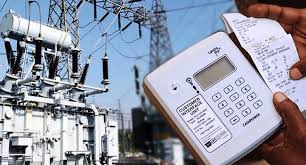
On Sunday, April 5, 2026, Special Adviser on Information Bayo Onanuga announced that President Bola Ahmed Tinubu had approved a payment plan to settle the N3.3 trillion outstanding debt in the power sector under the presidential power sector financial reforms programme.
nAccording to Onanuga, the longstanding debts accumulated between February 2015 and March 2025, and following verification, N3.3 trillion has been agreed as a full and final settlement to ensure a fair and transparent resolution.
nOlu Arowolo-Verheijen, Special Adviser to the President on Energy, further explained that the programme aims to go beyond settling legacy debts to restoring confidence in the power sector.
nThe announcement brought huge relief to Nigerians, who had been experiencing a power crisis with the sector in comatose mode for over six months, resulting in widespread darkness and disruption to businesses.
nMinister of Power Chief Adebayo Adelabu was overwhelmed by the challenges in the sector, and his response was criticized for being inadequate, with a notable incident showing him speaking on a handset connected to a power bank.
nDespite the government's claim of a fair settlement, available data indicates that the debt owed to Generating Companies, GenCos, stood at N6.8 trillion as of 2026, raising questions about the effectiveness of the N3.3 trillion payment.
nContrary to the government's claim, the last reconciliation between the government and key stakeholders in the power sector agreed on a figure of N4 trillion, not N3.3 trillion, with the Chief Executive Officer of the Association Power Generation Companies, Joy Ogaji, denying any verification outside the last reconciliation concluded in March 2025.
nThe government has not provided clear information on how the N3.3 trillion will be disbursed to the GenCos or issued any timelines for payment, which has raised concerns among stakeholders.
nAlthough the government had earlier issued bonds worth N501 billion to the GenCos, the payment is insignificant compared to the debts owed to gas suppliers, and the conditions of disbursement are said to be stringent.
nThe payment of N3.3 trillion falls short of addressing the challenges in the power sector, which include generation, transmission, and distribution, as well as concerns about the privatization process.
nThe privatization exercise, similar to the one under former Military President Ibrahim Babangida, was criticized for prioritizing patronage over technical expertise and capacity to deliver.
nThe GenCos have faced severe liquidity challenges and operational difficulties due to the huge debts owed to them, while transmission companies struggle to transmit the limited electricity generated by thermal and hydroelectric plants.
nAs of 2020, electricity distribution companies, DisCos, owed the Federal Government N2.6 trillion in unpaid remittances to NBET, and they continue to face issues with foreign exchange and operational inefficiency.
nIn January 2026, DisCos achieved a 76.34 per cent collection efficiency but still suffered a revenue shortfall of N63.46 billion, with several DisCos under receivership due to debt-related insolvencies.
nKey DisCos, including those in Ibadan, Kano, Kaduna, and Port Harcourt, are under management receivership, and the government must adopt a holistic approach to address the challenges in the power sector.
nTo put the power sector in good stead, the government must engage with critical stakeholders, invest in alternative forms of power generation, such as solar power, and dedicate thermal and hydro power to manufacturing and other key sectors.
nThe N3.3 trillion payment is a short-term measure and not a comprehensive solution to the power sector's challenges, which require a more thorough and inclusive approach to address the underlying issues.
Related Stories
 General News
CELEBRATING TWO YEARS OF TRANSFORMATIONAL LEADERSHIP IN THE PRESIDENTIAL AMNESTY PROGRAMME
Tomorrow, 14TH March 2026, as we look forward to the second anniversary, we reflect on the remarkable two years since the Administrator of the Preside
 General News
PRESIDENTIAL AMNESTY PROGRAMME PHASE 3: DISREGARD PURPORTED STATEMENT ON DELAYED ITA PAYMENTS — OFFICE OF NATIONAL CHAIRMAN
The Office of the National Chairman of the Presidential Amnesty Programme Phase 3, General Elaye ThankGod Dollar Slaboh, has called on beneficiaries a
 General News
RE: CLARIFICATION ON MY PERSONAL RELATIONSHIPS
PUBLIC NOTICErnrnRE: CLARIFICATION ON MY PERSONAL RELATIONSHIPSrnrnIt has become necessary to make this public clarification following the increasing