
Ekiti 2026: One-man race looms as Oyebanji consolidates power
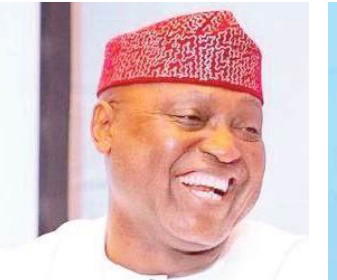
Governor Biodun Oyebanji Ekiti
nBy Rotimi Ojomoyela, ADO-EKITI
nBarring any last-minute political upset, the June 20, 2026 governorship election in Ekiti State is fast shaping into a one-horse race, with Governor Biodun Oyebanji consolidating his grip amid a visibly weakened opposition.
nRead Also: ADC: Uproar greets INEC’s axing of Mark, Aregbesola
nPolitical observers, analysts and stakeholders across the state say emerging indicators point to an election lacking the traditional competitiveness, as opposition parties struggle with internal crises, weak structures and fading influence.
nAs campaigns gradually gather momentum, the political contest appears driven less by ideology and more by power blocs, patronage, alliances and strategic realignments.
nAccording to the Independent National Electoral Commission, 12 political parties have been cleared for the poll, with Oyebanji of the All progressives Congress, APC facing candidates from Peoples democratic Party, PDP, African Democratic Congress, ADC, and other smaller parties.
nThe candidates, running mates and the parties are Opeyemi Falegan and Bayode Omoyeni (Accord); Oluwasegun Akande and Oluwasanmi Fajuyigbe (AAC); Oluwadare Bejide and Ayodeji Babalola (ADC); Ojo Ayodeji and Itunu Ibitoye (ADP); Olanrewaju Anifowose and Adenike Ilesanmi (APM); Biodun Oyebanji and Monisade Afuye (APC).
nOthers are Olaiya Awogbemi and Akinyemi Adewumi (APP); Oyebanji Olajuyin and Odunayo Okunade (LP); Olaniyi Ayodele and Dorcas Adeniyi (PRP); Damilola Adetunji and Adesina Oyeniyi (ZLP); Olusegun Osinkolu (YPP); and Blessing Abegunde and Ade Francis (NNPP).
nOyebanji’s dominance
nSince assuming office in October 2022, Oyebanji has leveraged incumbency advantage, grassroots engagement and a broad coalition of political heavyweights to strengthen his re-election bid.
nFrom regular payment of salaries and pensions to infrastructure development and social intervention programmes, the governor has sustained visibility across the state.
nHis administration’s “shared prosperity” agenda—covering infrastructure, agriculture, human capital development and governance—has further reinforced his presence at the grassroots.
nNotably, Oyebanji has succeeded in rallying past governors across party lines, including Niyi Adebayo, Segun Oni, Ayodele Fayose and Kayode Fayemi—a rare political alignment analysts describe as unprecedented in the state’s history.
nOpposition in disarray
nIn contrast, the opposition remains fragmented.
nThe PDP candidate, Wole Oluyede, emerged from a competitive primary but has been hampered by prolonged internal crises and legal battles over party leadership.
nAlthough a court ruling ordered his recognition, reconciliation within the party remains elusive, raising concerns about its preparedness for the election.
nSimilarly, the ADC candidate, Dare Bejide, has maintained a low-key campaign, with limited grassroots penetration and organizational structure.
nAnalysts say the absence of cohesion among opposition parties may ultimately weaken their chances against the incumbent.
nPolitics of patronage, alliances
nA defining feature of the current political landscape is Oyebanji’s conciliatory and inclusive approach, which has seen him engage and co-opt influential figures across party lines.
nObservers note that key opposition actors have either aligned with the governor or softened their stance, reducing the likelihood of a united front against him.
nThis strategy, anchored on patronage, political accommodation and strategic appointments, has effectively neutralised potential challengers.
nFayose factor, PDP troubles
nThe role of former governor, Ayodele Fayose, remains a critical variable in the unfolding contest.
nDespite being a PDP stalwart, Fayose’s perceived alignment with the APC-led government has deepened divisions within the opposition party.
nAnalysts argue that his influence has significantly weakened PDP’s cohesion, with fears that loyalists may either abstain or vote across party lines.
nNational influence, Senate dynamics
nAt the national level, the influence of Senate Leader, Opeyemi Bamidele, is also shaping political calculations.
nBamidele, who heads the APC campaign council in the state, is seen as a key figure in coordinating alliances and mobilization efforts ahead of the poll.
nHow the candidates stand
nThree months to the poll, how the three main contenders stand, their influence, capacity, strength and weaknesses are instructive.
nOyebanji of APC
nGovernor Biodun Oyebanji, a former Secretary to the State Government and the flagbearer of All Progressive Congress (APC) was sworn in as Governor of the state on October 16, 2022 and had a head-start because as the sitting Governor, every project and activity are targeted toward earning a second term
nThere’s hardly any area of of Ekiti that Oyebanji is not known, as he mobilises workers of the state, paid part of their salary arrears and bonuses, pay salaries as and when due, initiate people-centric projects, among others.
nHe was able to put the name, ‘BAO’ on the lips of the residents through his grassroots engagement, familiarity with critical stakeholders and his ability to unite the past for the betterment of his own future.
nOyebanji, through his human-centric relationship, was able to unite all the past Governors and put them under one umbrella, an herculean task no past Governor had achieved
nFrom the first civilian Governor, Otunba Niyi Adebayo, who doubled as his leader at the party level, to Segun Oni, his rival at the 2022, Gubernatorial election, Or Ayodele Fayose, who despite his repeated announcements that he remained rooted in PDP but still openly supports the APC-led government, and his predecessor, Kayode Fayemi, who was the brain behind his emergence as the candidate of the party at the 2022 primary and the subsequent election.
nOluyede of PDP
nThe PDP entered the 2026 Ekiti governorship race with early momentum after producing Dr Wole Oluyede as its candidate through a competitive primary in November 2025.
nWole Oluyede, an Australia based and Ikere-Ekiti born, medical doctor and businessman, secured the ticket after defeating other aspirants, positioning himself as the party’s standard-bearer against the incumbent administration.
nOluyede was no minnow in Ekiti Gubernatorial elections, he contested the APC primaries with Dr Kayode Fayemi in 2018 and resurfaced as the ADC flag bearer in the 2022 governorship election, where he contested against the incumbent.
nHowever, the PDP’s position has been significantly weakened by prolonged internal crises and legal disputes. These divisions led to the party’s exclusion from the INEC initial and even final candidate lists.
nThe situation only began to shift after a court ruling later validated Oluyede as the party’s legitimate candidate and ordered electoral recognition, though reconciliation within the party remains a critical challenge.
nOn the other hand, the African Democratic Congress has maintained a quiet presence in the race. The party successfully produced and submitted its candidate, a former Secretary to Ekiti Government in the Segun Oni led administration of 2007-2010, Dare Bejide without the high-profile disputes that plagued the PDP, ensuring its place on the ballot.
nBejide an Ilawe-Ekiti born diplomat, he was the Nigerian Ambassador to Canada between 199 and 2000, also served as the pioneer secretary of PDP in Ekiti State.
nWhile the ADC lacks the broad political structure and grassroots dominance of larger parties, its stability and absence of internal wrangling positioned it as a potential alternative for voters seeking a third-force option.
nVoter apathy fears
nMeanwhile, concerns are mounting over declining voter turnout in the state.
nData from previous elections show a steady drop—from over 50 per cent in 2014 to 36.5 per cent in 2022—raising fears of further apathy if the election is perceived as a foregone conclusion.
nPolitical strategists warn that low participation could undermine the credibility of the electoral process.
nBattle for the grassroots
nWith 16 local government areas and 177 wards, Ekiti’s grassroots structure remains central to electoral success.
nHowever, the APC’s dominance at ward and local government levels gives it a significant advantage in mobilization and vote delivery.
nOutlook
nWith less than three months to the election, the odds appear stacked in favour of the incumbent.
nYet, analysts insist that politics remains unpredictable, noting that shifts in alliances, voter sentiment or opposition resurgence could still alter the trajectory.
nFor now, however, the 2026 Ekiti governorship race increasingly resembles a one-man show.
n nRelated Stories
 General News
CELEBRATING TWO YEARS OF TRANSFORMATIONAL LEADERSHIP IN THE PRESIDENTIAL AMNESTY PROGRAMME
Tomorrow, 14TH March 2026, as we look forward to the second anniversary, we reflect on the remarkable two years since the Administrator of the Preside
 General News
PRESIDENTIAL AMNESTY PROGRAMME PHASE 3: DISREGARD PURPORTED STATEMENT ON DELAYED ITA PAYMENTS — OFFICE OF NATIONAL CHAIRMAN
The Office of the National Chairman of the Presidential Amnesty Programme Phase 3, General Elaye ThankGod Dollar Slaboh, has called on beneficiaries a
 General News
RE: CLARIFICATION ON MY PERSONAL RELATIONSHIPS
PUBLIC NOTICErnrnRE: CLARIFICATION ON MY PERSONAL RELATIONSHIPSrnrnIt has become necessary to make this public clarification following the increasing