
Educational woes require visionary direction and funding, not reforms, says Obi
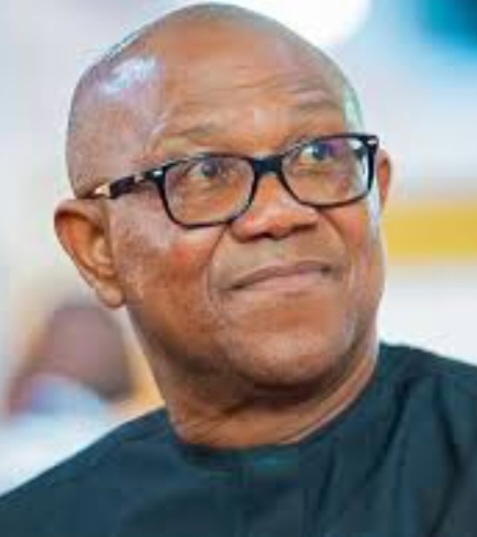
Nigeria's education crisis will not be alleviated by policy changes alone, according to Peter Obi, the presidential candidate of the Nigeria Democratic Congress, who is urging the Federal Government to focus on sustained investment, effective leadership, and improved learning infrastructure to reverse the sector's decline.
nObi's remarks come on the heels of the Federal Government's recent acknowledgment that the policy separating junior and senior secondary schools has failed to yield improved educational outcomes, a fact borne out by recent examination results, including the 2024 West African Senior School Certificate Examination.
nThe 2024 West African Senior School Certificate Examination saw only 38.32 per cent of candidates pass both English Language and Mathematics, while the 2025 computer-based WASSCE had a mere 32 per cent achieve the benchmark pass, highlighting the need for comprehensive reforms, according to Obi.
nObi notes that the consistent poor performance in national examinations over the past two years underscores the urgent need for comprehensive reforms, and he describes education as the cornerstone of human capital development and economic growth.
nNigeria's inability to overcome poverty and economic stagnation without investing in education, healthcare, and job creation is a point Obi emphasizes, arguing that these sectors are crucial to the country's development.
nThe 2026 federal budget allocates ₦3.52 trillion to education, representing 6.17 per cent of total expenditure, a figure that is down from 7.87 per cent in 2025 and far below UNESCO's recommended 15–20 per cent benchmark, according to Obi.
nObi criticizes the allocation as a failure to recognize education as a key driver of sustainable national development, and he references concerns raised by education advocate Alex Onyia, who disclosed that Nigeria was unable to sponsor students to international STEM and Mathematics Olympiads due to inadequate funding.
nObi describes the situation as unfortunate, saying it is troubling that the government can fund foreign conferences while neglecting opportunities for some of the country's brightest students to compete internationally.
nThe education crisis, Obi argues, stems more from poor funding, weak management, and lack of political will than from the structure of the junior and senior secondary school system, a point he emphasizes in his critique of the current state of education in Nigeria.
nHighlighting his administration's record in Anambra State, Obi notes that strategic investment in education, including the provision of laptops, internet connectivity, generators, and other learning facilities, significantly improved educational outcomes.
nThe state's large-scale computer procurement for secondary schools earned recognition from HP Africa as the largest laptop acquisition for schoolchildren by any subnational government in Africa, a feat Obi mentions as an example of effective investment in education.
nObi calls on the Federal Government to make deliberate investments in education, healthcare, and job creation, warning that failure to address these critical sectors will have long-term consequences for the country's future.
nHe concludes by reiterating his belief that “A New Nigeria is Possible.”
Related Stories
 General News
CELEBRATING TWO YEARS OF TRANSFORMATIONAL LEADERSHIP IN THE PRESIDENTIAL AMNESTY PROGRAMME
Tomorrow, 14TH March 2026, as we look forward to the second anniversary, we reflect on the remarkable two years since the Administrator of the Preside
 General News
PRESIDENTIAL AMNESTY PROGRAMME PHASE 3: DISREGARD PURPORTED STATEMENT ON DELAYED ITA PAYMENTS — OFFICE OF NATIONAL CHAIRMAN
The Office of the National Chairman of the Presidential Amnesty Programme Phase 3, General Elaye ThankGod Dollar Slaboh, has called on beneficiaries a
 General News
RE: CLARIFICATION ON MY PERSONAL RELATIONSHIPS
PUBLIC NOTICErnrnRE: CLARIFICATION ON MY PERSONAL RELATIONSHIPSrnrnIt has become necessary to make this public clarification following the increasing