
Ebola warning issued: Nigeria's disease control center identifies Lagos, Abuja, Kano, Rivers, and seven other states as areas of heightened concern due to Bundibugyo virus outbreak
By Chioma Obinna
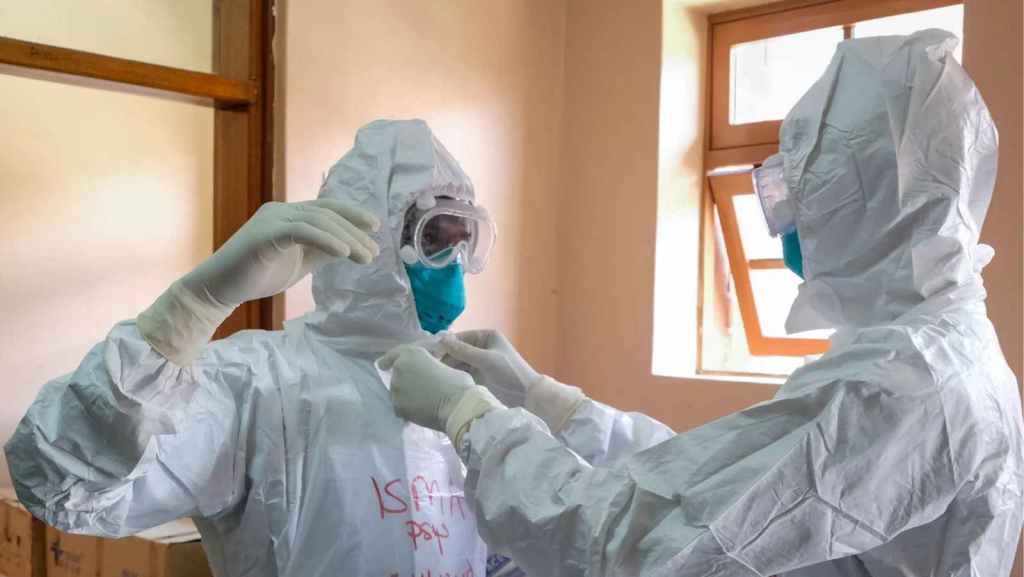
nThe Nigeria Centre for Disease Control and Prevention (NCDC) on Thursday placed Lagos, the Federal Capital Territory (FCT), Kano, Rivers and several other states on high Ebola preparedness alert following the classification of Nigeria’s risk of importing the deadly Bundibugyo Ebola Virus Disease as “HIGH.”
nIn a national public health advisory addressed to Honourable Commissioners for Health across the 36 states and the FCT, the NCDC warned that Nigeria must urgently strengthen surveillance, isolation capacity and infection prevention systems as the virus spreads across parts of the Democratic Republic of Congo and Uganda.
nThe World Health Organisation (WHO) has already declared the outbreak a Public Health Emergency of International Concern (PHEIC), a development the NCDC said underscores the urgency for immediate nationwide readiness before any suspected case is detected in Nigeria.
nAlthough Nigeria has recorded no confirmed case, the agency said its Dynamic Risk Assessment, conducted with partners after the WHO declaration showed that the country faces a “high risk of importation” due to regional transmission, international travel, porous land borders, informal crossings and trade routes across West and Central Africa.
nAccording to the advisory, 1,077 suspected cases and 247 deaths have already been reported in the Democratic Republic of Congo and Uganda, with a case fatality rate as high as 24.6 per cent.
n“The overall risk of importation of the disease into Nigeria has been assessed as HIGH due to increasing ongoing regional transmission, international travel, regional population movement, major airports, seaports, porous land borders, informal crossings and trade routes,” the NCDC stated.
nThe agency stressed that all states and the FCT must immediately activate full preparedness systems to ensure early detection, rapid containment and protection of healthcare workers.
nThe World Health Organisation (WHO) has already declared the outbreak a Public Health Emergency of International Concern (PHEIC), a development the NCDC said underscores the urgency for immediate nationwide readiness before any suspected case is detected in Nigeria.
nAlthough Nigeria has recorded no confirmed case, the agency said its Dynamic Risk Assessment, conducted with partners after the WHO declaration showed that the country faces a “high risk of importation” due to regional transmission, international travel, porous land borders, informal crossings and trade routes across West and Central Africa.
nAccording to the advisory, 1,077 suspected cases and 247 deaths have already been reported in the Democratic Republic of Congo and Uganda, with a case fatality rate as high as 24.6 per cent.
n“The overall risk of importation of the disease into Nigeria has been assessed as HIGH due to increasing ongoing regional transmission, international travel, regional population movement, major airports, seaports, porous land borders, informal crossings and trade routes,” the NCDC stated.
nThe agency stressed that all states and the FCT must immediately activate full preparedness systems to ensure early detection, rapid containment and protection of healthcare workers.
n“The immediate objective of our national preparedness and readiness efforts is to ensure that every State and the FCT can reasonably detect, contain and respond swiftly to any suspected case while protecting health workers and sustaining essential health services,” it said.
nThe advisory also stated the risk stratification of states, with the NCDC grouping the country into three preparedness tiers based on exposure routes and likelihood of importation.
nAt the top of the risk ladder, the agency classified Lagos, FCT, Rivers, Kano, Enugu, Borno, Akwa Ibom, Cross River, Taraba and Adamawa as high-risk states due to their international airports, seaports, major trade corridors, porous borders and heavy population movement.
nWhile all states are expected to maintain Ebola preparedness, the NCDC said high-risk states must scale up readiness faster and more aggressively, particularly in surveillance, laboratory readiness and isolation capacity.
nThe advisory warned that Bundibugyo Ebola Virus Disease currently has no approved vaccine or specific treatment, making early public health intervention the only effective defence.
nIt added that existing Ebola vaccines and monoclonal antibody treatments are primarily targeted at the Zaire strain and should not be relied upon for this outbreak.
nThe agency also cautioned that Ebola is not airborne but spreads through direct contact with blood, body fluids, contaminated materials or infected animals.
nIt urged health workers nationwide to maintain a high index of suspicion, warning that early symptoms often resemble malaria, Lassa fever and other common febrile illnesses.
n“Health workers must not wait for bleeding before suspecting Ebola in any patient with compatible symptoms and relevant travel or exposure history,” the advisory warned.
nSymptoms include fever, fatigue, muscle pain, headache, vomiting, diarrhoea, abdominal pain, rash, hicups, unexplained bleeding and signs of shock, the NCDC said.
nThe agency confirmed that its National Emergency Operations Centre has been activated in alert mode to coordinate preparedness across federal and state levels, with emphasis on surveillance, infection prevention and control, case management, safe sample handling and risk communication.
nThe NCDC assured that it is working closely with states and development partners to strengthen national preparedness and prevent any potential importation or community transmission of the virus.
nThe NCDC said the classification of high-risk states is a critical step in Nigeria’s early warning system, but warned that sustained vigilance and funding will determine how effectively the country can contain any potential outbreak.
n nRelated Stories
 General News
CELEBRATING TWO YEARS OF TRANSFORMATIONAL LEADERSHIP IN THE PRESIDENTIAL AMNESTY PROGRAMME
Tomorrow, 14TH March 2026, as we look forward to the second anniversary, we reflect on the remarkable two years since the Administrator of the Preside
 General News
PRESIDENTIAL AMNESTY PROGRAMME PHASE 3: DISREGARD PURPORTED STATEMENT ON DELAYED ITA PAYMENTS — OFFICE OF NATIONAL CHAIRMAN
The Office of the National Chairman of the Presidential Amnesty Programme Phase 3, General Elaye ThankGod Dollar Slaboh, has called on beneficiaries a
 General News
RE: CLARIFICATION ON MY PERSONAL RELATIONSHIPS
PUBLIC NOTICErnrnRE: CLARIFICATION ON MY PERSONAL RELATIONSHIPSrnrnIt has become necessary to make this public clarification following the increasing