
Domestic manufacturing surges to half of national demand, reducing reliance on foreign pharmaceuticals
Nigeria's push to reduce its reliance on imported medicines has gained significant momentum, with stakeholders attributing the surge in local pharmaceutical production to sweeping regulatory reforms, which has now reached an estimated 50 per cent.
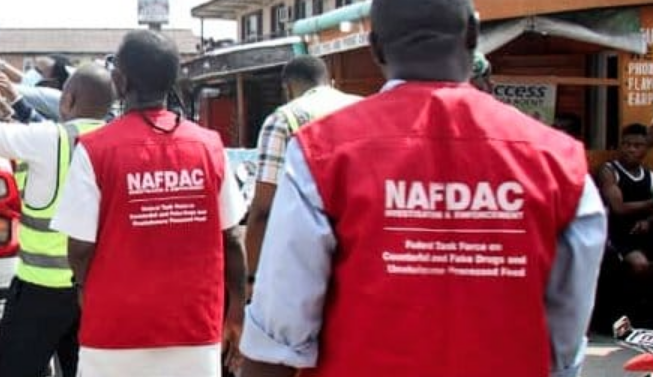
nThis development was highlighted at the commissioning of a new manufacturing facility by Sam Pharmaceutical Ltd in Lagos, where industry leaders and regulators praised the Director-General of the National Agency for Food and Drug Administration and Control, Prof. Mojisola Adeyeye, for driving policies that are transforming the sector.
nThe new plant is seen as a symbol of the country's growing shift toward self-sufficiency in drug production, with speakers describing it as more than just an addition to Nigeria's industrial base.
nAccording to stakeholders, the reforms have yielded tangible results, with one speaker noting that "what we are seeing today is the direct result of deliberate and strategic reforms" that are gradually weaning Nigeria off its heavy dependence on imported medicines.
nNAFDAC's Five Plus Five-Year Validity policy, introduced under Adeyeye's leadership, has been central to this transformation, compelling foreign pharmaceutical firms to establish local manufacturing capacity or partner with Nigerian companies.
nUnder this policy, companies are granted an initial five-year product registration licence, but must submit verifiable blueprints for local production by the fourth year, with renewal for another five years contingent on progress.
nStakeholders credited the policy with triggering a wave of investments and partnerships, accelerating technology transfer and boosting domestic capacity, with one industry player noting that "the 5+5 policy is a turning point" that is forcing a transition from importation to production.
nThe policy has helped increase local manufacturing output from about 30 per cent to 50 per cent in recent years, improving access to essential medicines and strengthening supply chain resilience, according to stakeholders.
nNAFDAC's recent attainment of Maturity Level 3 (ML3) under the World Health Organisation's Global Benchmarking Programme was also highlighted, signifying a stable and well-functioning regulatory system aligned with international standards.
nThis milestone enhances Nigeria's credibility, boosts investor confidence, and opens opportunities for vaccine manufacturing and global market participation, with stakeholders noting that "the ML3 rating sends a strong signal that Nigeria is ready to play at the global level".
nAdeyeye was widely praised for institutionalising a culture of self-audit and continuous improvement within NAFDAC, which was critical to achieving the global benchmark, with stakeholders applauding her leadership and commitment to ensuring quality, safety and efficacy of medicines in Nigeria.
nThe commissioning of the Sam Pharmaceutical facility is part of a broader trend of emerging local manufacturing outfits, driven by policy clarity and regulatory support, with stakeholders noting that "with more companies investing in local production, Nigeria is on the path to making essential medicines more affordable and accessible to its population".
nThe combined impact of policy reforms, regulatory strengthening, and private sector participation is steadily repositioning Nigeria's pharmaceutical industry, reducing import dependence and laying the groundwork for long-term health security, according to stakeholders.
Related Stories
 General News
CELEBRATING TWO YEARS OF TRANSFORMATIONAL LEADERSHIP IN THE PRESIDENTIAL AMNESTY PROGRAMME
Tomorrow, 14TH March 2026, as we look forward to the second anniversary, we reflect on the remarkable two years since the Administrator of the Preside
 General News
PRESIDENTIAL AMNESTY PROGRAMME PHASE 3: DISREGARD PURPORTED STATEMENT ON DELAYED ITA PAYMENTS — OFFICE OF NATIONAL CHAIRMAN
The Office of the National Chairman of the Presidential Amnesty Programme Phase 3, General Elaye ThankGod Dollar Slaboh, has called on beneficiaries a
 General News
RE: CLARIFICATION ON MY PERSONAL RELATIONSHIPS
PUBLIC NOTICErnrnRE: CLARIFICATION ON MY PERSONAL RELATIONSHIPSrnrnIt has become necessary to make this public clarification following the increasing