
Departure of Wale Edun: Issues emerging in a time when honesty is unwelcome
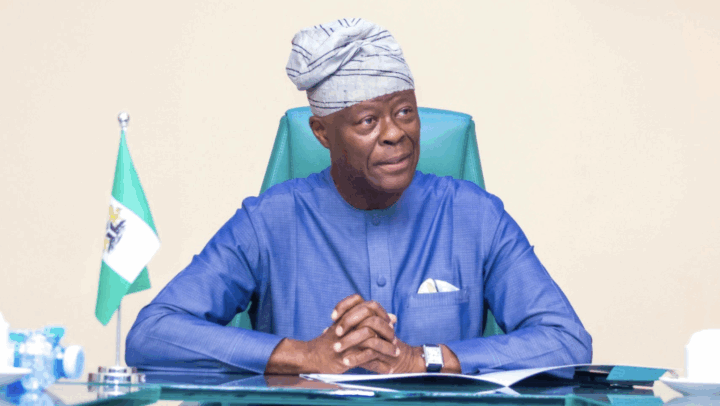
The removal of Wale Edun as Nigeria's Minister of Finance is a significant event that reveals a deeper issue with governance under President Tinubu, specifically whether there is still room for truth within the corridors of power.
nThis concern is rooted in a sequence of events that began in September 2025, when President Tinubu declared at the Presidential Villa that Nigeria was not borrowing, having met its revenue target for the year, a statement that conveyed a sense of fiscal strength and sufficiency.
nHowever, less than three months later, in December 2025, Wale Edun presented a starkly different account to the House of Representatives, stating that the federal government was likely to miss its 2025 revenue target by approximately ?30 trillion and had already borrowed about ?14.1 trillion to bridge fiscal gaps.
nThis contradiction between the political narrative of fiscal sufficiency and the reality of a substantial revenue shortfall and significant borrowing is a collision between political optimism and fiscal reality, with no subtle or reconcilable differences.
nFollowing Edun's disclosure, key components of his authority were reassigned to the Minister of State, with no formal explanation or policy justification offered to the Nigerian public, leading to the conclusion that Edun had fallen out of favour and his removal was merely a formalization of this.
nThis sequence of events raises a question of grave national importance: what happens when a finance minister is effectively penalized for telling the truth, and whether this sets a precedent for the value placed on honesty within the government.
nWale Edun's record does not suggest incompetence, as he was central to significant economic reforms, including navigating the aftermath of fuel subsidy removal, advancing foreign exchange unification, and improving Nigeria's debt service-to-revenue ratio from 97 per cent in 2023 to approximately 68 per cent by mid-2024.
nEdun's commitment to empirical accuracy and fiscal discipline may have been inconvenient for a government whose public narrative diverges from its fiscal reality, favoring those who affirm rather than those who question, and potentially leading to a system where honesty is treated as defiance.
nThe political theorist Hannah Arendt warned that the erosion of the boundary between truth and falsehood is a defining feature of declining political systems, and when facts become negotiable, governance itself becomes unmoored from reality.
nSimilarly, George Orwell observed that in times of pervasive deception, telling the truth assumes a subversive character, and when applied to governance, this insight becomes profoundly unsettling, suggesting that honesty within official circles may be treated not as duty, but as defiance.
nThe examples of Robert Mugabe and Nicolas Maduro, who presided over administrations where economic realities were subordinated to political messaging, resulting in catastrophic economic decline and hyperinflation, serve as a lesson that when leaders prefer praise to truth, policy failure becomes inevitable.
nThe issue of credibility is at stake when a President publicly declares that the nation is not borrowing, while the Finance Minister confirms substantial borrowing and a massive revenue shortfall, and the silence that follows such a contradiction is rarely neutral, signaling either indifference or discomfort.
nThe implications of this event extend beyond one individual, as when a finance minister is sidelined after presenting inconvenient data, a message is sent across the entire machinery of government that alignment is valued above accuracy, leading to a culture where civil servants become cautious and advisers become guarded.
nEconomic policy cannot be sustained on optimism alone, and a government that projects fiscal strength while quietly accumulating debt risks not only economic instability but also a collapse of public trust, as markets respond to credibility and investors rely on consistency.
nThe central question remains unavoidable: can a government that is intolerant of internal truth sustain effective economic management, and the evidence from history suggests otherwise, as leadership is strengthened by correction, not diminished by contradiction.
nA President who permits and encourages his ministers to present unvarnished realities demonstrates confidence, not weakness, and conversely, a system that penalizes candor in favor of conformity risks governing in partial blindness, as Wale Edun's exit is more than a change, it is a signal and a warning that the space for honest engagement within government may be narrowing.
nFor a nation already grappling with debt pressures, revenue challenges, and economic uncertainty, the margin for error is exceedingly thin, and to navigate such terrain requires not applause, but accuracy; not flattery, but frankness, as policy itself becomes compromised when those entrusted with managing the economy cannot speak freely.
nThe path forward demands a recalibration, one in which truth is restored to its rightful place at the centre of governance, as without it, even the most well-intentioned reforms will falter, undermined by the very environment in which they are executed.
nWhen truth becomes unwelcome, error is not merely possible, it is assured, and when error persists unchecked, decline is no longer a risk, it is a certainty.
Related Stories
 General News
CELEBRATING TWO YEARS OF TRANSFORMATIONAL LEADERSHIP IN THE PRESIDENTIAL AMNESTY PROGRAMME
Tomorrow, 14TH March 2026, as we look forward to the second anniversary, we reflect on the remarkable two years since the Administrator of the Preside
 General News
PRESIDENTIAL AMNESTY PROGRAMME PHASE 3: DISREGARD PURPORTED STATEMENT ON DELAYED ITA PAYMENTS — OFFICE OF NATIONAL CHAIRMAN
The Office of the National Chairman of the Presidential Amnesty Programme Phase 3, General Elaye ThankGod Dollar Slaboh, has called on beneficiaries a
 General News
RE: CLARIFICATION ON MY PERSONAL RELATIONSHIPS
PUBLIC NOTICErnrnRE: CLARIFICATION ON MY PERSONAL RELATIONSHIPSrnrnIt has become necessary to make this public clarification following the increasing