
Deceived by false employment promises: The story of how we were coerced into sexual exploitation in Burkina Faso
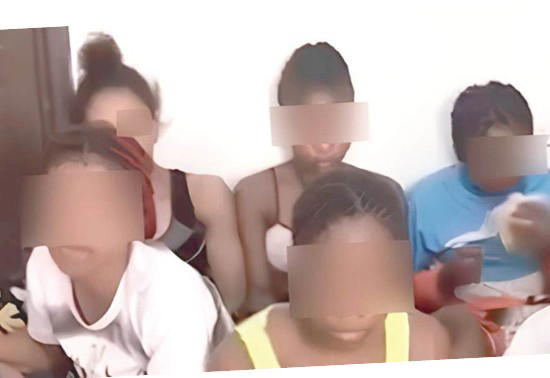
—trapped in 1.6m CFA debt
nBy Esther Onyegbula
nFor 22-year-old Saviour Aloho, what began as a promise of a sales job in Lagos spiralled into months of abuse, captivity and forced sex work in Burkina Faso.
n“I trusted them because it came through someone I knew,” she said quietly, recalling how she left home believing she was stepping into opportunity. Instead, she found herself trapped in a foreign land, burdened with a debt of 1.6 million CFA francs and forced to work long hours under threats of violence.
nSaviour is not alone.
n19 year-old Anita’s journey followed a similar pattern: Deception, betrayal and eventual enslavement.
nToday, both women are back in Nigeria, rescued through the intervention of Prosper K.A. Michael, founder of the Global Anti-Human Trafficking Organization (GAHTO).
nTheir return has once again highlighted the growing menace of cross-border human trafficking in West Africa, particularly the exploitation of vulnerable young women lured with promises of legitimate work.
nSaviour said her ordeal began when a family member introduced her to individuals who promised her employment as a salesgirl in Lagos. From Lagos, she was moved to Benin Republic, still under the guise of securing work.
n“But when we got to Burkina Faso, everything changed,” she recounted. “They told me I owed them 1.6 million CFA. I didn’t even know how that debt came about.”
nUnable to pay, she was forced into sex work.
nAnita’s experience was equally harrowing.
nA familiar neighbour who had just given birth told her she needed help raising hospital bills and sent her to Lagos to meet someone who would provide financial assistance.
nAnita travelled with two others, unaware that she was walking into a trap.
nOn arrival, she was told the supposed benefactor was in prison and had referred her to a man identified as “Mr Lucky.”
nNightmare
nThat meeting marked the beginning of her nightmare.
n“From there, they took me away. The two people I came with were left behind,” she said. She was transported through Benin Republic and eventually into Burkina Faso, where she was forced into prostitution.
nBoth women described the conditions as inhumane, inadequate feeding, no medical care and constant threats.
n“We were beaten if we refused clients,” Saviour said.
n“There was no rest. You either worked or you were punished.”
nThey said the traffickers used the fabricated debt as a tool of control, insisting they must “work it off” before regaining freedom, a freedom that seemed increasingly distant.
nHuman rights advocates say such debt bondage is a common tactic used by trafficking networks to keep victims compliant and fearful.
nHope came through the intervention of Prosper K.A. Michael, a humanitarian who has spent over two decades combating trafficking and who founded GAHTO in 2019.
nOperating without government funding and relying largely on private donations, GAHTO works to rescue, rehabilitate and empower victims of trafficking.
nMichael described human trafficking as “a crime against humanity” and stressed that poverty remains a major driver of the scourge.
n“When young people lack opportunities and parents are struggling, traffickers step in with false promises,” he said. “We must tackle poverty and strengthen family bonds to protect our children.”
nHe disclosed that Anita and Saviour were rescued from captivity in Burkina Faso and repatriated to Nigeria with the support of the Nigerian Embassy in Ouagadougou.
nMichael expressed appreciation to Nigeria’s Ambassador to Burkina Faso, Muhammad Galadima, for facilitating the repatriation process and pledging collaboration to intensify anti-trafficking efforts across Burkina Faso and West Africa.
nThe embassy, he said, has committed to working with GAHTO to target hotspots notorious for the sexual exploitation of young girls.
nNow undergoing rehabilitation and support, Anita and Saviour say they are determined to rebuild their lives.
n“I want other girls to learn from my story,” Anita said. “Don’t follow anyone who promises quick money or jobs abroad without proper verification.”
nSaviour echoed the warning, urging parents to be more vigilant about who has access to their children and to scrutinise offers that appear too good to be true.
nMichael said his vision is to position GAHTO as a leading force against trafficking in Nigeria, but he emphasised that partnerships and donor support are critical.
n“We cannot do this alone,” he said. “Every rescued life is proof that intervention works, but many more are still trapped.”
nTheir stories, painful as they are, serve as both a warning and a testament to resilience, a reminder that behind the statistics of human trafficking are young women with dreams, families and futures worth fighting for.
n nRelated Stories
 General News
CELEBRATING TWO YEARS OF TRANSFORMATIONAL LEADERSHIP IN THE PRESIDENTIAL AMNESTY PROGRAMME
Tomorrow, 14TH March 2026, as we look forward to the second anniversary, we reflect on the remarkable two years since the Administrator of the Preside
 General News
PRESIDENTIAL AMNESTY PROGRAMME PHASE 3: DISREGARD PURPORTED STATEMENT ON DELAYED ITA PAYMENTS — OFFICE OF NATIONAL CHAIRMAN
The Office of the National Chairman of the Presidential Amnesty Programme Phase 3, General Elaye ThankGod Dollar Slaboh, has called on beneficiaries a
 General News
RE: CLARIFICATION ON MY PERSONAL RELATIONSHIPS
PUBLIC NOTICErnrnRE: CLARIFICATION ON MY PERSONAL RELATIONSHIPSrnrnIt has become necessary to make this public clarification following the increasing