
Dangote refinery steers Nigeria towards self-sufficiency and increased local production value
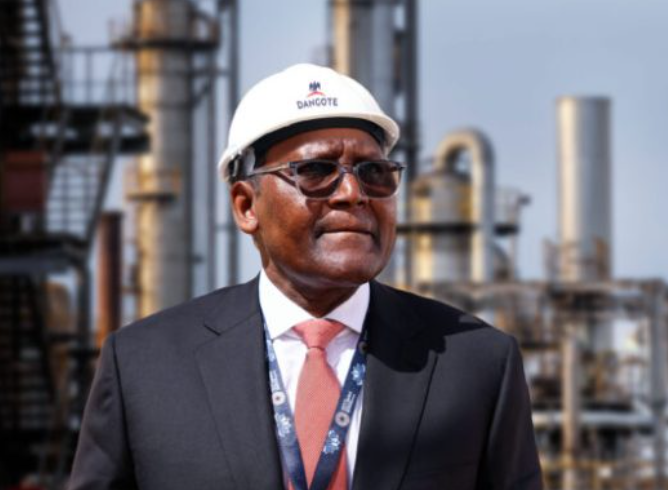
Nigeria's petroleum industry is undergoing a significant transformation, shifting away from an export-oriented model and towards greater domestic processing, driven by the operationalization of the Dangote Petroleum Refinery in Lagos.
nFor decades, the country has exported crude oil while importing refined petroleum products, including petrol, diesel, and aviation fuel, a model that has generated foreign exchange but also incurred substantial foreign exchange costs for refined fuel imports.
nThe Dangote Petroleum Refinery is revolutionizing the downstream petroleum industry by processing crude oil into refined products such as Premium Motor Spirit (PMS), Automotive Gas Oil (AGO), and Jet A-1, as well as petrochemical products like polypropylene and polyethylene.
nThis development adds multiple stages of value addition to Nigeria's petroleum industry, enabling crude oil produced in the country to be processed into products used by households, businesses, and industries.
nDomestic refining also has the potential to reduce Nigeria's dependence on imported petroleum products and the associated foreign exchange requirements, while also creating opportunities for the country to export refined petroleum products to other markets.
nThe refinery's output could serve markets outside Nigeria, particularly in West and Central Africa, allowing the country to export refined petroleum products rather than just crude oil.
nNigeria's long-standing challenges associated with imported refined products, including exposure to international market fluctuations, shipping costs, and insurance, are being addressed by the development of the Dangote Petroleum Refinery.
nThe refinery is linked to petrochemical production, creating potential supplies of industrial inputs for sectors such as packaging, pharmaceuticals, textiles, and construction, with polypropylene and polyethylene used as feedstocks in several manufacturing activities.
nThe wider industrial complex created by the refinery also generates demand for supporting activities, including logistics, transportation, and other services associated with refining and distribution.
nThe expansion of domestic processing could have far-reaching implications beyond the supply of fuels, particularly if locally produced petroleum and petrochemical products support increased industrial activity.
nThe Dangote project is part of a broader development in Nigeria's refining industry, aimed at increasing domestic processing capacity and reducing the country's historical dependence on imported refined petroleum products.
nIncreased Nigerian refining capacity could alter petroleum product supply patterns in West and Central Africa, where countries still rely heavily on refined fuel imports, and this development coincides with efforts to strengthen regional trade under the African Continental Free Trade Area (AfCFTA).
nThe refinery represents a major private investment in Nigeria's petroleum processing industry, adding significant refining and petrochemical capacity to the country's energy infrastructure, and its emergence comes as global energy markets face changes in supply, demand, and energy transition patterns.
nFor Nigeria, the shift towards domestic refining means that a larger portion of the value generated from crude oil can be captured after extraction through refining and petrochemical production, placing greater emphasis on processing crude oil into higher-value products for domestic consumption and regional markets.
nAs domestic refining expands, the performance of the industry will increasingly depend on crude supply, refinery operations, product distribution, and access to domestic and regional markets, making the Dangote Petroleum Refinery a significant development in Nigeria's downstream petroleum sector.
nThe Dangote Petroleum Refinery consequently links crude production with domestic refining, petrochemicals, industrial inputs, and regional petroleum trade, representing a major milestone in Nigeria's petroleum industry.
Related Stories
 General News
CELEBRATING TWO YEARS OF TRANSFORMATIONAL LEADERSHIP IN THE PRESIDENTIAL AMNESTY PROGRAMME
Tomorrow, 14TH March 2026, as we look forward to the second anniversary, we reflect on the remarkable two years since the Administrator of the Preside
 General News
PRESIDENTIAL AMNESTY PROGRAMME PHASE 3: DISREGARD PURPORTED STATEMENT ON DELAYED ITA PAYMENTS — OFFICE OF NATIONAL CHAIRMAN
The Office of the National Chairman of the Presidential Amnesty Programme Phase 3, General Elaye ThankGod Dollar Slaboh, has called on beneficiaries a
 General News
RE: CLARIFICATION ON MY PERSONAL RELATIONSHIPS
PUBLIC NOTICErnrnRE: CLARIFICATION ON MY PERSONAL RELATIONSHIPSrnrnIt has become necessary to make this public clarification following the increasing