
Dangote Refinery pledges to maintain reliable fuel supply despite worldwide refinery closures
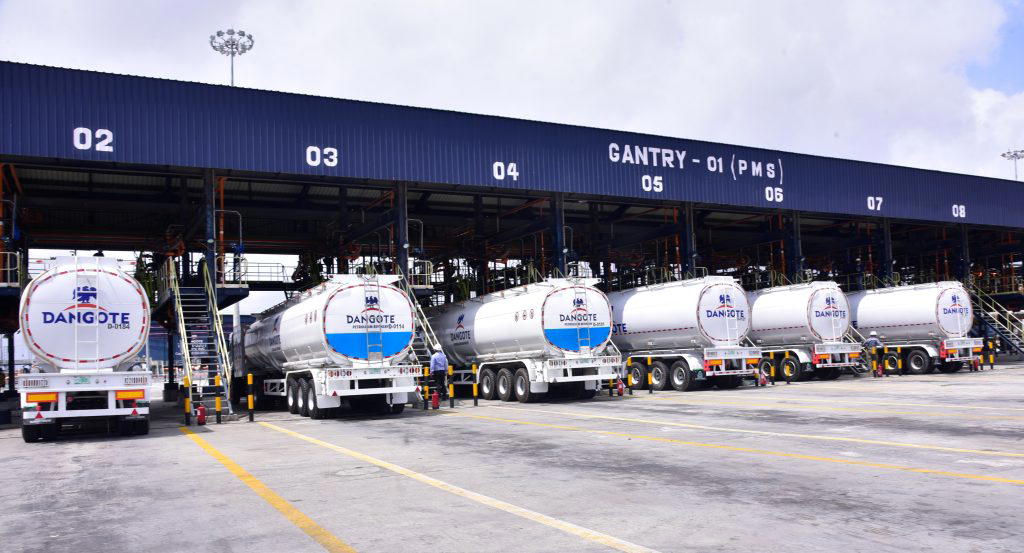
Dangote Petroleum Refinery & Petrochemicals has reaffirmed its dedication to maintaining a stable energy supply in Nigeria, despite the recent turmoil in the global oil market, as evident during a press conference at the Dangote Petroleum Refinery in Lekki, Lagos, on Monday, 15 September 2025, where Dangote Compressed Natural Gas (CNG) trucks were loading Premium Motor Spirit (PMS) at the refinery's gantry.
nThe ongoing conflict in the Middle East has resulted in the shutdown of several refineries worldwide, leading to a global shortage of petroleum products, while China's ban on the export of gasoline and diesel has further exacerbated the issue.
nNigeria, however, is shielded from these supply disruptions due to Dangote Refinery's prioritization of the domestic market, highlighting the benefits of domestic refining, according to the company.
nThe conflict has caused a significant surge in global crude oil and freight prices, with benchmark Brent prices increasing by approximately 26 percent to over $84 per barrel in a short period.
nIn response to this development, the refinery implemented a measured adjustment of N100 per litre in its ex-depot price of Premium Motor Spirit (PMS), representing a 12 percent increase.
nThe refinery has absorbed around 20 percent of the cost escalation to mitigate the impact on the domestic market, despite continuing to source crude oil at prevailing international market prices from both local and foreign suppliers.
nNigerian crude oil is more expensive than the Brent benchmark price by $3 to $6 per barrel, and after adding freight of $3.50 per barrel, the crude oil lands in the refinery's tanks at between $88 and $91 per barrel.
nFor context, crude oil was previously landing in the refinery's tanks at about $68 per barrel when the ex-depot price was N774 per litre, according to the company.
nThe refinery receives approximately five cargoes of crude oil per month from the Nigerian National Petroleum Company Limited (NNPC), which it pays for in naira, but this volume is significantly below the 13 cargoes required monthly to meet domestic demand.
nThe cargoes supplied by NNPC are priced at international market rates plus a premium, forcing the refinery to procure foreign exchange at open market rates to pay for crude cargoes sourced from both local and international traders.
nThe situation is further complicated by the failure of some upstream producers to supply crude oil to the refinery as required under the Petroleum Industry Act (PIA), resulting in the refinery sourcing a substantial portion of its crude through international traders who charge additional premiums.
Related Stories
 General News
CELEBRATING TWO YEARS OF TRANSFORMATIONAL LEADERSHIP IN THE PRESIDENTIAL AMNESTY PROGRAMME
Tomorrow, 14TH March 2026, as we look forward to the second anniversary, we reflect on the remarkable two years since the Administrator of the Preside
 General News
PRESIDENTIAL AMNESTY PROGRAMME PHASE 3: DISREGARD PURPORTED STATEMENT ON DELAYED ITA PAYMENTS — OFFICE OF NATIONAL CHAIRMAN
The Office of the National Chairman of the Presidential Amnesty Programme Phase 3, General Elaye ThankGod Dollar Slaboh, has called on beneficiaries a
 General News
RE: CLARIFICATION ON MY PERSONAL RELATIONSHIPS
PUBLIC NOTICErnrnRE: CLARIFICATION ON MY PERSONAL RELATIONSHIPSrnrnIt has become necessary to make this public clarification following the increasing