
Crude oil costs plummet, European shares bounce back after Trump calls off planned air assaults on Iran's energy sector
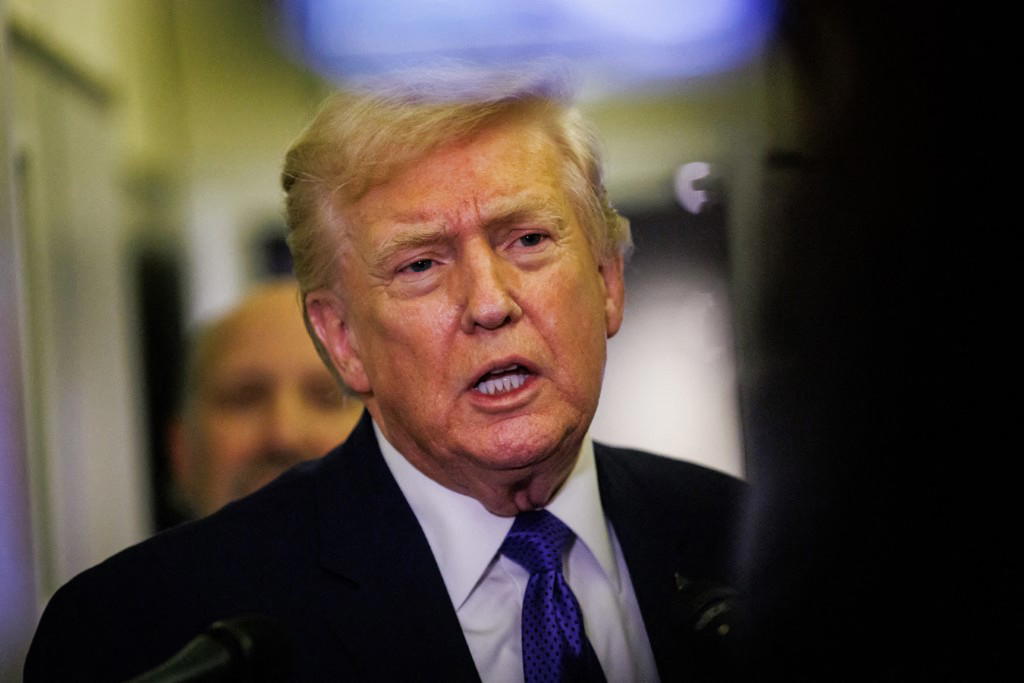
Oil prices plummeted and European stock markets staged a rebound on Monday, characterized by highly volatile trading, after US President Donald Trump unexpectedly called off strikes on Iranian energy infrastructure, citing "very good" discussions with Tehran.
nThis sudden development led to a more than 14 percent drop in crude futures, a stark contrast to Trump's menacing rhetoric over the weekend, although they later pared back to trade around nine percent lower as Iran disputed the occurrence of negotiations.
nAccording to UBS commodities analyst Giovanni Staunovo, "We need to wait for more clarity," as European gas prices declined by four percent, reflecting the uncertainty surrounding the situation.
nAsian and European stock markets initially suffered sharp losses at the start of the week, but European equities rallied following Trump's update and the close of Asian markets.
nThe rebound, however, lost some momentum after Iranian media reported that there had been no talks between Tehran and Washington, injecting further uncertainty into the markets.
nSaxo UK investor strategist Neil Wilson noted, "It's incredibly difficult to trade these markets when Trump is swinging between massive escalation and declaring peace/victory… but the market is happy for now that we do not enter a new phase of danger," highlighting the challenges of navigating such a volatile environment.
nPrior to Trump's update, the International Energy Agency warned of the worst global energy crisis in decades, underscoring the gravity of the situation.
nOn Saturday, Trump had given Iran a 48-hour ultimatum to reopen the Strait of Hormuz to shipping or face the destruction of its energy infrastructure, a move that significantly raised the stakes.
nThe Strait of Hormuz, through which a fifth of global oil and gas flows, remained effectively closed, prompting Iran to warn that it "will be completely closed" should Trump act on his threat.
nObservers have raised concerns about the prospect of surging inflation as oil prices remain elevated, despite Monday's plunge, which could lead to central banks hiking interest rates and potentially triggering a fresh cost-of-living crisis.
nDisruption to fertiliser shipments has also fanned concerns about global food security, adding to the complexity of the situation.
nThe prospect of higher borrowing costs has negatively impacted the price of non-yielding gold, although the precious metal recovered some of its losses following Trump's latest comments, which also reversed the direction of the dollar.
nAhead of Wall Street's reopening, the greenback dropped against the euro, British pound, and yen, having previously risen, reflecting the shifting market dynamics.
nYields on 10-year government bonds, which have been surging, pulled back slightly, as investors continued to navigate the volatile market environment.
nAccording to Susannah Streeter, chief investment strategist at Wealth Club, "As government bonds… see yields rise, it makes gold less attractive given that gold pays no interest," explaining the relationship between bond yields and gold prices.
nStreeter further noted, "Investors who have made losses elsewhere in volatile markets are selling to cover positions," highlighting the challenges faced by investors in such a turbulent market.
nIsrael has stated that the Middle East war could last several more weeks, with its military expanding ground operations in Lebanon against Iran-backed militant group Hezbollah, indicating a potentially prolonged conflict.
nKey figures at around 1245 GMT included Brent North Sea Crude, which was down 9.3 percent at $101.72 per barrel, and West Texas Intermediate, which was down 8.7 percent at $89.73 per barrel.
nIn terms of stock market performance, the London FTSE 100 was up 0.4 percent at 9,952.85 points, while the Paris CAC 40 was up 1.7 percent at 7,795.23, and the Frankfurt DAX was up 2.3 percent at 22,882.83.
nMeanwhile, the Tokyo Nikkei 225 was down 3.5 percent at 51,515.49, the Hong Kong Hang Seng Index was down 3.5 percent at 24,382.47, and the Shanghai Composite was down 3.6 percent at 3,813.28.
nThe New York Dow was down 1.0 percent at 45,577.47, while the euro/dollar was up at $1.1589 from $1.1550 on Friday, and the pound/dollar was up at $1.3397 from $1.3323.
nThe dollar/yen was down at 158.62 yen from 159.30 yen, and the euro/pound was down at 86.50 pence from 86.68 pence, reflecting the fluctuations in the foreign exchange market.
Related Stories
 General News
CELEBRATING TWO YEARS OF TRANSFORMATIONAL LEADERSHIP IN THE PRESIDENTIAL AMNESTY PROGRAMME
Tomorrow, 14TH March 2026, as we look forward to the second anniversary, we reflect on the remarkable two years since the Administrator of the Preside
 General News
PRESIDENTIAL AMNESTY PROGRAMME PHASE 3: DISREGARD PURPORTED STATEMENT ON DELAYED ITA PAYMENTS — OFFICE OF NATIONAL CHAIRMAN
The Office of the National Chairman of the Presidential Amnesty Programme Phase 3, General Elaye ThankGod Dollar Slaboh, has called on beneficiaries a
 General News
RE: CLARIFICATION ON MY PERSONAL RELATIONSHIPS
PUBLIC NOTICErnrnRE: CLARIFICATION ON MY PERSONAL RELATIONSHIPSrnrnIt has become necessary to make this public clarification following the increasing