
Court adjourns for judgment suit challenging Donald Duke’s PRP presidential candidacy
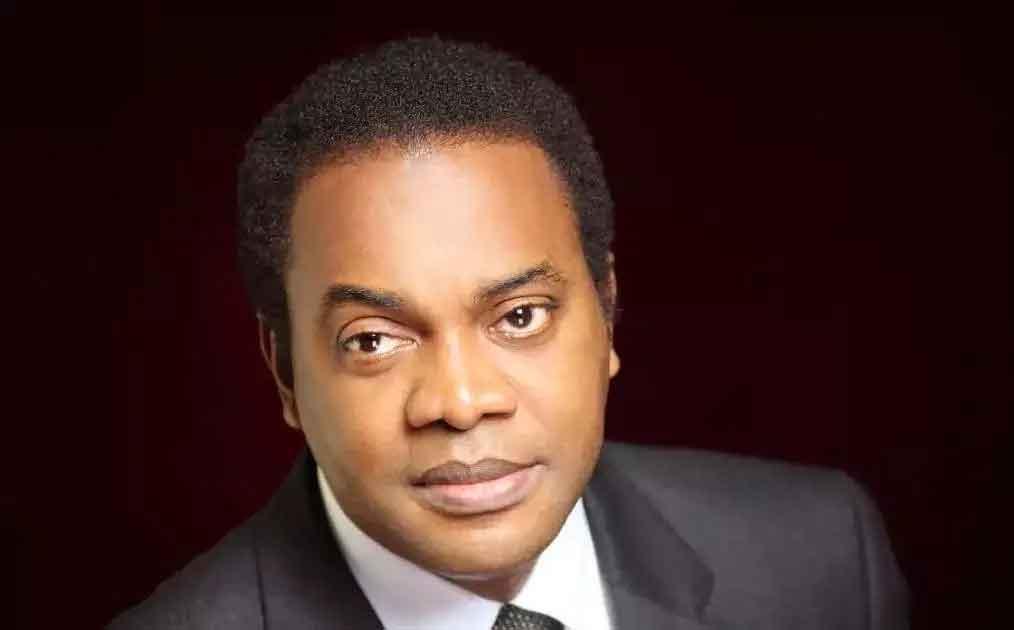
Donald Duke
nThe Federal High Court has adjourned until Nov. 2 for judgment in a suit challenging the emergence of former governor of Cross River, Mr Donald Duke of Cross Rivers, as the presidential candidate of the Peoples Redemption Party (PRP) for the 2027 general elections.
nJustice Mohammed Umar fixed the date on Tuesday in Abuja after counsel for the plaintiff, Abdullahi Muhammad; Duke’s lawyer, Noah Abdul; and Azubuike Ogochukwu, who appeared for INEC, adopted their processes in the case.
nAn aspirant, Dr Yakubu Kingsley, filed the suit to challenge the emergence of Duke as presidential candidate of PRP.
nKingsley, through his lawyer, sued the PRP, Duke and INEC as the 1st to 3rd defendants, respectively.
nThe plaintiff, in the suit marked FHC/ABJ/CS/1234/2026, sought three questions for determination in the originating summons filed on June 10.
nThe plaintiff wants the court to determine whether Duke was duly returned as the presidential candidate of PRP in the May 25 primary election, in which its results were declared on May 26, having not been a registered member of the party as of May 4, when the PRP’s membership register was submitted to INEC.
nHe also prayed the court to declare overvoting in states like Bauchi, Gombe and Kwara.
nHe, therefore, sought a declaration that the ex-governor, not being a registered member of the PRP, cannot participate in the party’s primary election held on May 25, where he was declared the winner on May 26.
nHe sought a declaration that Duke ought not to have been cleared for the presidential primary election contest, having not complied with the guidelines of the party to physically present for the screening at its national secretariat.
nKingsley prayed the court for an order setting aside the results of the presidential election conducted in Bauchi, Gombe and Kwara, respectively, on the grounds of overvoting.
nHe sought an order declaring him as the presidential candidate of PRP for the 2027 general elections, having complied with all the party’s guidelines and been a registered member of the party.
nHe also sought an order directing the commission not to recognise Duke as PRP’s presidential flagbearer or to delete his name from its database as the presidential candidate of the party.
nThe plaintiff further sought an order directing the electoral umpire to recognise him as PRP’s presidential candidate.
nIn the affidavit in support of the suit, deposed to by Kingsley himself, the aggrieved aspirant said he is a registered member of PRP with membership card number 2A8D8B20B2.
nThe plaintiff, who described himself as a “politician”, said he is of Auchi III Ward, Etsako West Local Government Area of Edo State, but is presently in Abuja, FCT.
nHe averred on oath that Duke was not a duly registered member of the PRP as of May 4 when the membership register of the party was submitted to INEC.
nHe said he validly purchased the party’s Expression of Interest Form and Nomination Form for the office of president of the Federal Republic of Nigeria and paid a total sum of N20 million to the party.
nDuke and PRP, in a preliminary objection jointly filed June 23 by their lawyer, Noah Abdul, challenged the jurisdiction of the court to hear the case.
nGiving seven grounds why their application should be granted, Abdul argued that Kingsley’s suit “as constituted is purportedly a pre-election matter within the meaning of Section 285(14)(a) of the Constitution of the Federal Republic of Nigeria, 1999 (as amended)”.
nThe lawyer submitted that by Section 285(9) of the constitution, every pre-election matter ought to have been filed not later than 14 days from the date of the occurrence of the event, decision or action complained of.
nAccording to him, the cause of action in this suit arose on 26 May 2026, being the day the result of the presidential primary election of the 1st defendant was declared.
nHe, however, said that the instant suit was filed on June 11, 17 days after the accrual of the cause of action.
n“The instant suit was filed outside the mandatory 14-day period stipulated by Section 285(9) of the constitution and therefore statute-barred.
n“The 14-day period under Section 285(9) is jurisdictional and cannot be extended or enlarged by the court or waived by parties,” he said.
nAbdul argued that issues relating to membership of a political party, as is the instant case, are matters strictly within the domestic affairs of a political party.
nHe said the court has no jurisdiction to determine who the members of a political party are.
n“It is not a justiciable question,” he said.
nOn its part, INEC said its statutory function is to promote knowledge of sound democratic election processes and monitor the operations of political parties, including their primaries.
nThe commission said its officers who monitored the PRP primary election neither participated in the accreditation of delegates, the voting process, the collation of votes, nor the declaration of the winner of the primary election.
nIt said the responsibilities for conducting, collating and declaring the outcome of the primary election rested solely on the PRP officials.
nAccording to INEC, the officials of the 3rd defendant merely observed the conduct of the exercise in accordance with the provisions of the Electoral Act.
nThe electoral umpire said it was therefore not in a position to include or exclude the result of any ward or local government area.
nBesides, it said the declaration of the winner of the primary election was made exclusively by the electoral committee appointed by the party.
nINEC said it could only act upon the name of a candidate validly submitted to it by the political party in accordance with the Electoral Act.
nIt said until a competent court makes an order affecting the nomination of a candidate, it is bound to discharge its statutory duties strictly in accordance with the constitution and the Electoral Act.
nThe commission said it had no personal interest whatsoever in who emerges as the candidate of PRP and had remained completely neutral throughout the nomination process.
n“The third defendant remains a neutral arbiter in the primary election.
n“The third defendant is bound to accept the returned candidate of any election that is fair, free and credible as the winner of the election,” it said.
nThe commission, therefore, said its primary concern is the integrity of the process. (NAN)
n nRelated Stories
 General News
CELEBRATING TWO YEARS OF TRANSFORMATIONAL LEADERSHIP IN THE PRESIDENTIAL AMNESTY PROGRAMME
Tomorrow, 14TH March 2026, as we look forward to the second anniversary, we reflect on the remarkable two years since the Administrator of the Preside
 General News
PRESIDENTIAL AMNESTY PROGRAMME PHASE 3: DISREGARD PURPORTED STATEMENT ON DELAYED ITA PAYMENTS — OFFICE OF NATIONAL CHAIRMAN
The Office of the National Chairman of the Presidential Amnesty Programme Phase 3, General Elaye ThankGod Dollar Slaboh, has called on beneficiaries a
 General News
RE: CLARIFICATION ON MY PERSONAL RELATIONSHIPS
PUBLIC NOTICErnrnRE: CLARIFICATION ON MY PERSONAL RELATIONSHIPSrnrnIt has become necessary to make this public clarification following the increasing