
Country's electricity grid completely disrupted
Professor Zulum embodies the quintessential Nigerian leader who shuns the truth, as evidenced by his unilateral decision to grant amnesty to 30,000, or possibly 300,000, "repentant" Boko Haram terrorists without consulting the Federal Government, thereby endangering the lives of Nigerians nationwide.
nThis move was met with warnings from some individuals, who cautioned that it would have far-reaching consequences, not only in Borno State but also across the country, and it appears that deception has played a significant role in this scenario.
nThe recent assault on military installations and civilian settlements in the state by hoodlums, resulting in the loss of hundreds of lives among both the armed forces and civilians, underscores the gravity of the situation, and Governor Zulum's lack of remorse is striking.
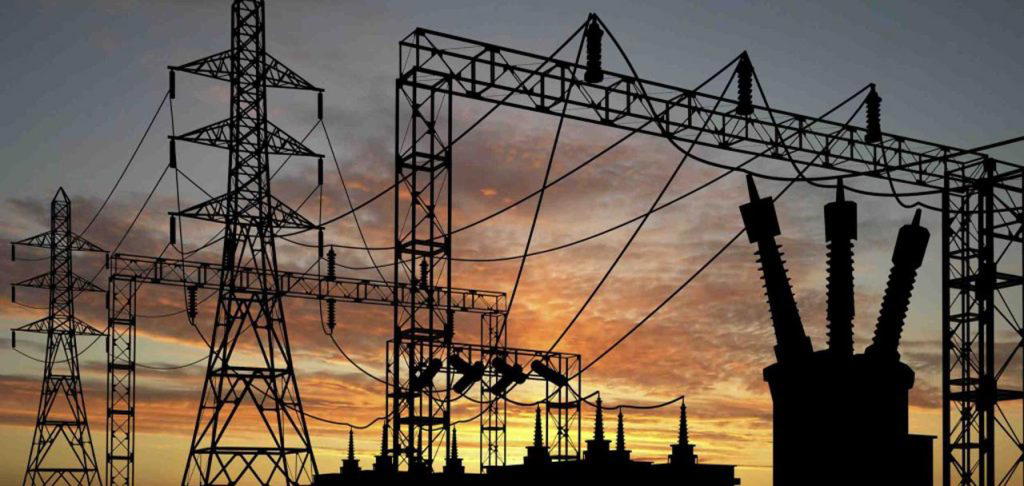
nThe power crisis plaguing the economy and the lives of Nigerians did not occur by chance, but rather as a result of deliberate actions and inactions by those in power, with all Nigerian Presidents since 1999 contributing to the problem, which has been dubbed "a cruel national joke" by a national newspaper.
nFurthermore, every Senator and Member of the Federal House of Representatives, Minister of Power, and Special Adviser has been complicit in the conspiracy of falsehood that has led the country to the brink of collapse, with the power sector being a prime example of this phenomenon.
nPerhaps no issue has inspired as much despair and hopelessness as the power crisis, with a long history of broken promises and unfulfilled expectations, as aptly captured by the quote "promises are like cream crackers, made to be broken" from Jonathan Swift's VANGUARD BOOK OF QUOTATIONS.
nLate Chief Bola Ige, President Obasanjo's first Minister of Power and Steel, set the tone for deceit in 1999 when he claimed that "power failure will be a thing of the past in six months," despite efforts to correct him, and he was eventually removed from office two and a half years later without achieving any significant progress.
nEngineer Lyel Imoke succeeded Ige and made his own promise to deliver 10,000MW of power per day by 2007, but this goal was not met, and President Obasanjo's request for $13-16 billion to support this effort ultimately yielded little results, with maximum power supply per day standing at under 3,500MW when Obasanjo left office in 2007.
nPresident Jonathan took over and made new promises, with Professor Nnaji pledging to deliver 14,000MW of power before 2015, but by May 29, 2015, when the baton of leadership was passed to Buhari, power supply had only reached 3,600MW, with a maximum supply of 4,100MW during Jonathan's tenure.
nOn May 29, 2015, Buhari declared that "4,000MW power supply per day is unacceptable" and vowed to improve the situation, but eight years later, on May 29, 2023, Buhari handed over power to Tinubu with the economy on the brink of collapse and power supply at 3,980MW, marking a significant decline from the previous year.
nTinubu had campaigned on a promise to turn around the power sector, stating that if he failed to do so within three years, Nigerians should not vote for him again, but with only two and a half months left in his third year, it appears that only a miracle can save him from embarrassment, as power supply has continued to decline.
nA report by VANGUARD on March 6, 2026, revealed that power generation had dropped by 11% to 2,898 MW, with the Nigerian Independent System Operator citing poor gas supply as the reason, a excuse that has been offered countless times over the past 40 years.
nThe power supply crisis in Nigeria has evolved into a full-blown disaster that threatens to destroy the country, with energy being the primary constraint on the economy, health, transportation, education, and every aspect of social welfare, and it is imperative that the government takes immediate action to address this issue.
nUnfortunately, every government since the 1980s has failed to deliver on its promises regarding power supply, contributing to the country's relative backwardness, and the same mindset persists, with appointments to the Ministry of Power often being seen as an opportunity for personal gain rather than a call to serve the nation.
nPresidents have made appointments to the Ministry of Power for political reasons, frequently disregarding the performance of their appointees, and three examples illustrate this point, including a corruption case involving a power contract awarded during Obasanjo's second term, which is currently winding its way through the courts.
nA former Minister of Power under Buhari is also facing charges of monumental embezzlement of public funds, but was not sacked or prosecuted due to religious and ethnic considerations, raising questions about the government's commitment to accountability and good governance.
nTinubu's Minister of Power has reportedly resigned to contest the governorship of Oyo State, a move that could have significant implications for the state, and it is worth noting that the Minister has been instrumental in imposing rapid tariff increases on power consumers while presiding over a decline in power supply.
nOn March 8, 2026, a remarkable phenomenon occurred, as all generators in two communities where the author works and resides fell silent, not due to any coordinated effort, but because the cost of fueling them had become unsustainable, marking a new low in the power crisis and a testament to the desperation of Nigerians.
nThe situation is a stark reminder that, as Joseph Goebbels once said, "there are no desperate situations, only desperate men," and it is clear that powerless Nigerians are indeed desperate, with the author himself being a "legalised victim" of the power distribution companies, which are permitted to present bills and demand payment without providing adequate services.
Related Stories
 General News
CELEBRATING TWO YEARS OF TRANSFORMATIONAL LEADERSHIP IN THE PRESIDENTIAL AMNESTY PROGRAMME
Tomorrow, 14TH March 2026, as we look forward to the second anniversary, we reflect on the remarkable two years since the Administrator of the Preside
 General News
PRESIDENTIAL AMNESTY PROGRAMME PHASE 3: DISREGARD PURPORTED STATEMENT ON DELAYED ITA PAYMENTS — OFFICE OF NATIONAL CHAIRMAN
The Office of the National Chairman of the Presidential Amnesty Programme Phase 3, General Elaye ThankGod Dollar Slaboh, has called on beneficiaries a
 General News
RE: CLARIFICATION ON MY PERSONAL RELATIONSHIPS
PUBLIC NOTICErnrnRE: CLARIFICATION ON MY PERSONAL RELATIONSHIPSrnrnIt has become necessary to make this public clarification following the increasing