US President Donald Trump has declared that the war with Iran "would end soon", sparking a drop in crude oil prices to $88 per barrel from $110 per barrel, thus driving down fears of extended disruptions to global oil supply.
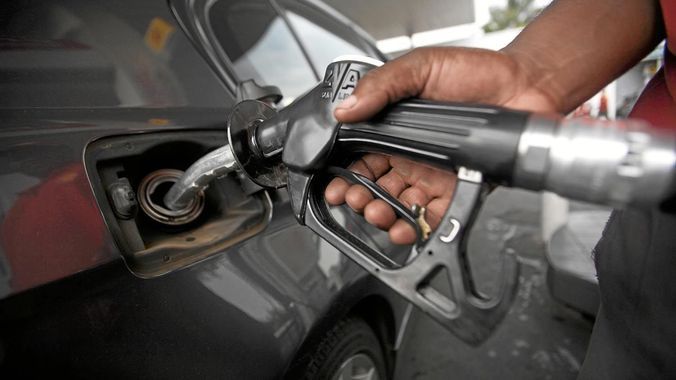
The Dangote Petroleum Refinery has reduced its ex-gantry petrol price by N100 per litre to N1,075 per litre from N1,175 per litre, following the drop in crude oil price, while petrol supplied through coastal distribution will now sell at N1,050 per litre.
Speaking from his Doral resort in Miami, Trump described the war in Iran as a "little excursion" that had succeeded "much faster than we thought", and his administration was "looking to keep the oil prices down", as "they went artificially up because of this excursion".
Iranian authorities, however, have ruled out talks with the US government, vowing to continue missile attacks on its neighbours, with Iran's foreign minister, Abbas Araghchi, saying talks with the United States are not on the agenda as the war entered its 11th day.
Abbas Araghchi told PBS News in an interview that Tehran had a "very bitter experience" during previous negotiations with the US, and "we are prepared, we have been prepared to continue attacking them with our missiles as long as needed and as long as it takes".
A report by Fitch Ratings has warned that emerging market economies could face heightened economic and financial pressures as a result of the ongoing conflict involving Iran, which could lead to sustained disruptions to energy supplies from the Gulf.
The price of diesel was also revised downward to N1,430 per litre, a N190 reduction from the previous price of N1,620 per litre, offering further relief to consumers and businesses dependent on the fuel, according to Dangote Refinery's latest pricing template released yesterday.
The company noted that the quoted gantry prices exclude statutory charges imposed by the Nigerian Midstream and Downstream Petroleum Regulatory Authority, as the development aligns with remarks made by the refinery's Chief Executive Officer, David Bird.
David Bird said on March 9 that the Dangote refinery was not insulated from global oil price shocks, given that it sources its crude on international benchmarks, as Brent crude, the global oil benchmark, dipped by over 10.45 per cent to $88 a barrel.
US West Texas Intermediate dropped by 8.58 per cent to $86.77 per barrel, after ministers of European countries met to examine the release of oil reserves, as part of measures to tame price upswings seen recently in the global market.
Depot owners and oil marketers remain adamant, despite the drop in crude oil price, as petrol retail outlets in Abuja retained the high pump price of petrol implemented the previous day, with NNPC Retail outlets dispensing at N1,285 per litre.
AA Rano and AYM Shafa are still selling at N1,330 per litre, while checks on some of the bus stops in Area 8, Garki and Central Area, showed that routes which cost about N1,500 the previous day had dropped to N1,200.
Fare from Area 8 to Nyanya, which doubled to N1,000, on Monday evening, has reduced to N800, as oil and gas sector governance expert, Mr. Henry Adigun, expressed optimism that the war in the Middle East would end soon.
Mr. Henry Adigun warned, however, that "it will take about four weeks from the end of hostilities for crude oil prices to come back to normal", as the ripple effects of the increase in fuel price are being felt across all sectors of the economy in Lagos.
Marketers now sell petrol between N1,150 and N1,250 per litre, respectively, a development which saw transport fares going to as high as 30 per cent, as commuters resorted to trekking, following increase in fares.
Ben Ofufu, a commercial motor cyclist, said: "It’s kind of hard for us as overnight, prices shot up, the sad thing is that it will not make sense to customers who had been complaining of hardship before now".
A private car owner, Mr. Sulaimon Jubril, explained that the price increase has forced him to abandon his car, saying "I tell you for certain that today was the first time in days since I bought fuel for my car".
Mr. Sulaimon Jubril called on the Federal Government to wade into the power sector crisis and help Nigerians whose businesses and livelihood depended on electricity, as the Chief Executive Officer, Petroleumprice.ng, Olajide Jeremiah, said the depots and retail outlets had not yet responded by effecting reductions in their prices.
Olajide Jeremiah said: "The news of change in crude oil price and gantry price of Dangote Petroleum Refinery came as a big surprise to the domestic market, many depots and filling stations are still selling at the old price but there should be downward adjustments before weekend".
The Petroleum Products Retail Outlets Owners Association of Nigeria, PETROAN, said petrol price in Nigeria will continue to rise and fall, depending on developments, as its National President, Billy Gillis-Harry, commended Dangote Petroleum Refinery for the latest downward price adjustment.
Billy Gillis-Harry said: "The refinery has taken the right step, other operators in the downstream will follow as soon as they finished selling their stocks", emphasizing that revamping Nigeria’s refineries for immediate domestic production was critical.
The Executive Director, Centre for Promotion of Private Enterprises, CPPE, Dr Muda Yusuf, said: "There is a need for policy priorities for sustaining refining investments, given the strategic importance of domestic refining to Nigeria’s energy security, external sector stability and industrial development".
Dr Muda Yusuf emphasized that government policy should continue to encourage domestic refining through a coordinated mix of trade policy, fiscal policy and monetary policy measures, as Fitch Ratings warned that emerging market economies could face heightened economic and financial pressures due to the ongoing conflict involving Iran.
Fitch said oil and gas imports were the most direct channel for contagion from the conflict, given its effect on global energy prices, and that larger economies, such as India, net fossil fuel imports are equivalent to 3 per cent or more of GDP.
Fitch Ratings said: "The Iran conflict could raise additional challenges for some emerging market sovereigns, through such channels as energy imports, remittances, fiscal subsidies, exchange rates, and access to international finance".


Comments
Please login to leave a comment.
No comments yet. Be the first to share your thoughts!