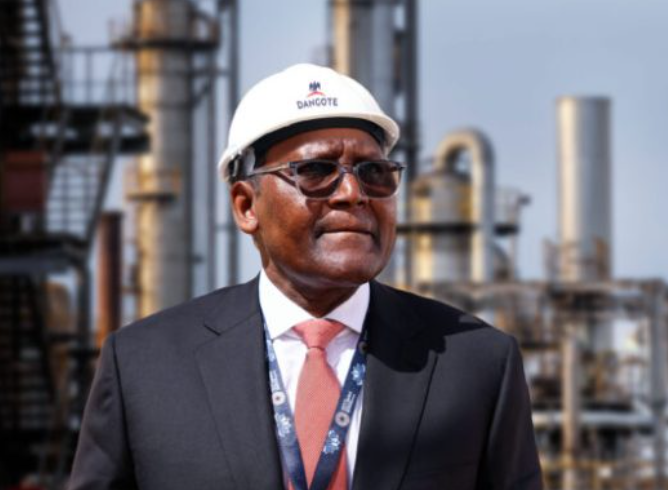
Despite a reduction in the gantry price of Dangote Petroleum Refinery to N1,200 per litre from N1,275 per litre, oil marketers continue to sell petrol at N1,330 per litre and above in Lagos and its environs.
Motorists had anticipated that the N75 per litre reduction by the refinery would be reflected at petrol stations, but this has not been the case, with MRS selling at N1,300 per litre and Mobil at N1,330 per litre in Lagos.
Transporters are also charging exorbitant fares, with commuters paying as much as N2,600 from Ikorodu to Mile 12, compared to about N1,500 before the recent surge in petrol prices.
The Dangote refinery has continued to attract patronage from many oil marketers, despite the Nigerian Midstream and Downstream Petroleum Regulatory Authority granting import licences to six local marketers.
According to S&P Global, this move has prompted temporary patronage of fuel importers, but the Dangote refinery remains a key player in the domestic market.
Colman Obasi, National President of the Oil and Gas Service Providers Association of Nigeria, noted that Dangote Petroleum Refinery has the capacity to meet domestic demand and export to other markets.
Obasi stressed that the domestic refineries, especially Dangote, should be encouraged to meet local demand and export petroleum products, which would conserve foreign exchange and generate revenue for the nation.
Olatide Jeremiah, Chief Executive Officer of Petroleumprice.ng, said the latest gantry price reduction has repositioned Dangote Petroleum Refinery as the market leader in the domestic market.
The global oil market is reacting to Middle East tensions, with Nigeria's Bonny Light crude rising to about $110 per barrel from $100 per barrel, amid indications of possible stability.
Iran has permitted the passage of 10 tankers through the Strait of Hormuz, although the details of the shipments remain unclear, with analysts believing the vessels may be carrying Saudi Arabian crude.
Petroleum economist Wumi Iledare commented that the Middle East tensions have tightened global oil supply and pushed crude prices upward, affecting Nigerian households and businesses.
Iledare noted that petrol prices are closely linked to crude oil prices and exchange rate movements, resulting in higher transport costs, rising food prices, and increased operating expenses for Nigerian households and businesses.
Chinyere Almona, Director-General of the Lagos Chamber of Commerce and Industry, said the current challenge reflects a structural supply deficit, as Nigeria's daily petrol demand of over 50-53 million litres outpaces effective domestic refining capacity.
Almona called for government intervention, stressing the need for targeted support for critical sectors, such as transportation, agriculture, and SMEs, to mitigate inflationary spillovers and avoid inefficient blanket subsidies.
She also emphasized the importance of stabilising the naira through improved FX liquidity and policy coordination, as well as signaling policy clarity and consistency to reinforce investor confidence in the deregulated regime.
Pope Leo XIV warned that God "does not listen to the prayer of those who wage war" as conflict in the Middle East continues on multiple fronts, saying "this is our God… A God who refuses war… who does not listen to the prayer of those who wage war".
The Pontiff paid tribute to "the Christians of the Middle East, who suffer the consequences of a terrible conflict and, in many cases, cannot fully live the rites of these holy days" during his Palm Sunday homily.
Earlier this week, the pope called for a ceasefire in the Middle East war, urging the warring parties to hold talks, and noting that more than a million people had been forced to flee their homes.
Pope Leo XIV, the first American pope, has repeatedly condemned the war and called for dialogue, but has been cautious in his statements since the US-Israeli strikes on Iran that started the war on February 28.

Comments
Please login to leave a comment.
No comments yet. Be the first to share your thoughts!