
Concerns Mount as Orphanage Reports Alarming Disappearance of Infants Amid Fears of Widespread Child Smuggling
By Steve Oko, UMUAHIA
nA quiet but disturbing shift is unfolding in Nigeria’s child welfare system – one that is leaving orphanages emptier and raising fresh concerns about an underground trade in human lives.
nAt first glance, the reduced number of children in some orphanages might suggest progress — fewer abandoned babies, stronger family structures, improved social responsibility. But beneath the surface lies a far more troubling reality.
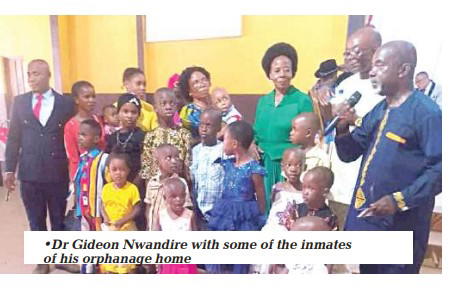
nAccording to the Chief Executive Officer of Holyland Homes, Owerrinta, Abia State, Dr Gideon Ijeoma Nwandire, the decline is not a sign of societal improvement but evidence of a dangerous trend: the commercialization of newborns.
n“What we are hearing is that many young girls who get pregnant now sell their babies. It has become a business,” he said, his voice heavy with concern.
nA disturbing shift
nFor decades, orphanages relied largely on infants abandoned due to poverty, stigma, or unwanted pregnancies. Those children, though victims of circumstance, often found refuge in care homes where they were nurtured, educated, and sometimes adopted into new families.
nToday, that pathway is shrinking. Instead of abandonment, babies are increasingly being diverted into informal and often illegal networks, where they are exchanged for money — out of desperation, exploitation, or greed.
nThe result is a troubling paradox: orphanages are running low on children even as economic hardship deepens across communities.
n“This is not because things are getting better,” Dr Nwandire stressed. “It’s because something worse is happening quietly.”
nIn fact more teenage girls are now into baby factory craze where they are impregnated and harboured in illegal baby homes popularly known as baby factories.
nWhen they give birth, they sell off their babies to the operators of such illegal homes often at ridiculous amounts. The innocent babies are sold out to buyers for different purposes including rituals.
nFrom compassion to commitment
nHolyland Homes itself was born out of compassion. Troubled by the plight of abandoned children, Dr Nwandire and his wife took it upon themselves to create a safe haven.
nWith no institutional backing at the start, the couple relied on personal income and family inheritance to keep the home running — feeding, clothing, and educating children who had nowhere else to go.
n“We couldn’t look away,” he said. “These children needed a future.”
nOver time, their efforts grew into a structured institution, complete with nursery, primary, and secondary schools — not just for the children in their care, but also for others in the community.
nYet, even as the facility expanded, a new challenge emerged: fewer children to care for.
nThe hidden network
nWhile official records may show a decline in abandoned babies, insiders fear this may only reflect a shift into less visible channels.
nSome children still arrive — picked up by security agencies after being found in precarious conditions, or handed over by struggling parents unable to provide for them. But such cases are now fewer.
n“There are still children in need,” Dr Nwandire explained. “But many are no longer coming through the right channels.”
nThe implication is chilling: vulnerable infants may be slipping through the cracks into unregulated systems, where their safety cannot be guaranteed.
nAdoption without children
nIronically, demand for adoption remains strong. “We have people who want to adopt. But the children are not there like before”, he said.
nStrict adoption protocols, carried out through the Ministry of Women Affairs and Youth Development, are designed to protect children from abuse and trafficking. But the shortage of legally available children has created a bottleneck.
nSome children in the homes have grown beyond adoptable age, while fewer infants are being brought in.
nThe imbalance raises difficult questions: Where are the missing babies going?
nA call for urgent attention
nExperts warn that without decisive intervention, the trend could deepen, fueling a shadow economy that thrives on exploitation and weak oversight.
nDr Nwandire believes the solution lies in stronger monitoring systems, public awareness, and economic support for vulnerable mothers.
n“We must address the root causes”, which he identified as”poverty, stigma, and lack of support”.
n”If we don’t, this problem will continue to grow”, he warned.
nBeyond statistics, real lives
nBehind the statistics are real children — unseen, unaccounted for, and potentially at risk. For facilities like Holyland Homes, the mission remains unchanged: to protect, nurture, and give hope to the most vulnerable. But the changing landscape has made that mission more complex.
n“This is not just about orphanages,” Dr Nwandire said. “It is about the value we place on human life.”
nAs Nigeria grapples with economic and social pressures, this emerging crisis demands urgent attention — before more lives are quietly traded out of sight.
n nRelated Stories
 General News
CELEBRATING TWO YEARS OF TRANSFORMATIONAL LEADERSHIP IN THE PRESIDENTIAL AMNESTY PROGRAMME
Tomorrow, 14TH March 2026, as we look forward to the second anniversary, we reflect on the remarkable two years since the Administrator of the Preside
 General News
PRESIDENTIAL AMNESTY PROGRAMME PHASE 3: DISREGARD PURPORTED STATEMENT ON DELAYED ITA PAYMENTS — OFFICE OF NATIONAL CHAIRMAN
The Office of the National Chairman of the Presidential Amnesty Programme Phase 3, General Elaye ThankGod Dollar Slaboh, has called on beneficiaries a
 General News
RE: CLARIFICATION ON MY PERSONAL RELATIONSHIPS
PUBLIC NOTICErnrnRE: CLARIFICATION ON MY PERSONAL RELATIONSHIPSrnrnIt has become necessary to make this public clarification following the increasing