
Complete inventory: Anti-graft agency wins court order to seize 48 assets tied to Malami
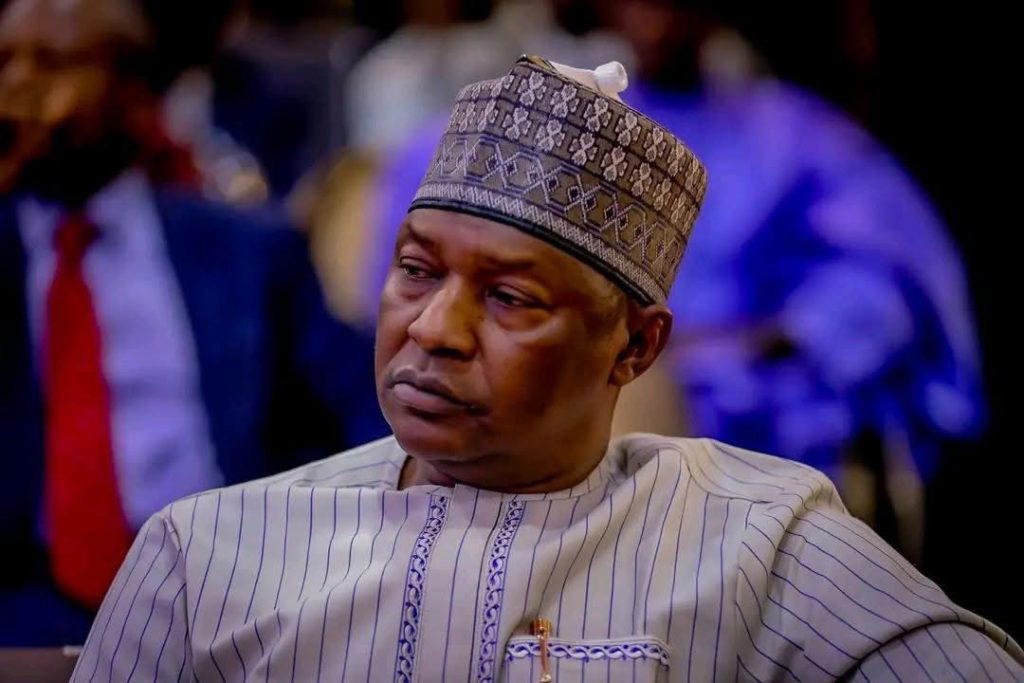
The Economic and Financial Crimes Commission has successfully obtained the final forfeiture of 48 properties tied to former Attorney-General of the Federation and Minister of Justice, Abubakar Malami, in favor of the Federal Government.
nThis decision was made by Justice Joyce Abdulmalik of the Federal High Court in Abuja, who granted the order on Wednesday, stating that the EFCC had demonstrated that the assets were likely acquired through unlawful means and not from legitimate income sources.
nAmong the properties forfeited to the government are Rayhaan University's campuses in Kebbi State, including its permanent, temporary, and third campuses, as well as the Vice Chancellor's residence and Rayhaan Radio.
nOther forfeited assets include luxury buildings, hotels, and commercial plazas in Abuja, Kano, and Kebbi States, such as Meethaq Hotels in Jabi and Maitama, and Harmonia Hotels in Garki.
nThe court also ordered the forfeiture of Rayhaan Agro Allied Factory in Kebbi State, including its buildings, machinery, and other facilities, as well as assets at Azbir Arena, including the hotel, printing press, and pharmacy.
nAdditional properties affected by the order include the Al-Afiya Energy tanker garage, Rayhaan Security House, and the Zeennoor Hotel in Kano, among others.
nThe case initially began on January 6, 2026, when Justice Emeka Nwite granted an interim forfeiture order following an application by EFCC counsel, Ekele Iheanacho.
nFollowing the interim order, the EFCC published notices in national newspapers, inviting interested parties to show cause why the assets should not be permanently forfeited to the Federal Government.
nMalami and 14 other respondents subsequently challenged the interim forfeiture, questioning the court's jurisdiction and urging it to reject the EFCC's request for permanent forfeiture.
nAfter hearing arguments on May 27, 2026, Justice Abdulmalik reserved judgment before delivering her ruling on Wednesday, ultimately holding that the EFCC had sufficiently established the properties were acquired with proceeds of unlawful activities.
nThe court ruled that the respondents failed to prove the properties were acquired from legitimate sources, and instead merely claimed ownership without presenting evidence.
nAccording to the court, the respondents were required to provide evidence of the lawful sources of funds used to acquire the disputed assets, rather than relying on bare claims of ownership.
Related Stories
 General News
CELEBRATING TWO YEARS OF TRANSFORMATIONAL LEADERSHIP IN THE PRESIDENTIAL AMNESTY PROGRAMME
Tomorrow, 14TH March 2026, as we look forward to the second anniversary, we reflect on the remarkable two years since the Administrator of the Preside
 General News
PRESIDENTIAL AMNESTY PROGRAMME PHASE 3: DISREGARD PURPORTED STATEMENT ON DELAYED ITA PAYMENTS — OFFICE OF NATIONAL CHAIRMAN
The Office of the National Chairman of the Presidential Amnesty Programme Phase 3, General Elaye ThankGod Dollar Slaboh, has called on beneficiaries a
 General News
RE: CLARIFICATION ON MY PERSONAL RELATIONSHIPS
PUBLIC NOTICErnrnRE: CLARIFICATION ON MY PERSONAL RELATIONSHIPSrnrnIt has become necessary to make this public clarification following the increasing