
Complete breakdown of nations impacted by Trump's recently introduced American visa deposit requirement
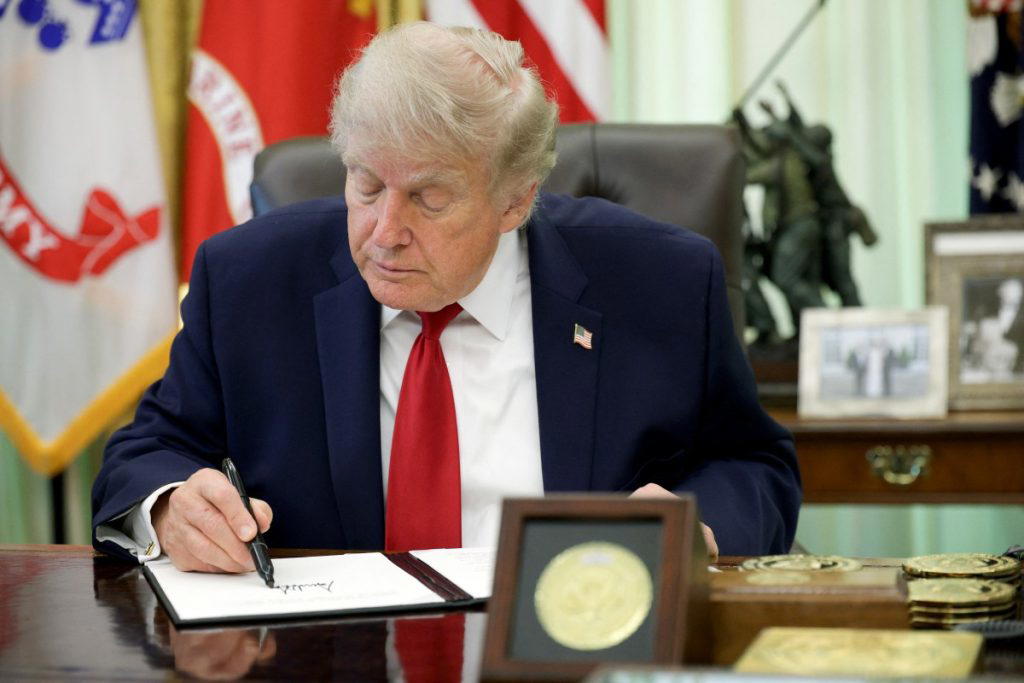
WASHINGTON, DC – JUNE 29: U.S. President Donald Trump signs an executive order dealing with automobile repairs in the Oval Office at the White House on June 29, 2026 in Washington, DC. Trump followed up the signing by answering questions about the SAVE America Act. Alex Wong/Getty Images/AFP (Photo by ALEX WONG / GETTY IMAGES NORTH AMERICA / Getty Images via AFP)
nThe administration of US President Donald Trump has moved to permanently enforce a visa bond programme requiring certain visitor visa applicants from 50 countries, including Nigeria, to pay refundable bonds of up to $20,000 before travelling to the United States.
nThe Visa Bond Pilot Program, introduced in August 2025, required some applicants for tourist and business visas to pay refundable bonds aimed at discouraging visa overstays.
nIn a draft notice published on Friday, the US State Department said the year-long pilot had demonstrated that the policy was effective.
nThe department stated that the pilot had “provided sufficient data to suggest that a visa bond program is an effective tool for enforcing compliance among bonded visa holders.”
nUnder the permanent programme, consular officers may require applicants to post bonds of $10,000, $15,000 or $20,000, depending on their individual circumstances.
nAccording to the State Department, the standard bond will generally be set at $15,000. However, the amount may be reduced to $10,000 if an applicant cannot afford the standard bond but can still finance the proposed trip.
nConversely, the bond may be increased to $20,000 if an applicant’s ties to the United States suggest that the standard amount would not provide sufficient assurance that they would leave the country before their authorised stay expires.
nThe new bond amounts are higher than those introduced during the pilot programme, where applicants paid $5,000, $10,000 or $15,000.
nThe department explained that the bond would be refunded if travellers comply with the conditions of their visas, including departing the United States before their authorised stay ends. Refunds will also be issued if the visa holder does not travel before the visa expires or is denied entry at a US port of entry.
nAccording to official figures, nationals from the 50 affected countries recorded 45,488 visa overstays during the 2024 financial year, compared with fewer than 50 overstays during the first 10 months of the pilot programme.
nThe State Department also disclosed that visa issuance to citizens of the affected countries declined by 83 per cent during the pilot period, partly because many eligible applicants chose not to pay the required bond.
nThe rule applies to travellers using passports issued by any of the listed countries, regardless of where they submit their visa applications.
nThe department added that consular officers may also consider factors such as the purpose of the visit, an applicant’s employment, income, education and professional skills when determining the bond amount, stressing that the amount is not automatically based on nationality alone.
nThe 50 countries currently covered by the programme include
nThe 50 countries currently covered under the permanent US visa bond programme are:
n- n
- Algeria n
- Angola n
- Antigua and Barbuda n
- Bangladesh n
- Benin n
- Bhutan n
- Botswana n
- Burundi n
- Cabo Verde n
- Cambodia n
- Central African Republic n
- Côte d’Ivoire n
- Cuba n
- Djibouti n
- Dominica n
- Ethiopia n
- Fiji n
- Gabon n
- The Gambia n
- Georgia n
- Grenada n
- Guinea n
- Guinea-Bissau n
- Kyrgyz Republic n
- Lesotho n
- Malawi n
- Mauritania n
- Mauritius n
- Mongolia n
- Mozambique n
- Namibia n
- Nepal n
- Nicaragua n
- Nigeria n
- Papua New Guinea n
- São Tomé and Príncipe n
- Senegal n
- Seychelles n
- Tajikistan n
- Tanzania n
- Togo n
- Tonga n
- Tunisia n
- Turkmenistan n
- Tuvalu n
- Uganda n
- Vanuatu n
- Venezuela n
- Zambia n
- Zimbabwe n
The State Department said the list may be updated periodically, with new additions taking effect after at least 15 days’ notice, while removals may take immediate effect.
n nRelated Stories
 General News
CELEBRATING TWO YEARS OF TRANSFORMATIONAL LEADERSHIP IN THE PRESIDENTIAL AMNESTY PROGRAMME
Tomorrow, 14TH March 2026, as we look forward to the second anniversary, we reflect on the remarkable two years since the Administrator of the Preside
 General News
PRESIDENTIAL AMNESTY PROGRAMME PHASE 3: DISREGARD PURPORTED STATEMENT ON DELAYED ITA PAYMENTS — OFFICE OF NATIONAL CHAIRMAN
The Office of the National Chairman of the Presidential Amnesty Programme Phase 3, General Elaye ThankGod Dollar Slaboh, has called on beneficiaries a
 General News
RE: CLARIFICATION ON MY PERSONAL RELATIONSHIPS
PUBLIC NOTICErnrnRE: CLARIFICATION ON MY PERSONAL RELATIONSHIPSrnrnIt has become necessary to make this public clarification following the increasing