
Chaos erupts as NPA, petroleum depot operators, law enforcement, and traffic management officials block off Oshodi-Apapa Expressway
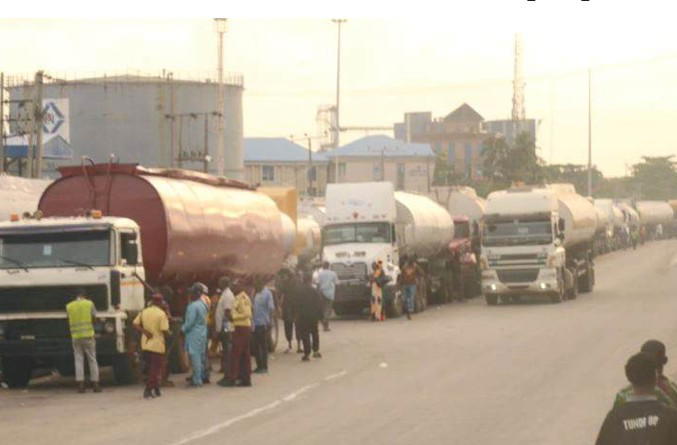
Mayhem erupted on the Oshodi-Apapa Expressway as a combination of negligence and lack of coordination among the Nigerian Ports Authority, the Police, the Lagos State Traffic Management Authority, and tank farm owners led to a lockdown of the major access road to the nation's busiest seaports.
nThousands of commuters and motorists were trapped in one of the worst traffic nightmares in recent months, as container-laden trucks and fuel tankers brought the Oshodi-Apapa Expressway to a standstill, sparking a fresh blame game among the NPA, tank farm owners, truck drivers, and traffic management agencies over the persistent gridlock along the nation's busiest port corridor.
nThe gridlock, which crippled movement along the Mile 2-Berger Yard axis and adjoining routes, was worsened by the indiscriminate parking of trucks on both sides of the road and reckless driving by truck operators along the Mile 2-Tin Can corridor.
nMotorists and commuters spent several hours on journeys that would have taken less than one hour, while commercial transport operators lamented huge losses caused by the traffic paralysis, with some motorists reporting that they spent about two hours traveling from Fatgbems Filling Station to Berger Yard.
nA motorist caught in the congestion stated that the slow movement was caused by tankers loading products at the tank farms, saying, "From Fatgbems Filling Station to Otto Wharf, I spent more than two hours, and the slow movement is caused by tankers loading products at the tank farms."
nSome tanker drivers blamed poor traffic management by the Lagos State Government, the NPA, and the activities of independent tanker drivers, while customs agents accused the NPA of failing to effectively manage port access roads.
nTruck owners blamed petroleum tankers for abandoning the designated single-lane arrangement, while Traffic Transit Point managers of the electronic call-up platform insisted that tankers are yet to be integrated into the system and therefore should not be linked to the current gridlock.
nResidents, transport operators, and businesses affected by the congestion identified the commencement of operations at the new Kirikiri terminal, poor road infrastructure, inadequate traffic coordination, indiscriminate parking by tanker drivers, and weak enforcement of traffic regulations as major factors responsible for the recurring crisis.
nDespite the deployment of police officers, military personnel, and LASTMA officials to the corridor, the gridlock persisted for several hours, with motorists, commuters, and commercial operators bearing the brunt of the chaos.
nStakeholders maintained that unless truck movements are better coordinated, tank farm operations properly regulated, and all relevant agencies work in unison, the Oshodi-Apapa Expressway and adjoining port corridors will continue to witness recurring traffic paralysis with severe economic consequences.
nInvestigations revealed that the heavy gridlock along the Mile 2-Coconut Expressway was triggered by the inability of fuel-laden tankers to exit Shema, Integrated, and Sahara tank farms by Westminster, before the Ibru jetty, after access routes became blocked by empty tankers waiting to load petroleum products.
nThe situation worsened as scores of empty tankers parked indiscriminately along the corridor, obstructing entrances and exits to the depots and preventing loaded tankers from leaving, with the recent decline in crude oil prices on the international market encouraging many tank farms to replenish their petroleum product stocks.
nThe increased availability of petroleum products along the Mile 2-Coconut corridor attracted a surge of tanker drivers, many of whom abandoned the Dangote Refinery route and diverted to the Mile 2-Coconut Expressway in search of loading opportunities.
nA member of the NUPENG task force, who spoke on condition of anonymity, stated that the traffic started around noon when empty tankers waiting to load were turned back because it was not yet their turn, saying, "Most of the tankers removed from the queue relocated to the opposite side of the Coconut-Mile 2 Road, obstructing vehicles and loaded tankers trying to exit the tank farms."
nA tanker driver, who had been on the queue since morning, blamed the gridlock on indiscipline among some drivers, while another driver blamed the lack of coordination among road users, saying, "The major cause of the traffic congestion is the lack of coordination among road users."
nA PTD official, who spoke on condition of anonymity, blamed the persistent gridlock on poor traffic management by the Lagos State Government and the Nigerian Ports Authority, as well as the indiscipline of truck drivers, particularly independent tanker operators.
nThe official explained that many independent tanker drivers park indiscriminately while waiting for marketers to engage them to lift petroleum products, saying, "At the moment, Lagos supplies about 95 per cent of the petroleum products consumed across the country, and the state is witnessing a massive influx of tankers."
nThe PTD official accused some jetty operators of worsening the traffic situation, saying, "Some of the jetty operators have not helped matters, and the inflow and outflow of tankers are poorly managed, and some operators ignore basic traffic discipline and orderliness."
nThe official maintained that responsibility for maintaining order along the corridor rests primarily with the Nigerian Ports Authority and the jetty operators, stressing that effective coordination among all stakeholders remains the only lasting solution to the recurring traffic crisis.
nAs the gridlock worsened, the NPA came under renewed criticism over the persistent traffic congestion along the Apapa-Oshodi Expressway, with customs agents and truck owners accusing the authority of failing to effectively manage truck movements and port access roads.
nThe National Council of Managing Directors of Licensed Customs Agents blamed the NPA for the recurring gridlock along the Tin Can Port corridor, saying the authority had failed in its responsibility to keep the port access routes free of obstruction.
nPresident of the council, Lucky Amiwero, stated that the roads affected by the congestion are designated port access routes under the management of the NPA and should be properly coordinated, saying, "The authority is responsible for regulating activities along the port corridor to ensure the free flow of traffic."
nThe Association of Maritime Truck Owners said many businesses operating around the port corridor had either suspended operations or were struggling to survive because of the persistent congestion, with General Secretary Sani Mohammed blaming petroleum tankers for worsening the situation.
nMohammed appealed to both the Federal Government and the Lagos State Government to urgently intervene and restore sanity to the port access roads, saying, "The gridlock has disrupted the supply chain and port operations, while commuters now spend several hours trying to move in and out of Apapa."
nResponding to claims that the electronic call-up system had failed, the General Manager of Traffic Transit Point, Nancy Nnamdi, clarified that petroleum tankers are not currently covered by the electronic call-up platform.
nNnamdi explained that although TTP has consistently advocated the inclusion of tankers in the system, implementation depends on government approval and enforcement, saying, "Discussions had been held on bringing tankers into the electronic call-up platform, but the company lacks the authority to regulate tanker movements without the necessary government backing."
nThe Nigerian Ports Authority said it was working with relevant stakeholders to address the traffic situation and restore normal vehicular movement along the Apapa port corridor.
nThe persistent truck congestion also brought the Kirikiri-Apapa corridor to a standstill, leaving thousands of commuters stranded, disrupting businesses, and prompting renewed calls for urgent government intervention.
nResidents, motorists, and commercial drivers described the situation as one of the worst in recent years, blaming the worsening gridlock on the recent commencement of operations at a new terminal in Kirikiri, inadequate road infrastructure, and poor traffic management.
nA commercial driver, Mr Captain Wes, blamed the new terminal for worsening the congestion, saying, "Most of these trucks are heading to the new terminal, and if you get there, you will see personnel of the Nigerian Navy and the Police controlling traffic."
nAnother motorist, Mr Chigozie, who had spent more than 50 minutes in traffic, lamented his ordeal, saying, "I joined this traffic from Mile 2 and have been here for almost an hour, and ever since the new terminal began operations, the situation has become unbearable."
nA commercial sand supplier, Mr Sunday, said the gridlock translated into heavy financial losses, saying, "I was on my way to deliver sand when I got trapped here, and today alone, I have lost about N120,000 because of this traffic."
nMilitary personnel drafted to the area to assist with traffic control said they had been working without respite since July 1, identifying poor road conditions and terminal operations as major contributors to the congestion.
nThe officers urged the government to regulate the number of trucks entering the terminals daily, saying such a measure would significantly ease the gridlock, and when Vanguard visited Africa Global Logistics, security personnel denied reporters access to the management.
nResponding to the allegations, the Manager of Exodus Terminal, Mr Chidi, denied that his company was solely responsible for the traffic crisis, saying, "It is not only our terminal contributing to the congestion, and other terminals, including AGL, also operate here."
Related Stories
 General News
CELEBRATING TWO YEARS OF TRANSFORMATIONAL LEADERSHIP IN THE PRESIDENTIAL AMNESTY PROGRAMME
Tomorrow, 14TH March 2026, as we look forward to the second anniversary, we reflect on the remarkable two years since the Administrator of the Preside
 General News
PRESIDENTIAL AMNESTY PROGRAMME PHASE 3: DISREGARD PURPORTED STATEMENT ON DELAYED ITA PAYMENTS — OFFICE OF NATIONAL CHAIRMAN
The Office of the National Chairman of the Presidential Amnesty Programme Phase 3, General Elaye ThankGod Dollar Slaboh, has called on beneficiaries a
 General News
RE: CLARIFICATION ON MY PERSONAL RELATIONSHIPS
PUBLIC NOTICErnrnRE: CLARIFICATION ON MY PERSONAL RELATIONSHIPSrnrnIt has become necessary to make this public clarification following the increasing