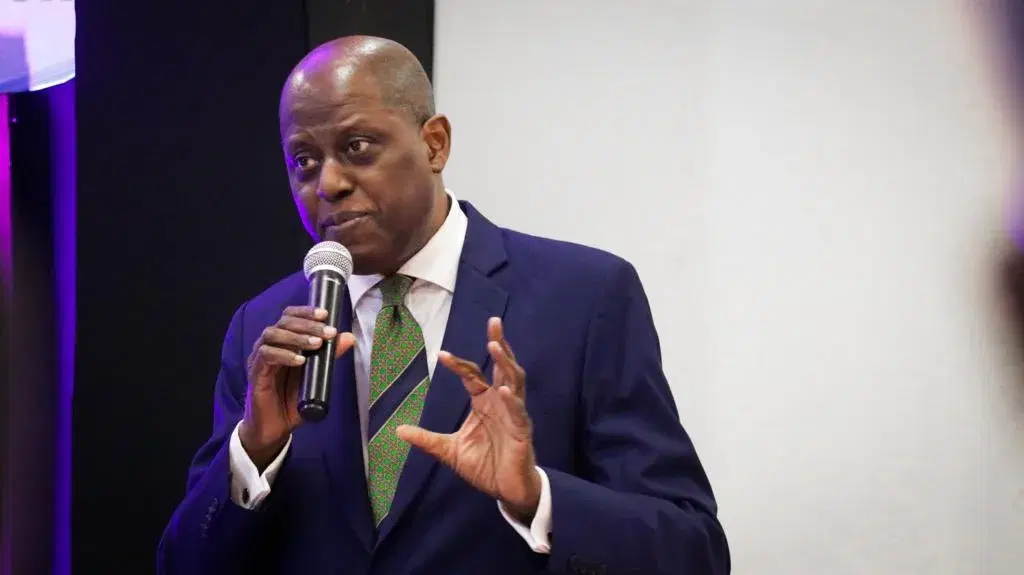
Nigeria's Ways and Means portfolio has plummeted to N2.84 trillion, a significant drop from the N26.95 trillion inherited by the current administration, according to Governor of the Central Bank of Nigeria, Mr Olayemi Cardoso.
Cardoso made this revelation at the Monetary Policy Forum, themed "Strengthening Nigeria's Macroeconomic Stability Through Effective Monetary Policy: The role of Critical Stakeholders", held in Abuja, where he expressed satisfaction with the outcomes of the reforms implemented by his team.
With a clear understanding of the challenges they faced, Cardoso's team swiftly implemented far-reaching reforms aimed at restoring credibility, normalizing policy conduct, rebuilding confidence, and stabilizing the macroeconomic environment, with the first critical step being the restoration of monetary-fiscal discipline.
The Ways and Means financing was reined in decisively, declining from N26.95 trillion to N3.51 trillion in December 2024 and further to N2.84 trillion by January 2026, marking one of the sharpest fiscal consolidations in recent history and restoring compliance with the law.
This action strengthened central bank independence, signalled to markets about the Bank's commitment to orthodoxy and transparency, and sent a clear message that the era of fiscal dominance had come to an end, according to Cardoso.
On the Foreign Exchange front, the CBN boss noted that the reforms introduced yielded the desired results, stabilizing the market and increasing FX inflows, with diaspora remittances now among Nigeria's most stable FX sources, often outperforming oil receipts during periods of market stress.
Monthly inflows through formal channels have tripled since the reforms, from about US$200 million to US$600 million, with a policy target of US$1.0 billion per month by end-2026, representing a structural shift rather than a mere cyclical growth.
Improved settlement architecture and tighter prudential controls have supported FX liquidity, collectively narrowing the parallel market premium to under 2.0%, restoring correspondent banking confidence, and improving overall market functioning.
The reforms were complemented by an improved external reserves position, with gross external reserves increasing from US$38.34 billion in February 2025 to US$50.12 billion in February 2026, representing a 30.73 percent year-on-year increase, the highest level recorded in 13 years.
Net External Reserves have surged from US$3.99 billion at the end of 2023 to US$34.80 billion at the end of 2025, representing a 772.2 percent increase and higher than total gross reserves in 2023.
Nigeria's Balance of Payments also strengthened, recording a surplus of US$4.59 billion in Q3 2025, compared with a deficit of US$2.77 billion earlier in the year, according to Cardoso.
The far-reaching reforms pursued by his team have enhanced resilience, strengthened governance, and aligned regulatory frameworks with emerging risks, with the banking sector recapitalisation programme recording commendable progress, as 32 banks have already met the revised capital requirements.
This achievement has significantly strengthened the resilience and capacity of the Nigerian banking system, positioning it to effectively mobilise long-term capital, support productive investment, and play its critical role in enabling the transition towards a US$1.0 trillion economy.
Despite the gains, Cardoso noted that the journey is far from complete, with the next phase focused on consolidation, aiming to anchor inflation firmly on a downward trajectory toward a single-digit level, sustaining exchange rate stability, and strengthening reserve buffers.
Achieving these goals requires continued collaboration with the fiscal authority, disciplined policy execution, and strong stakeholder engagement, according to Cardoso.
Minister of Finance and Coordinating Minister of the Economy, Mr Wale Edun, stated that one of the key tools available to tackle inflation is interest rates, but high interest rates can increase the cost of financing, affecting government, households, and businesses.
Edun agreed with the CBN governor that macroeconomic stability cannot be achieved by any single institution and requires policy coherence, institutional discipline, and sustained collaboration across monetary, fiscal, and broader economic authorities.


Comments
Please login to leave a comment.
No comments yet. Be the first to share your thoughts!