
Breaking: Iran Blocks Strategic Waterway in Response to Israeli Strikes on Lebanon
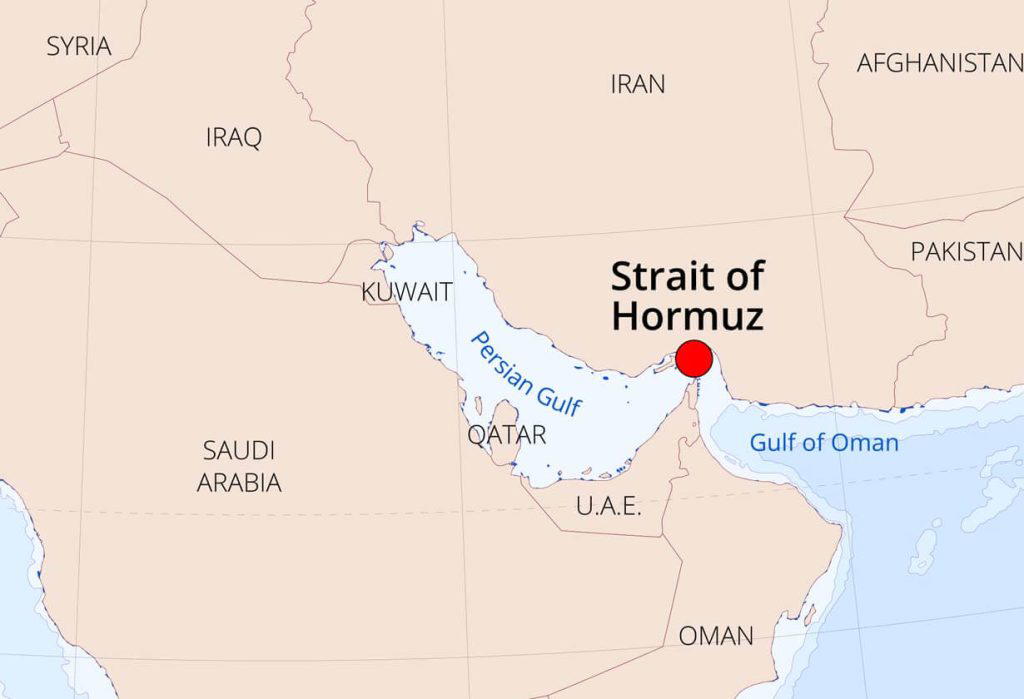
Iran has announced the closure of the Strait of Hormuz shipping lane, citing a breach of contract by the US and relentless violations of the ceasefire in southern Lebanon by Israel, which it refers to as the "Zionist regime".
nThis decision comes after Israeli troops clashed with Hezbollah fighters and conducted airstrikes in southern Lebanon on Saturday, just hours after the US announced a renewed ceasefire in the region.
nThe ongoing violence has put a strain on the deal signed by US President Donald Trump and Iranian counterpart Masoud Pezeshkian to halt the regional war, including in Lebanon, which was a key demand from Tehran.
nIran's central military command declared on Saturday that the Strait of Hormuz will be closed to vessel traffic, citing the US breach of contract and Israel's continuous violation of the ceasefire.
nThe Strait of Hormuz is a crucial passage for oil and gas shipments, and its blockade by Iran during the war had sent shockwaves through global energy markets.
nIran had agreed to reopen the strait under the preliminary agreement with the US, and shipping traffic had started to pick up in recent days.
nFollow-up talks on the US-Iran deal, scheduled to take place in Switzerland on Friday, were postponed indefinitely after Israel launched a wave of deadly strikes in Lebanon following the killing of four Israeli soldiers.
nA US official announced a new ceasefire between Israel and Hezbollah on Friday, brokered by US and Qatari mediators, with Israel's ambassador to Washington stating that Israel would respect the truce if Hezbollah did.
nHowever, on Saturday, an Israeli military official said that Israel was conducting fresh attacks against Hezbollah, accusing the Iran-backed movement of launching over 50 projectiles at Israeli forces in southern Lebanon overnight.
nHezbollah claimed that Israel had carried out an infiltration attempt towards the Ali Taher hills under the cover of the ceasefire, and that its fighters had confronted them with appropriate weapons.
nLebanese state media reported Israeli air raids on around 20 locations, resulting in 16 deaths in the Nabatieh area, while Lebanon's health ministry reported seven more deaths and 13 wounded in a strike on a village near Sidon.
nHezbollah lawmaker Hassan Fadlallah stated that his group has the right to confront Israel when it attacks, while an Israeli military official said that Israel's approach to the truce is based on the principle of fire being answered with fire.
nIsrael's US ambassador, Yechiel Leiter, maintained that Hezbollah had broken the truce, and that Israel was defending itself against terrorist attacks.
nFadi Zayat, a 53-year-old who had fled the southern Lebanon town of Tayr Debba, said that fear dominates everyone, and that people are waiting for a serious decision to end the war so they can return to their lives.
nHezbollah had pulled Lebanon into the wider Middle East conflict in early March when it fired rockets at Israel in retaliation for the killing of Iran's supreme leader in US-Israeli strikes.
nA previous ceasefire in Lebanon in April was never honored, and Lebanese President Joseph Aoun stressed the need for Israeli attacks on Lebanese territory to cease in a call with US Secretary of State Marco Rubio on Friday.
nRubio emphasized the importance of Lebanon disarming Hezbollah and re-establishing control over all Lebanese territory, according to the State Department.
nTalks between the US and Iran, scheduled to take place in Switzerland to work towards a lasting settlement in the Middle East war, were postponed on Friday, with no new date announced.
nVice President JD Vance had been expected to represent the American side, but put off his trip, and instead, US envoy Steve Witkoff headed to Switzerland to get the talks back on track.
nMediator Pakistan's interior minister Mohsin Naqvi arrived in Iran on Saturday for meetings with officials, according to Iranian media.
nThe talks in Switzerland were meant to kick off a two-month period of negotiations to discuss outstanding issues not covered by the initial deal, notably Iran's nuclear programme.
nSwitzerland's foreign ministry said that envoys from various countries are continuing their efforts to maintain the dialogue, while Swiss public broadcaster RTS reported that technical delegations from the US, Iran, Pakistan, and Qatar are present for the discussions.
Related Stories
 General News
CELEBRATING TWO YEARS OF TRANSFORMATIONAL LEADERSHIP IN THE PRESIDENTIAL AMNESTY PROGRAMME
Tomorrow, 14TH March 2026, as we look forward to the second anniversary, we reflect on the remarkable two years since the Administrator of the Preside
 General News
PRESIDENTIAL AMNESTY PROGRAMME PHASE 3: DISREGARD PURPORTED STATEMENT ON DELAYED ITA PAYMENTS — OFFICE OF NATIONAL CHAIRMAN
The Office of the National Chairman of the Presidential Amnesty Programme Phase 3, General Elaye ThankGod Dollar Slaboh, has called on beneficiaries a
 General News
RE: CLARIFICATION ON MY PERSONAL RELATIONSHIPS
PUBLIC NOTICErnrnRE: CLARIFICATION ON MY PERSONAL RELATIONSHIPSrnrnIt has become necessary to make this public clarification following the increasing