
Blood, tears,deaths: 34 states record 137 cases of terror/kidnap attacks in four weeks
•Borno, Benue, Ondo worst hit
nBy Nnamdi Ojiego
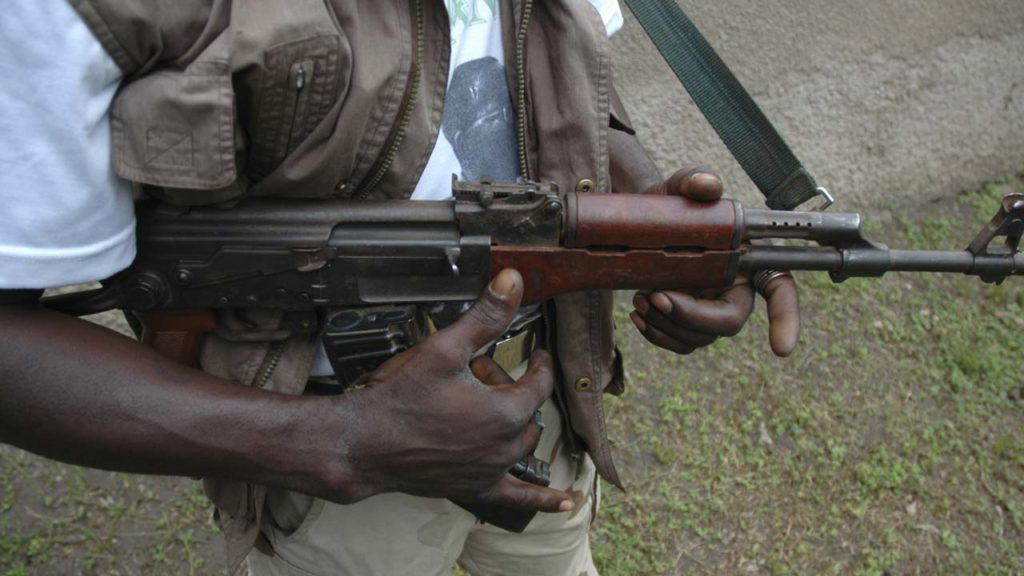
nNigeria’s deepening security crisis came into stark focus over the past four weeks, with no fewer than 137
nterror and kidnapping incidents recorded across 34 states and the Federal Capital Territory (FCT), underscoring the widening reach of violence across the country.
nData compiled by Sunday Vanguard from across the states shows that Borno, Benue, and Ondo States emerged as the worst hit, accounting for some of the deadliest attacks and highest number of incidents within the period under review.
nFrom coordinated insurgent assaults in the North-East to mass killings in the North-Central and a surge in kidnappings in the South-West, the pattern reflects a crisis that is no longer confined to any one region.
nAccording findings, only Nasarawa and Jigawa States recorded no incidents during the period, offering a rare contrast in an otherwise widespread wave of violence
nRising terror index
nThe recent surge aligns with broader national trends.
nAccording to the Global Terrorism Index 2025 released by the Institute for Economics & Peace, Nigeria ranked fourth globally, with terror attacks rising by 43 percent, from 120 incidents in 2024 to 171 in 2025.
nThe report identified Boko Haram and ISWAP as the main drivers of violence, accounting for the majority of fatalities.
nIt also noted that civilians made up 67 percent of victims, underscoring a shift toward softer targets.
nBreakdown
nAcross the North-East, Borno State recorded 19 incidents, the highest nationwide, reflecting sustained insurgent activity marked by coordinated assaults, mass abductions, and suicide bombings. Yobe, Bauchi and Adamawa had four each, including attacks on security formations and deadly village raids and abductions.
nTaraba recorded two incidents, while Gombe had three, largely involving attacks on farming communities.
nIn the North-West, Sokoto State recorded eight incidents, driven by persistent bandit attacks and kidnappings.
nKatsina had four, while Zamfara and Kebbi recorded three incidents each, including mass casualty attacks and village raids.
nKano State recorded one incident, a kidnapping case.
nThe North Central zone showed intense pressure.
nBenue State recorded 10 incidents, including multiple village attacks in Kwande, Apa, and Otukpo, with dozens killed in separate assaults. Plateau State recorded five incidents, largely involving coordinated attacks on rural communities and security patrols.
nKogi State had six incidents, many targeting highways and travellers. Niger State recorded seven incidents, including large-scale village attacks and ambushes on security personnel. Kwara recorded three incidents, including a major massacre in Kaiama.
nThe Federal Capital Territory recorded eight incidents, mostly kidnappings in satellite communities around Bwari and Kubwa.
nIn the South-East, Abia State recorded five incidents, including attacks on security personnel and kidnappings.
nImo and Enugu recorded four each, involving raids on facilities and security operations and deadly attacks and abductions along highways.
nEbonyi also recorded four, including the killing of a traditional ruler and child abductions.
nAnambra recorded three incidents, largely involving armed confrontations and attempted kidnappings.
nIn the South-South, Edo State recorded five incidents, mostly kidnappings and related violence. Rivers State recorded four incidents, including multiple abductions. Bayelsa and Cross River States recorded two incidents each including kidnapping-related cases.
nAkwa Ibom State and Delta States recorded one incident each.
nIn the South-West, Ondo State recorded 10 incidents, emerging as the most affected in the region, with killings, abductions, and attacks on farms and communities across Akure North and Owo axes.
nOyo and Ekiti States recorded five incidents each, while Osun State recorded two and Ogun State recorded one.
nLagos State had one unconfirmed incident linked to highway kidnappings.
nNotably, Nasarawa and Jigawa States recorded no attacks within the period under review, with their last reported incidents occurring in January 2026.
nDeadly attacks
nThe incidents were marked by heavy casualties across several regions, with some states recording mass killings on a scale rarely seen outside insurgency zones.
nIn Borno State, coordinated insurgent operations, including the invasion of Ngoshe and repeated assaults on military formations, left scores dead, with about 300 civilians abducted in one attack alone.
nIn Benue State, a series of attacks across Kwande, Apa, and Agatu LGAs resulted in over 70 deaths, alongside multiple abductions and widespread displacement.
nThe situation in Kwara State was particularly severe.
nIn a single attack on Woro community in Kaiama Local Government Area, over 200 residents were reportedly killed, while 175 others, including men, women, and children, were abducted.
nMany of those abducted remain in captivity, making it one of the deadliest incidents recorded in the period under review.
nIn Niger State, attacks on communities such as Tungan Makeri and surrounding areas reportedly left dozens dead, with entire settlements razed and residents forced to flee.
nSimilarly, in Zamfara State, a mass casualty attack in Tungan Dutse allegedly claimed over 50 lives, in addition to large-scale abductions.
nIn the South-West, Ondo State recorded multiple killings, including the murder of a traditional ruler and several farmers, reflecting a rise in the lethality of attacks in the region.
nAcross the country, civilians remained the primary victims, with many of the attacks deliberately targeting rural communities, travellers, and places of worship.
nProtests and rising fear
nPublic anger has followed closely behind the violence.
nIn Oyo State, residents staged protests along major highways, including the Ibadan-Oyo Expressway, condemning repeated kidnappings and what they described as weak enforcement.
nIn Ondo State, communities in Akure North and surrounding areas repeatedly blocked highways, in some cases displaying corpses of victims to draw attention to their plight.
nProtesters demanded direct intervention from the government, citing an inability to access farms and rising ransom demands.
nElsewhere, fear has reshaped daily life.
nRural communities in Benue and Niger, and parts of the South-East reported displacement, with residents abandoning homes and farmlands.
nIn the FCT outskirts, residents described living under constant threat, with kidnappers issuing ransom instructions directly to communities.
nInterventions
nSecurity agencies have responded with a mix of operations and reactive measures.
nIn Borno, troops under Operation Hadin Kai carried out sustained offensives, repelling attacks, killing insurgents, and rescuing abducted civilians.
nIn Niger and Kebbi, military deployments were reinforced following mass casualty attacks, while joint task forces conducted clearance operations in affected communities.
nAuthorities in Ondo launched coordinated patrols involving the police, army, and Amotekun Corps, alongside mass arrests of suspected kidnappers.
nSimilar crackdowns were reported in Imo and Abia States, where security forces raided suspected camps and made arrests.
nIn Abuja, joint operations led to the rescue of kidnapped victims in Bwari, though attacks continued in nearby communities.
nDespite these efforts, many residents and local leaders argue that responses remain largely reactive, with calls for permanent security bases, improved intelligence gathering, and stronger rural protection strategies.
nUnder strain
nWith 137 incidents in just four weeks, the data points to a security challenge that is both widespread and evolving.
nWhile states such as Nasarawa and Jigawa recorded no attacks during the period, the overall pattern suggests that insecurity has taken on a national character, cutting across regions once considered relatively stable.
nThe figures, taken together, raise fresh questions about the capacity of existing security frameworks to contain a threat that is no longer confined to any one part of the country.
nAdditional reports by Dayo Johnson, Ndahi Marama, Ozioruva Aliu, Jimitota Onoyume, Demola Akinyemi, Golok Nanmwa, Musa Ubandawaki, Femi Bolaji, Peter Duru, Adeola Badru and Rotimi Ojomoyela
n nRelated Stories
 General News
CELEBRATING TWO YEARS OF TRANSFORMATIONAL LEADERSHIP IN THE PRESIDENTIAL AMNESTY PROGRAMME
Tomorrow, 14TH March 2026, as we look forward to the second anniversary, we reflect on the remarkable two years since the Administrator of the Preside
 General News
PRESIDENTIAL AMNESTY PROGRAMME PHASE 3: DISREGARD PURPORTED STATEMENT ON DELAYED ITA PAYMENTS — OFFICE OF NATIONAL CHAIRMAN
The Office of the National Chairman of the Presidential Amnesty Programme Phase 3, General Elaye ThankGod Dollar Slaboh, has called on beneficiaries a
 General News
RE: CLARIFICATION ON MY PERSONAL RELATIONSHIPS
PUBLIC NOTICErnrnRE: CLARIFICATION ON MY PERSONAL RELATIONSHIPSrnrnIt has become necessary to make this public clarification following the increasing