
Benchers back CJN’s push to retire colonial titles
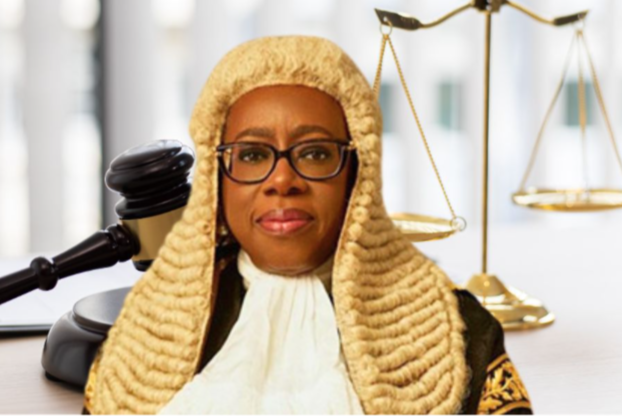
Chief Justice of Nigeria (CJN), Justice Kudirat Kekere-Ekun
nBy Ikechukwu Nnochiri
nWilly Mutunga was sworn in as the first Chief Justice and President of the Supreme Court of Kenya on June 20, 2011, under the country’s 2010 Constitution.
nBarely months in office, he took a revolutionary step with the enforcement of a reform policy that historically altered Kenya’s legal practice.
nMutunga moved Kenya’s judiciary away from colonial-era regalia, including wigs, robes and grandiose forms of address.
nUnder him, judges dropped their wigs and the honorific ‘My Lord’ in favour of ‘Your Honour,’ while lawyers were allowed to wear sober-coloured suits without robes or wigs.
nIn 2019, Malawi’s Constitutional Court suspended the long-standing requirement that lawyers and judges wear traditional white wigs and black robes in court.
nThe ruling was driven partly by the country’s hot climate, along with growing concerns about the impracticality of a dress code inherited from the colonial era.
nTwo years ago, Burkina Faso announced locally made African courtroom attire using Faso Dan Fani fabric.
nOver time, calls to review the colonial-era relics still embedded in Nigeria’s routine court rituals have grown louder.
nBeyond the fluffy wigs rooted in 17th-century British fashion, which came to symbolize tradition, authority, and respect for the court, the use of ‘Barrister’ as a professional title has become a topical issue in the country.
nThe title ‘Barrister’ derives from medieval England, where a railing known as the “Bar” separated judges and legal practitioners from the public in courtrooms and Inns of Court.
nAspiring advocates trained at the Inns of Court, and upon completing this training and being admitted by their Inn, a candidate symbolically crossed the bar, thereby gaining the right to practise as an advocate before the courts.
nGradually, ‘the Bar’ came to denote both the body of practising advocates and the legal profession as a whole.
nA lawyer formally admitted to plead in court was said to be ‘called to the Bar,’ and thus became known as a barrister, especially within the common-law tradition.
nHaving adopted English legal concepts during British colonial rule, Nigeria appropriated the ‘Barrister’ honorific along with a host of legal Latin jargon.
nUnlike the English model, which splits legal practice into two professions, barristers, who are specialists in advocacy and argue cases in court, and solicitors, who handle client relations, paperwork, and case preparation and typically hire barristers for courtroom work, Nigeria fused the two roles.
nThe British legal system arrived in Nigeria with Lagos’s Supreme Court Ordinance of 1863, which empowered the Chief Justice to admit barristers and solicitors, with specific rules for those already called to the Bar in England, Scotland, or Northern Ireland.
nChristopher Sapara Williams enrolled at the Inns of Court in England in 1879 and became Nigeria’s first barrister and solicitor in 1888.
nThe fused legal practice model in Nigeria automatically made anyone called to its Bar both a ‘Barrister and Solicitor’ of the Supreme Court.
nWith time, ‘Barrister’ evolved into a common professional title and cultural status marker for lawyers, much like “Doctor” is commonly used for medical practitioners.
nIt became a revered prefix before the names of legal practitioners in the country, notwithstanding that the Legal Practitioners Disciplinary Committee (LPDC) had, in 2017, in NBA v. Ofomata (2017) 5 NWLR (Pt. 1557) 128, described using ‘Barrister’ as a title before a legal practitioner’s name as “unprofessional and improper.”
nDetermined to put an end to the trend, the Chief Justice of Nigeria (CJN), Justice Kudirat Kekere-Ekun, in a memo dated July 13, 2026, barred the use of the title ‘Barrister’ as a prefix to the names of lawyers in all official correspondence.
nThe CJN described the use of such a title as inappropriate and inconsistent with the standards of professionalism expected within the Supreme Court, to which every lawyer in the country is enrolled.
nShe directed all litigation staff, legal practitioners, and court registrars to discontinue the use of the title in official correspondence, records, documents, identity materials, and other official engagements with immediate effect.
nThe CJN also instructed heads of departments and unit heads in all tiers of courts in the country to ensure strict compliance with the directive.
nThis directive comes after the Body of Benchers (BoB), through its Chairman, HRM Albert Akpomuje, SAN, expressed concerns over the abusive use of the ‘Barrister’ title by lawyers.
nAccording to the legal body: “The word ‘Barrister’ as a title has become very common, particularly among our political colleagues who want everybody to know they are lawyers, though not in active practice, by introducing themselves with the title ‘Barrister’ before their name.
n“This is very wrong and unprofessional. A lawyer can address himself by his name but not with ‘Barrister’ before the name,” it stated during a Call-to-Bar ceremony held in Abuja recently.
nIt said: “We have observed the increasing use of the word ‘BARRISTER’ as a title not just by unlearned people but by members of the Bar.
n“While we know that Nigerians like titles, to the extent that we now have titles like Vulcanizer ‘X’ or Tailor or Fashion Designer ‘Y’, the legal profession cannot afford to be part of the bandwagon of title seekers by using the word Barrister before our names as a title.
n“Despite admonitions by successive Chief Justices of Nigeria, particularly Hon. Justice Mohammed Uwais (GCON), at the annual conferences of the NBA on the unprofessional use of the word ‘Barrister’ as a title, the trend seems to be growing worse by the day, particularly among young lawyers who want to be known as members of the profession by using the word Barrister as a title.
n“People will know you are a lawyer by your competence, comportment, hard work and diligence, not by intimidation through adding Barrister as an appellation or title to your name. New wigs, please take heed,” the BoB warned.
nHowever, dissenting voices have queried the CJN’s powers to administratively restrict the use of a professional designation recognised under the Legal Practitioners Act, citing a Court of Appeal decision in Ishaku & Anor v. Kantiok & Ors (2011) LPELR-8944(CA).
nThe appellate court had affirmed that the use of the prefix ‘Barrister’ does not alter an individual’s fundamental legal identity or invalidate a petition.
nAs the nation continues to hope earnestly for comprehensive judicial reform, there is growing optimism that legal drafting purged of outdated colonial-era language will also be given serious consideration.
n nRelated Stories
 General News
CELEBRATING TWO YEARS OF TRANSFORMATIONAL LEADERSHIP IN THE PRESIDENTIAL AMNESTY PROGRAMME
Tomorrow, 14TH March 2026, as we look forward to the second anniversary, we reflect on the remarkable two years since the Administrator of the Preside
 General News
PRESIDENTIAL AMNESTY PROGRAMME PHASE 3: DISREGARD PURPORTED STATEMENT ON DELAYED ITA PAYMENTS — OFFICE OF NATIONAL CHAIRMAN
The Office of the National Chairman of the Presidential Amnesty Programme Phase 3, General Elaye ThankGod Dollar Slaboh, has called on beneficiaries a
 General News
RE: CLARIFICATION ON MY PERSONAL RELATIONSHIPS
PUBLIC NOTICErnrnRE: CLARIFICATION ON MY PERSONAL RELATIONSHIPSrnrnIt has become necessary to make this public clarification following the increasing