
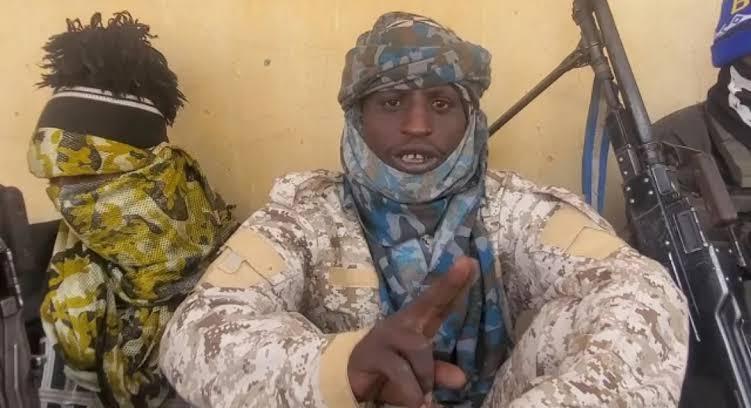
Bello Turji’s alleged sophisticated weapons raise fresh security concerns in Nigeria – Experts
By Ibrahim Hassan-Wuyo
nReports alleging that notorious bandit leader Bello Turji has acquired sophisticated weapons and is collaborating with Boko Haram elements to train and equip fighters have once again drawn attention to the worsening security situation in Nigeria’s North-West.
nIf confirmed, the claims suggest that criminal networks are becoming more organised, better armed and increasingly capable of challenging state authority.
nThe allegations emerged shortly after former NYSC Director-General, Brigadier-General Maharazu Tsiga (rtd), suggested that bandits and terrorists may be receiving support from within certain official circles.
nWhile such claims require thorough investigation and credible evidence, they reflect growing public concern over the continued expansion of armed groups despite sustained military operations.
nAccording to Halliru Abdullahi Maraya, a former Special Adviser to the Kaduna State Governor on Islamic Matters and Pilgrimage, the influx of sophisticated weapons is driven largely by transnational smuggling, corruption and attacks on security formations.
nHis view aligns with long-standing concerns that Nigeria’s poorly monitored borders continue to enable the inflow of illicit arms from conflict zones in Libya, Mali, Burkina Faso and other parts of the Sahel.
nReports that weapons are concealed in fuel tanks, cargo vehicles and agricultural consignments highlight the sophistication of smuggling networks and persistent gaps in border surveillance.
nThere are also concerns that compromised security personnel may have diverted state-owned weapons to criminal groups. If proven, such incidents would represent a grave threat to national security and underline the need for stronger internal accountability within security institutions.
nAnother major source of arms for criminal groups has been repeated attacks on military and police formations, during which weapons, ammunition and communication equipment are carted away.
nThe difficult terrain across Zamfara, Sokoto, Katsina, Kaduna, Niger and parts of Kebbi States also continues to provide cover for armed groups operating in forested and hard-to-reach areas.
nIn addition, local informant networks allegedly assist bandits by providing intelligence on troop movements, enabling them to evade military operations.
nSecurity agencies also face operational constraints when armed groups operate near civilian populations, limiting the use of force and sometimes allowing suspects to escape during operations.
nUnlike structured insurgent organisations, many bandit groups operate in decentralised cells, making them harder to dismantle completely even when individual leaders are arrested or neutralised.
nThe overlap between banditry, terrorism, illegal mining, cattle rustling, kidnapping and extortion has also created a self-sustaining criminal economy that funds recruitment and arms procurement.
nConcerns raised by the Northern Christian Association leader, John Joseph Hayab, reflect wider public frustration over how armed groups continue to operate training camps and expand influence despite years of counterinsurgency efforts.
nSimilarly, analyst Samuel Yusuf warned that insecurity risks evolving into a “mega enterprise” if not decisively addressed, especially given the scale of public spending on security with limited visible results.
nFormer Chief of Army Staff, Tukur Buratai, has also warned that terrorist and bandit groups are becoming more sophisticated, using digital platforms and modern communication tools to evade detection.
nHe questioned why armed groups that openly release videos and communicate online remain difficult to apprehend, arguing that security agencies possess the technological capacity to track them.
nHis concerns point to an evolving security threat that is increasingly networked and technology-enabled, requiring intelligence-driven responses in addition to conventional military operations.
nUltimately, the reports surrounding Bello Turji should serve as a renewed warning that Nigeria’s security challenges are becoming more complex.
nExperts say addressing them will require stronger border control, improved intelligence, accountability within security agencies, community cooperation and sustained coordinated operations against armed groups.
n nRelated Stories
 General News
CELEBRATING TWO YEARS OF TRANSFORMATIONAL LEADERSHIP IN THE PRESIDENTIAL AMNESTY PROGRAMME
Tomorrow, 14TH March 2026, as we look forward to the second anniversary, we reflect on the remarkable two years since the Administrator of the Preside
 General News
PRESIDENTIAL AMNESTY PROGRAMME PHASE 3: DISREGARD PURPORTED STATEMENT ON DELAYED ITA PAYMENTS — OFFICE OF NATIONAL CHAIRMAN
The Office of the National Chairman of the Presidential Amnesty Programme Phase 3, General Elaye ThankGod Dollar Slaboh, has called on beneficiaries a
 General News
RE: CLARIFICATION ON MY PERSONAL RELATIONSHIPS
PUBLIC NOTICErnrnRE: CLARIFICATION ON MY PERSONAL RELATIONSHIPSrnrnIt has become necessary to make this public clarification following the increasing