
Being a businessman in Nigeria is notoriously tough, says 81-year-old Aare Oyefeso
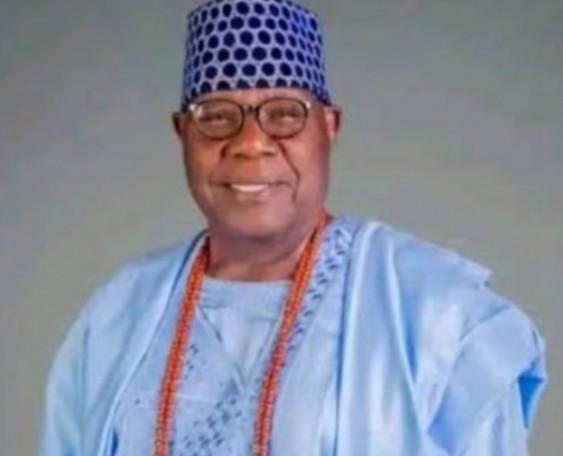
Aare Kola Oyefeso, at 82, embodies the quiet confidence of a man who has spent a lifetime building institutions, nurturing enterprise, and giving back to society, with his journey mirroring the story of resilience and industry that has defined Nigeria's indigenous business class for decades.
nFrom modest beginnings in a family of artisans and traders to becoming the founder of the Kotco Group, Oyefeso's path has been shaped by his early experiences, with his father being a goldsmith and his mother trading textiles at the bustling Gbagi Market in Ibadan, where he learned the rhythms of buying and selling fabrics by his late teens.
nThose early experiences, assisting in the craft of goldsmithing and learning the rhythms of buying and selling fabrics, shaped his outlook on work and enterprise, planting the seeds of the entrepreneurial path he would later pursue, with the establishment and growth of Kotco evolving from a modest business venture into a diversified group with interests linked to Nigeria's energy and industrial ecosystem.
nBeyond industry, Oyefeso's influence extends into philanthropy and civic life, with a gesture that reflects his deep commitment to community welfare being the donation of a health centre to his community in memory of his late wife, a project aimed at expanding access to healthcare for ordinary people, driven by his conviction that success ultimately comes by the grace of God and should be used to uplift others.
nHis leadership has also been visible in social institutions, with Oyefeso serving as president of the Lagos Country Club and now chairing its Board of Trustees, guiding the governance of one of the country's most prominent social and professional clubs, where he has been a respected member for decades.
nIn an interview, the veteran industrialist reflects on the choices that led him into entrepreneurship, the challenges of running a manufacturing-oriented business in Nigeria, and the values that guided the growth of Kotco, as well as the lessons younger entrepreneurs must embrace to survive in today's economic climate.
nOyefeso reveals that what drove his decision to build Kotco from scratch was the understanding that he is an incarnate, coupled with the realization that his birth and upbringing in an enterprise-driven environment shaped his life's patterning, with his father's goldsmithing and mother's textile trading teaching him the value of self-reliance and initiative from a young age.
nHe notes that by the time he was 17, he had already begun helping in his father's workshop, where he learned discipline and craftsmanship, and also helped his mother sell textiles at Gbagi Market, an environment that was a very practical school of business, where he quickly learned about negotiation, customer relationships, and the truth that profit depends on effort and good judgment.
nThose early experiences shaped his thinking, making him see entrepreneurship not merely as a way of making money but as a path to independence, giving him room to innovate, grow, and create something of his own, and when the opportunity came to establish Kotco, it felt like a natural continuation of the environment in which he had been raised.
nOyefeso's conviction that indigenous companies could compete with foreign firms in the early days of Nigeria's power support industry was based on the observation that Nigerians are not lacking in intelligence or education, but rather face challenges in their operating environment, with reliable infrastructure, access to finance, and policies that encourage innovation and manufacturing being essential for success.
nHe believes that with the right training and support structures, there is nothing inherently limiting about Nigerian capacity, and that the real issue has always been the environment in which people operate, with professionals in developed countries working within systems that support their productivity, and that if those same conditions exist in Nigeria, professionals can perform at the same level as anyone else.
nWhen founding Kotco, Oyefeso faced tough early barriers, including the cost of finance and energy, with accessing capital in Nigeria never being easy, especially for manufacturing businesses that require substantial investment in equipment and infrastructure, and the cost of generating power being extremely high, making entrepreneurship in the industrial sector quite daunting.
nHowever, he notes that entrepreneurship demands perseverance, and that what sustained him was the determination to continue despite setbacks, with the old saying that if you remain focused and resilient, there will always be light at the end of the tunnel, being true in his own experience, where challenges arose, but persistence often opened doors that initially appeared closed.
nAs an industrialist in Nigeria, Oyefeso finds it extremely challenging, with manufacturing involving navigating several structural difficulties, including high interest rates, energy costs, and policy consistency, making it difficult for local manufacturers to compete with imported goods, but believes that no country can achieve sustainable economic development without a strong manufacturing base.
nLooking back, Oyefeso believes that much of Kotco's progress has been guided by divine providence, with human effort being important, but with moments when outcomes exceed what one could reasonably attribute to planning alone, and that the grace of God plays a vital role in every genuine achievement, with success requiring blessings beyond human control.
nThe values that guided Oyefeso's leadership style as Kotco expanded include integrity, punctuality, and diligence, with integrity being essential in business, without which no organization can survive for long, and punctuality reflecting discipline, with time influencing the culture of the entire organization, and diligence being the willingness to work hard and remain committed to excellence.
nAnother important aspect of his leadership is ensuring that employees feel valued, with people becoming more committed to the success of the organization when they believe their contributions matter, and customer satisfaction remaining a priority, with organizations needing to be willing to adapt to the constantly changing business environment to survive.
nOyefeso notes that one of the most difficult challenges he faced as a business leader was the sharp depreciation of the naira, with currency instability affecting every aspect of industrial operations, and the cost of importing raw materials and equipment rising dramatically, but believes that Nigerians are remarkably resilient, with survival often depending on flexibility and creativity.
nAcross his decades in business, Oyefeso believes that one reform that made a positive difference was the liberalization of the import licensing system, with the change allowing more businesses to access imports directly, creating a more transparent and equitable environment for commercial activity, and that reforms that remove artificial barriers tend to encourage entrepreneurship.
nHe would want the government to provide support in three key areas: lower interest rates, strategic protection for goods that can be produced locally, and government institutions patronizing locally made products, with these measures strengthening the industrial ecosystem and encouraging entrepreneurship.
nOyefeso believes that real resilience in business means remaining committed despite adversity, with perseverance being essential for success, and that those who endure challenges often find that persistence eventually brings results, with a biblical passage saying that anyone who puts his hand to the plough and then looks back is not fit for the task.
nIn his social life, Oyefeso has been involved with the Lagos Country Club, where he served as president and now chairs its Board of Trustees, guiding the governance of the club, which has evolved considerably over time, with successive administrations modernizing the club while preserving its traditions.
nLeadership at the club has taught Oyefeso about legacy, with the goal being to leave the organization stronger than you found it, and that leadership carries responsibility, with humility being essential, and that a leader should guide and coordinate, but not behave as though others are inferior, with respect and collaboration being essential for healthy institutions.
nOyefeso's philanthropic work, especially in community health, has been consistent, with his approach to giving being rooted in gratitude, recognizing that many factors contribute to success, including hard work, opportunities, guidance, and the grace of God, and that if you have been fortunate, you should try to extend a helping hand to others who may not have had the same opportunities.
Related Stories
 General News
CELEBRATING TWO YEARS OF TRANSFORMATIONAL LEADERSHIP IN THE PRESIDENTIAL AMNESTY PROGRAMME
Tomorrow, 14TH March 2026, as we look forward to the second anniversary, we reflect on the remarkable two years since the Administrator of the Preside
 General News
PRESIDENTIAL AMNESTY PROGRAMME PHASE 3: DISREGARD PURPORTED STATEMENT ON DELAYED ITA PAYMENTS — OFFICE OF NATIONAL CHAIRMAN
The Office of the National Chairman of the Presidential Amnesty Programme Phase 3, General Elaye ThankGod Dollar Slaboh, has called on beneficiaries a
 General News
RE: CLARIFICATION ON MY PERSONAL RELATIONSHIPS
PUBLIC NOTICErnrnRE: CLARIFICATION ON MY PERSONAL RELATIONSHIPSrnrnIt has become necessary to make this public clarification following the increasing